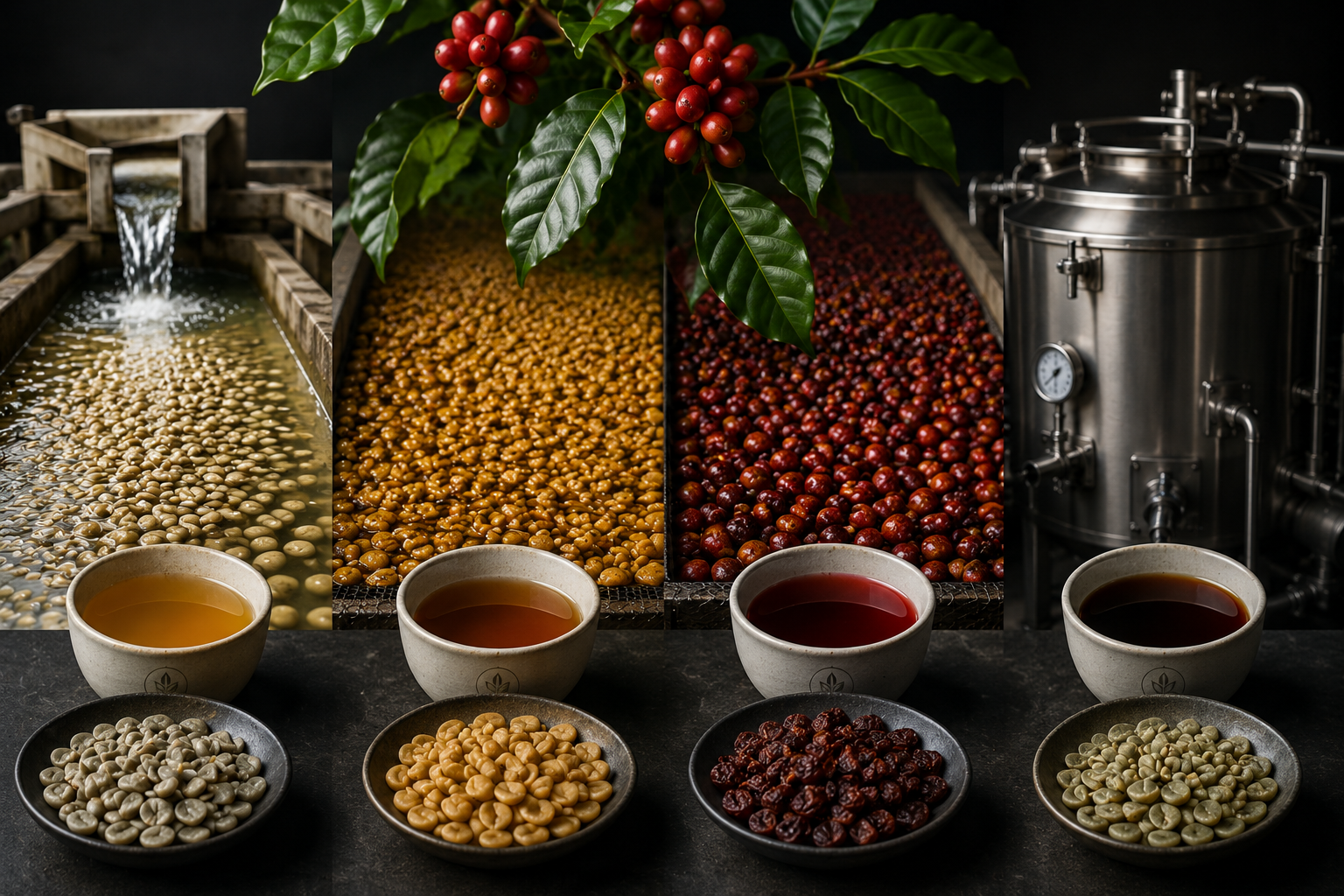
Natural vs Washed vs Honey Process Coffee: The Complete Guide
If you have spent any time exploring specialty coffee, you have almost certainly encountered terms like Natural, Washed, Honey Process, or even Anaerobic Fermentation.
For many coffee drinkers, these words seem technical and confusing at first.
Yet they are among the most important factors influencing what ends up in your cup.
Two coffees grown on the same farm, at the same altitude, from the same coffee variety can taste dramatically different simply because they were processed differently after harvest.
Understanding coffee processing is one of the fastest ways to improve your appreciation of specialty coffee.
At Speciality Coffee, every coffee includes processing information so you can better understand why certain coffees taste fruity, floral, sweet, wine-like, or exceptionally clean.
Looking for more specialty coffee education, brewing guides, and coffee discoveries? Visit the All About Speciality Coffee Blog.
What Is Coffee Processing?
Before coffee becomes a roasted bean, it begins life as a fruit.
Coffee grows as a cherry containing:
- an outer skin,
- fruit pulp,
- sticky mucilage,
- parchment,
- and finally the seed inside.
That seed eventually becomes the coffee bean you brew.
Processing refers to the methods producers use to remove the fruit and prepare the coffee for drying and export.
The way these layers are removed dramatically affects:
- sweetness,
- acidity,
- body,
- texture,
- fruitiness,
- and overall flavor complexity.
In many cases, processing influences flavor almost as much as origin itself.
Think of processing as one of the most important stages in shaping coffee character.
Why Processing Matters So Much
Imagine two identical coffees:
- Same farm
- Same variety
- Same altitude
- Same harvest
If one is processed as a washed coffee and the other as a natural coffee, they can taste completely different.
Processing determines:
- how long the bean remains in contact with fruit sugars,
- how fermentation develops,
- how moisture is removed,
- and how flavor compounds evolve.
This is why specialty coffee enthusiasts often pay close attention to processing methods when choosing coffee.
Washed Process Coffee
What Is Washed Coffee?
The washed process (sometimes called wet process) is one of the most widely used methods in specialty coffee.
After harvest:
- The cherry skin is removed.
- Most fruit pulp is removed mechanically.
- The coffee ferments in water tanks.
- Remaining mucilage is washed away.
- The coffee is dried on raised beds or patios.
The result is a coffee where very little fruit remains attached during drying.
Because of this, washed coffees tend to highlight:
- terroir,
- variety,
- altitude,
- and origin characteristics.
Explore washed coffees: Washed Coffee Collection
What Does Washed Coffee Taste Like?
Washed coffees are typically:
- clean
- bright
- transparent
- elegant
- structured
Common tasting notes include:
- lemon
- bergamot
- jasmine
- black tea
- peach
- apricot
- stone fruits
- floral notes
Washed coffees are often the best choice if you want to understand what a particular coffee origin naturally tastes like.
Best Brewing Methods for Washed Coffees
Washed coffees perform exceptionally well with:
- V60
- Chemex
- Kalita Wave
- Origami Dripper
- AeroPress
These brewing methods preserve clarity and acidity.
Many competition-level filter coffees are washed coffees for exactly this reason.
Natural Process Coffee
What Is Natural Coffee?
Natural processing is the oldest coffee processing method in the world.
Instead of removing the fruit immediately, producers dry the entire coffee cherry intact.
The cherries remain on drying beds for:
- several weeks,
- sometimes up to six weeks,
- depending on climate and conditions.
During this period:
- fruit sugars,
- fermentation compounds,
- and flavor precursors
interact continuously with the coffee seed.
The result is one of the most distinctive coffee styles available.
Explore natural coffees: Natural Coffee Collection
What Does Natural Coffee Taste Like?
Natural coffees often display:
- intense fruit flavors
- heavier body
- lower perceived acidity
- greater sweetness
- richer texture
Common tasting notes include:
- blueberry
- strawberry
- raspberry
- tropical fruit
- mango
- pineapple
- dark chocolate
- wine-like notes
High-quality naturals can be incredibly expressive and memorable.
However, poor processing management can lead to:
- excessive fermentation,
- inconsistency,
- or undesirable flavors.
This is why producer skill matters enormously with natural coffees.
Best Brewing Methods for Natural Coffees
Natural coffees are fantastic for:
- V60
- AeroPress
- Espresso
- Pour-over methods
Many specialty coffee drinkers also enjoy naturals as espresso because the fruit character becomes highly concentrated.
Honey Process Coffee
What Is Honey Process Coffee?
Honey process coffee sits between washed and natural processing.
After harvest:
- The skin is removed.
- Some or all mucilage remains attached.
- Coffee dries with this sticky layer still present.
The term “honey” does not refer to actual honey.
It refers to the sticky, sugary mucilage coating the bean during drying.
Depending on how much mucilage remains, producers may classify coffees as:
- Yellow Honey
- Red Honey
- Black Honey
Generally:
- more mucilage equals more sweetness and body.
Explore honey processed coffees: Honey Process Coffee Collection
What Does Honey Process Coffee Taste Like?
Honey coffees often offer:
- balanced sweetness
- medium body
- moderate acidity
- excellent complexity
Common tasting notes include:
- brown sugar
- caramel
- peach
- apricot
- plum
- honey sweetness
- red fruits
Many coffee enthusiasts consider honey processing the perfect middle ground between washed and natural coffees.
Best Brewing Methods for Honey Coffees
Honey coffees work beautifully with:
- V60
- Chemex
- Espresso
- AeroPress
Their balance makes them highly versatile across brewing styles.
Anaerobic Fermentation Coffee
What Is Anaerobic Coffee?
Anaerobic fermentation represents one of the most innovative developments in modern specialty coffee.
In anaerobic processing:
- cherries or depulped coffee are placed inside sealed tanks,
- oxygen is removed,
- fermentation occurs under highly controlled conditions.
By manipulating:
- temperature,
- pressure,
- fermentation duration,
- and oxygen levels,
producers can create flavor profiles impossible through traditional methods.
What Does Anaerobic Coffee Taste Like?
Anaerobic coffees often display:
- tropical fruit
- wine-like complexity
- intense sweetness
- floral aromatics
- exotic fermentation notes
Common descriptors include:
- passionfruit
- mango
- hibiscus
- sangria
- fruit punch
- pineapple
- berries
These coffees can be exciting and highly memorable.
However, they can also be polarizing.
Some coffee drinkers love the intensity.
Others prefer the cleaner expression of washed coffees.
Which Processing Method Should You Choose?
The answer depends entirely on your preferences.
Choose Washed Coffee If You Like:
- clean cups
- bright acidity
- terroir expression
- floral coffees
- tea-like coffees
Browse: Washed Coffees
Choose Natural Coffee If You Like:
- fruit-forward coffees
- sweetness
- heavier body
- berry notes
- wine-like complexity
Browse: Natural Coffees
Choose Honey Process Coffee If You Like:
- balance
- sweetness
- moderate acidity
- versatility
Browse: Honey Process Coffees
Choose Anaerobic Coffee If You Like:
- experimentation
- exotic flavors
- innovation
- tropical fruit profiles
Many of today's most exciting competition coffees use anaerobic fermentation techniques.
Why Coffee Processing Is One of the Most Important Parts of Specialty Coffee
Coffee processing is where science, agriculture, and craftsmanship intersect.
The producer’s decisions after harvest influence every aspect of the final cup.
Understanding processing helps you:
- buy coffee more confidently,
- understand tasting notes,
- explore new origins,
- and discover your personal preferences.
Whether you prefer the clarity of a washed Ethiopian coffee, the fruit intensity of a natural Colombian coffee, the balance of a honey Costa Rican coffee, or the innovation of an anaerobic lot, processing is one of the keys to unlocking specialty coffee’s incredible diversity.
At Speciality Coffee, every coffee includes detailed processing information so you can explore coffee intentionally and discover new flavor experiences.
FAQ — Coffee Processing Methods
What is the difference between natural and washed coffee?
Natural coffees dry inside the entire fruit, creating sweeter and fruitier flavor profiles. Washed coffees remove the fruit before drying, resulting in cleaner and brighter cups.
Is honey process coffee sweeter than washed coffee?
Generally yes. Honey process coffees retain some fruit mucilage during drying, which often increases sweetness and body compared to washed coffees.
Which coffee process is best for beginners?
Many beginners enjoy honey process coffees because they offer a balance between the clarity of washed coffees and the fruitiness of naturals.
What is anaerobic coffee?
Anaerobic coffee is fermented in oxygen-free environments, creating unique flavor compounds that often produce tropical fruit, wine-like, and highly expressive flavor profiles.
Which processing method is best for espresso?
Natural and honey process coffees are often excellent for espresso because of their sweetness and body, although washed coffees can also produce outstanding espresso depending on the roast profile.
Which process is best for pour-over coffee?
Washed coffees are often preferred for pour-over methods like V60 and Chemex because they emphasize clarity, acidity, and terroir expression.