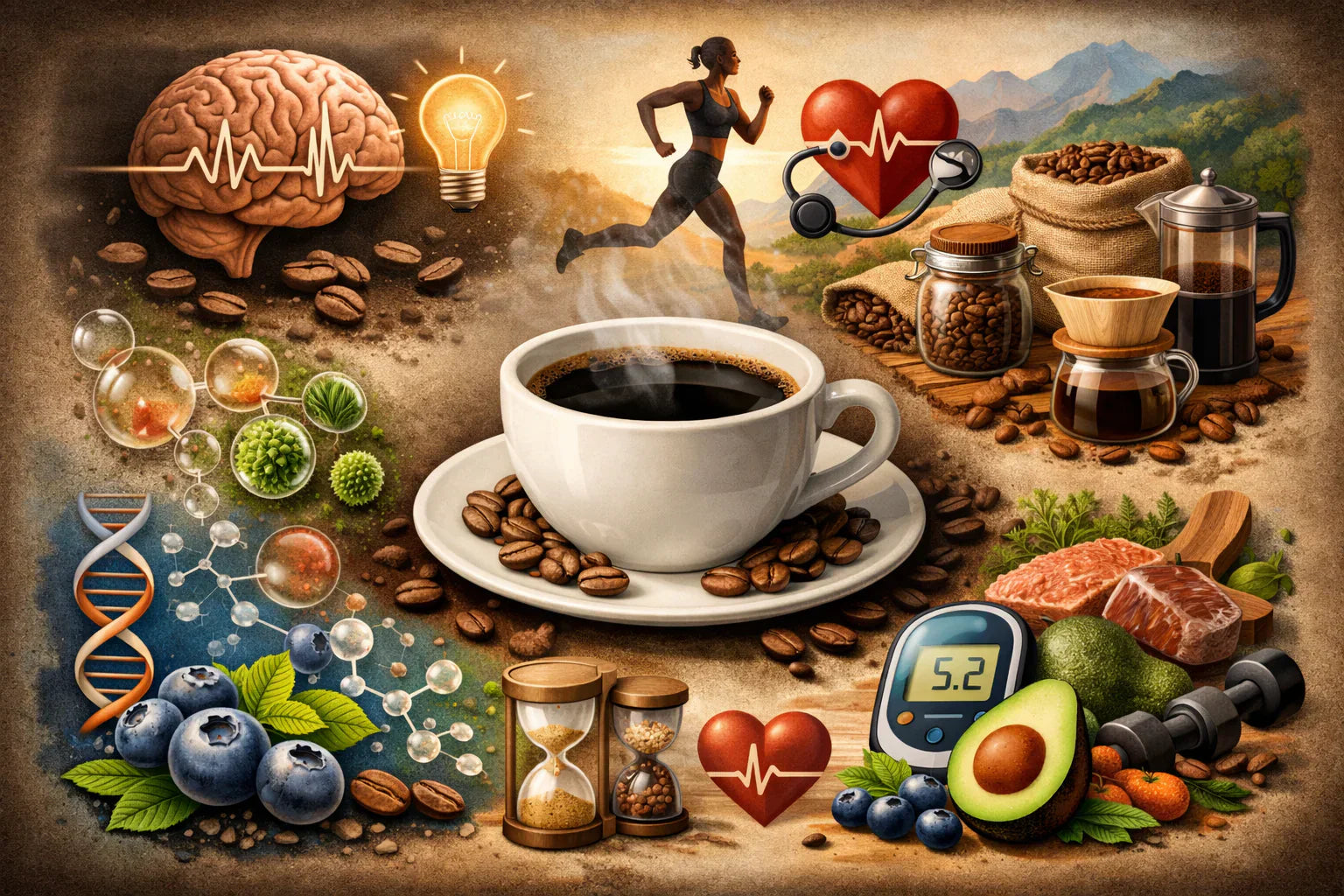
Les bienfaits (et les mythes) de la consommation quotidienne de café
Publié par SpecialityCoffee.ca

Introduction : Café, santé et beaucoup de confusion
Le café est l'une des boissons les plus consommées au monde, et aussi l'une des plus mal comprises. Pendant des décennies, il a été associé à des effets néfastes sur la santé, souvent sur la base de recherches obsolètes ou incomplètes. Aujourd'hui, des études à grande échelle dressent un tableau bien plus nuancé et positif.
En 2026, le café figure parmi les aliments les plus étudiés , avec des centaines d'études évaluées par des pairs examinant ses effets sur la santé physique et cognitive. Consommé avec modération, le café peut s'intégrer à un mode de vie sain, surtout lorsqu'il s'agit d'un café de spécialité de qualité, préparé dans les règles de l'art.
Cet article explore les véritables bienfaits du café sur la santé grâce à une consommation quotidienne , démêle le vrai du faux et explique comment apprécier le café sans inquiétude inutile.
Que contient réellement le café ?
Le café est bien plus que de la caféine. Une tasse de café contient :
- Antioxydants (polyphénols)
- Acides organiques
- Minéraux (en petites quantités)
- Composés bioactifs qui influencent le métabolisme et les fonctions cérébrales
En réalité, pour beaucoup de gens, le café est la principale source d'antioxydants dans leur alimentation quotidienne.
Les associations observées dans les études ne prouvent pas que le café prévient une maladie. Il ne remplace pas un traitement. Selon Santé Canada, le maximum recommandé est de 400 mg de caféine par jour chez l’adulte et de 300 mg pendant la grossesse, l’allaitement ou lorsqu’une grossesse est envisagée. Ces quantités incluent toutes les sources de caféine. Une sensibilité individuelle peut justifier une quantité plus faible.
Café et santé : ce que suggèrent les recherches
1. Café et performances cognitives
La caféine est un stimulant naturel qui :
- Améliore la vigilance
- Améliore la concentration
- Réduit la fatigue perçue
- Améliore le temps de réaction
Il a été démontré qu'une consommation modérée de café favorise les performances mentales, notamment lors de tâches nécessitant une attention soutenue.
2. Apport en café et en antioxydants
Le café contient d'importantes quantités d'antioxydants, qui contribuent à neutraliser les radicaux libres dans l'organisme. Ces composés sont liés à :
- Réduction de l'inflammation
- Protection cellulaire
- Avantages à long terme pour la santé
Les cafés de spécialité à torréfaction légère à moyenne ont tendance à conserver une activité antioxydante plus importante que les cafés à torréfaction très foncée.
3. Café et santé métabolique
Des recherches suggèrent qu'une consommation régulière de café pourrait être associée à :
- Amélioration de la sensibilité à l'insuline
- Réduction du risque de diabète de type 2
- Soutien des fonctions métaboliques
Ces bienfaits semblent les plus marqués lorsque le café est consommé sans excès de sucre ni additifs artificiels .
4. Café et performance physique
La caféine augmente le taux d'adrénaline et mobilise les acides gras, ce qui peut améliorer les performances physiques et l'endurance. C'est pourquoi le café est souvent consommé avant l'effort.
5. Le café et ses effets à long terme sur la santé
De vastes études observationnelles ont établi un lien entre une consommation modérée de café et un risque moindre de :
- Certaines maladies neurodégénératives
- maladie du foie
- Complications cardiovasculaires (en cas de consommation responsable)
Bien que le café ne soit pas un médicament, les études montrent de façon constante qu'une consommation modérée n'est pas nocive pour la plupart des gens .
Quelle quantité de café est considérée comme « saine » ?
La plupart des autorités sanitaires s'accordent à dire qu'une consommation modérée de café est sans danger pour les adultes en bonne santé.
Directives générales :
- La quantité de caféine varie selon le volume de la tasse et la préparation
- Limite supérieure générale : jusqu'à 400 mg de caféine par jour
La sensibilité varie d'une personne à l'autre et la tolérance individuelle doit toujours guider la prise.
Mythes courants sur les bienfaits du café pour la santé (démystifiés)
Mythe n° 1 : Le café déshydrate
Le café a un léger effet diurétique, mais les consommateurs réguliers développent une tolérance. Le café contribue à l'apport hydrique quotidien.
Mythe n° 2 : Le café est mauvais pour le cœur
Pour la plupart des gens, une consommation modérée de café n'est pas associée à un risque cardiovasculaire accru.
Mythe n° 3 : Le café freine la croissance
Aucune preuve scientifique ne vient étayer cette affirmation.
Mythe n°4 : Le café torréfié foncé est plus sain
Le degré de torréfaction n'est pas un indicateur de la valeur nutritionnelle. Les torréfactions légères et moyennes préservent souvent davantage de composés bénéfiques.
Café, acidité et digestion
Certaines personnes ressentent des troubles digestifs après avoir consommé du café. Cela est influencé par :
- Niveau de torréfaction
- Méthode de préparation
- Qualité du café
- sensibilité individuelle
Conseils pour réduire l'inconfort :
- Choisissez des cafés moins acides.
- Évitez la sur-extraction
- Boire du café avec les repas
- Optez pour des grains de qualité supérieure.
Le prix, la fraîcheur et la mention « café de spécialité » ne permettent pas de garantir une meilleure tolérance digestive. Si le café vous incommode, adaptez votre consommation à votre tolérance et demandez conseil au besoin.
Le rôle de l'infusion dans la santé du café
La façon dont le café est préparé a son importance :
- Les filtres en papier peuvent réduire la concentration de certains composés.
- Un café trop extrait augmente l'amertume et l'irritation.
- Une préparation adaptée améliore le goût, sans garantir une meilleure tolérance digestive.
Une bonne préparation améliore à la fois la saveur et le confort .
Les additifs du café sont plus importants que le café lui-même.
De nombreuses associations négatives avec la santé ne proviennent pas du café lui-même, mais des ingrédients qui y sont ajoutés :
- Sucre
- crèmes artificielles
- Sirops
Le café de spécialité se déguste souvent noir ou avec un minimum d'ajouts, ce qui préserve ses bienfaits naturels.
Qui devrait modérer sa consommation de café ?
Certaines personnes devraient faire preuve de prudence :
- Les personnes sensibles à la caféine
- Les personnes atteintes de certaines affections médicales
- Femmes enceintes (limites inférieures recommandées)
Écouter son corps est essentiel.
Pourquoi le café de spécialité s'intègre-t-il à un mode de vie soucieux de sa santé ?
Le café de spécialité met l'accent sur :
- Fraîcheur
- Approvisionnement de qualité
- torréfaction propre
- Transparence
Ces facteurs contribuent à un meilleur goût et souvent à une meilleure tolérance.
En conclusion : le café n’est pas le problème.
Pour la plupart des gens, le café n'est pas à craindre ni à éliminer. Consommé avec modération et préparé correctement, le café peut être :
- Agréable
- Avantageux
- Un élément d'un mode de vie équilibré
La clé, c'est la qualité, la modération et une consommation responsable.