

Café Pista: Montréal’s Coffee-Bike Story and Roaster Guide
Montréal’s coffee culture is built around places people return to: a familiar counter, a good conversation and a cup worth slowing down for. Café Pista brings that neighbourhood spirit into a collection that stretches from comforting espresso blends to vivid single origins. Its story began on a bicycle, and its coffees now offer plenty of ways to explore the work of producers around the world from your own kitchen.
This guide introduces Pista’s beginnings, its approach to sourcing and roasting, and the 12 coffees in our Café Pista collection at the time of writing. Whether you prefer a chocolate-rich cappuccino, a bright pour-over or a carefully sourced decaf, we will help you find a starting point that fits your taste.
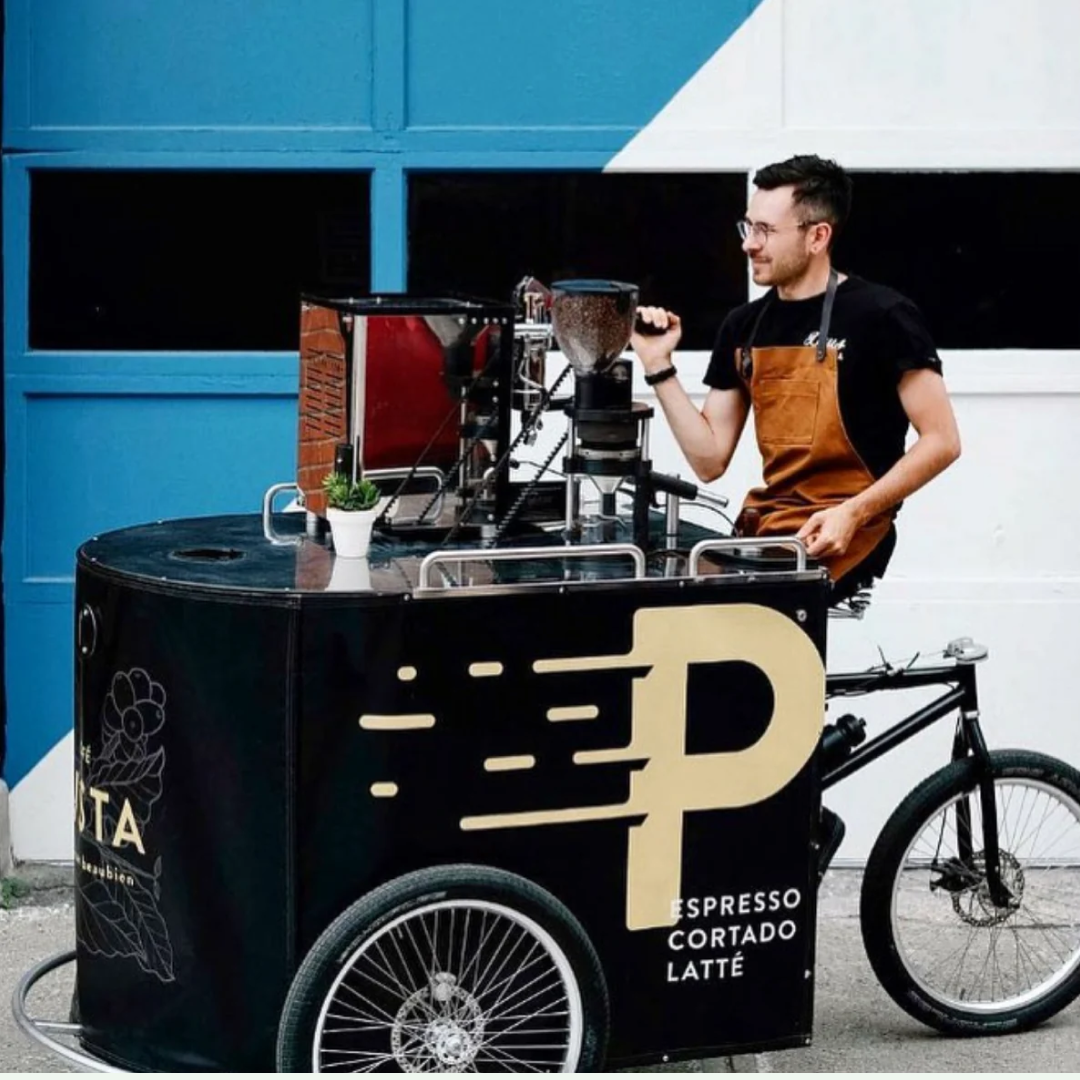
Photo : Café Pista.
The story of Café Pista: coffee on the move
Maxime Richard founded Pista in 2014 with a mobile coffee bicycle. A PME MTL profile describes the Vélopresso travelling through Rosemont–La Petite-Patrie, with pedals driving the grinder and gas heating the water. The first permanent café opened in 2016, at Beaubien and Saint-Vallier. Richard developed the business with partners Julien Charmillot and Alexandre Séguin; roasting followed in December 2018.
That beginning gives Pista a particularly local story. Before a bag reached a home coffee shelf, the project was meeting people outdoors and around the neighbourhood. It is an appealing way to discover specialty coffee: through an enjoyable drink, followed by curiosity about what made it taste that way.
From the counter to the coffee bag
Pista’s official history places its packaged-coffee launch in 2018, a second café on boulevard Saint-Laurent in 2019, and a third café with a new roasting space in 2020. The business connects coffee with community and design, while making specialty coffee approachable.
For the home brewer, the collection offers that same invitation in several forms. You can begin with an espresso blend whose chocolate notes feel familiar, then try a named producer’s coffee or compare two origins. There is no required order. The best first bag is the one you are excited to brew tomorrow morning.
The people behind the roasting approach
In a 2023 interview with The Roasters Pack, Alexandre Séguin, introduced as co-owner and head roaster, described a preference for revealing a coffee’s terroir while keeping the roasting signature restrained. He also discussed planning purchases and returning to producers over time. Those ideas provide useful context for reading the names and origins on Pista’s bags.
What Café Pista focuses on
Following the producer as well as the origin
Pista says it works with farms and selected importers, values recurring relationships, and uses blind tasting to help select lots. Its official story also identifies a Loring roaster among its environmental measures. These are the roaster’s stated practices; each product’s producer, process and flavour description offer the practical details for choosing a bag.
In our collection, those details create several interesting connections. Colombia appears through washed coffees, a floral semi-washed Caturra and a decaf. The Monkaaba name connects a Pink Bourbon from Luis Marino Ortega with the Guarapo decaf project. Brazil appears in two espresso blends, paired with different origins. A country name is therefore the beginning of the story, with plenty of variation inside it.
Finding your preferred expression
Our Tandem and Saison listings describe dark roasts intended for espresso and milk drinks. The single origins are listed as light to medium and suitable for espresso or filter. That gives you a useful first distinction when shopping, especially if you are buying for an automatic machine or preparing mostly black coffee.
A roast category cannot tell you everything about the finished cup. Compare the flavour notes too: milk chocolate and hazelnut point toward a different experience from mango and pineapple. We use those descriptions below to suggest starting points, rather than presenting every coffee as interchangeable.
Which Café Pista coffee should you try first?
Start with how you drink coffee most often. These are our buying suggestions based on the profiles listed in our store.
| If you enjoy... | A good place to start | What to look for |
|---|---|---|
| Rich espresso and milk drinks | Tandem or Saison | Dark chocolate, hazelnut or caramel |
| A sweet, nutty single origin | Jorge Arturo Serrano Villanueva | Milk chocolate, hazelnut and cane sugar |
| Bright fruit with familiar sweetness | El Cortijo or El Naranjo | Apple, citrus, cherry and caramel or marmalade |
| Tropical fruit in black coffee | Bookkisa Natural | Mango, pineapple and blueberry |
| Floral or delicate fruit notes | Andres Martinez Caturra Floral | Honey, mandarin and flowers |
| A decaffeinated option | Guarapo Decaf | Chocolate, plum and honey |
Tasting notes are descriptions of flavour impressions. They help you choose a direction, while your water, grinder and preparation influence what you notice. Visit each product page for the current lot, bag size, roast information and availability.
Explore Café Pista’s coffees
Tandem: a rich introduction to Pista espresso
Tandem combines Brazilian and Burundian coffees, with listed notes of dark chocolate, molasses and hazelnut. The current blend brings together José Schiavo’s coffee from Espírito Santo and Kawa Zamurabawe coffee from Bururi. Our listing describes a developed roast and a creamy cup suited to espresso, automatic machines and milk drinks.
This is our natural starting point for someone whose daily order is a cappuccino or latte. Those deeper sweet and nutty descriptors give you something familiar to follow while adjusting your machine. If you also enjoy espresso on its own, taste a small sip before adding milk and notice which flavours remain most prominent in the finished drink.
Saison: caramel, chocolate and a traditional espresso direction
Saison pairs Brazil and Honduras in a dark-roasted blend inspired by Italian espresso tradition. Its listed profile is caramel, chocolate and syrup, with Brazilian coffee from Fazenda Pedra Redonda and Honduran coffee from producers around Siguatepeque. It is another accessible choice for espresso and milk drinks.
Choose Saison when caramel sweetness and a full-bodied description sound especially appealing. To explore the two blends, prepare Saison and Tandem with your usual espresso setup on different mornings, keeping your milk quantity consistent. You may find that one better matches your everyday drink even when both sit in the comforting, chocolate-led part of the range.
Jorge Arturo Serrano Villanueva: chocolate and hazelnut from Honduras
Jorge Arturo Serrano Villanueva is a washed Honduran lot from Tierra de Leyendas in Siguatepeque. The varieties are Lempira and Parainema, and the listed notes are milk chocolate, hazelnut and cane sugar. Our product description connects the family’s farm work with reforestation and neighbouring coffee-growing families.
We would suggest this bag to someone moving from blends into single origins while keeping a familiar flavour vocabulary. It is listed for both espresso and filter, so you can explore it using the equipment you already own. Try a black cup as well as your normal preparation to see how you experience its sweetness without milk.
Finca La Hermosa: Guatemala with a gentle spice accent
Finca La Hermosa comes from Max Pérez’s farm on the slopes of Acatenango in Guatemala. This washed Bourbon and Caturra lot lists milk chocolate, plum and cardamom. It offers another approachable single-origin direction, with a fruit and spice description that distinguishes it from the Honduran selection.
If chocolate is usually your favourite note but you want a little more to explore, this is a good candidate. Compare it with Jorge Arturo Serrano Villanueva using the same brewer. Look for broad differences in sweetness, fruit character and finish before trying to identify something as specific as cardamom.
El Cortijo and El Naranjo: two perspectives on Nariño
El Cortijo brings together family-farm coffees around Villa Moreno in Buesaco, Colombia. Our listing names Ximena Cifuentes, Luis Antonio Martínez and Noé Montánchez, and describes a washed lot of Caturra, Colombia and Castillo grown at 2,100–2,400 metres. Apple, citrus and caramel make it a useful starting point for a sweet but brighter cup.
El Naranjo is also from Nariño, with red apple, cherry and marmalade notes. The current listing identifies Álvaro Iván Muñoz Gómez at La Macarena and connects the coffee with Azahar’s Proyecto Recolectores, a project supporting coffee pickers through training and improved pay. It is offered for espresso or filter.
These two bags make an inviting tasting pair. Both are washed Colombian coffees, yet the producer details and flavour descriptions give you different threads to follow. Prepare them in the same way and let them cool a little. Notice whether you prefer the citrus-and-caramel direction or the cherry-and-marmalade description, without assuming that any single farming detail explains every difference.
Colectivo: Luis Marino Ortega’s Pink Bourbon
Colectivo – Luis Marino Ortega is a washed Pink Bourbon from San Agustín, Huila. Our listing describes his work with the Monkaaba collective and a lot with blackcurrant, tangerine and meringue notes. The coffee undergoes dry fermentation after depulping, followed by washing and raised-bed drying.
Consider it if you enjoy fruit-led coffees with a sweet counterpoint. As a filter coffee, it offers a different set of descriptors from El Cortijo and El Naranjo. It also makes an interesting choice for someone exploring named varieties: use Pink Bourbon as one detail in the coffee’s identity, alongside its producer, origin and processing.
Andres Martinez Caturra Floral: honey and mandarin
Andres Martinez Caturra Floral takes the Colombian selection in another direction. This semi-washed Caturra lists honey, mandarin and floral notes. Our product description details controlled fermentation of whole cherries before depulping, followed by additional fermentation in closed tanks and drying on raised beds.
We would shortlist it for drinkers who look for floral aromatics and rounded sweetness. The current offering is a 200 g bag, while the other coffees in this guide are listed at 300 g, so check the size when comparing your options. Brew it with a familiar recipe first; that makes the new coffee the main thing you are exploring.
La Linda: a washed Bolivian Caturra
La Linda is a washed Red Caturra from the Rodríguez family’s Finca La Linda in Caranavi, Bolivia. Its lemon, cocoa and brown-sugar notes suggest a combination of brightness and familiar sweetness. Our listing identifies Agricafé as the direct sourcing partner, with logistical support from Apex Coffee Imports.
This is an appealing option if you want to explore an origin beyond your usual rotation without choosing solely for an unusual process. Try it as filter coffee and pay attention to the balance between the citrus description and the cocoa notes. It can also be compared with El Cortijo for two different washed coffees with sweet, bright profiles.
Bookkisa Natural: tropical fruit from Guji
Bookkisa Natural comes from smallholder farmers in Ethiopia’s Guji region, with processing by Ture Waji’s Sookoo Coffee at Dambi Uddo. The listed varieties are 74110 and 74112. Whole-cherry drying on raised beds accompanies a flavour profile of mango, pineapple and blueberry.
Of the coffees featured here, this is one of our clearest suggestions for someone drawn to tropical-fruit descriptions. Try it black to explore that profile, particularly if you usually choose chocolate-led espresso. Tasting it beside a washed coffee can be rewarding, although origin, variety and other differences also contribute to what you perceive.
Gundikhan Lot 3: a distinctive Indian single origin
Gundikhan Lot 3 is a washed Chandragiri from Saif Ulla’s Gundikhan Estate in Karnataka, part of the KaadKaapi collective. Our listing describes shade-grown coffee and gives tamarind, chocolate and nutmeg as the tasting notes.
Choose it when you want a different combination of fruit, cocoa and spice descriptors. It is a useful reminder to shop by the particular lot: a country alone cannot tell you which flavours you will enjoy. For a focused comparison, pair it with Finca La Hermosa and look at how you experience the spice and chocolate impressions in each.
Guarapo Decaf: Colombian coffee with a traceable story
Guarapo Decaf comes from Huila, through the Monkaaba collective and Semilla Coffee. The washed coffees are decaffeinated using sugarcane-derived ethyl acetate. Chocolate, plum and honey are the listed notes, and the coffee is offered for both espresso and filter.
Our suggestion is to choose it with the same attention you would give any other bag: consider the flavours, preparation and producer information. It provides a decaffeinated route into Pista’s Colombian selection. Decaf still contains a small amount of caffeine, so it should not be understood as completely caffeine-free.
How to enjoy Café Pista at home
Build around your everyday drink
For milk drinks, start with Tandem or Saison and keep your milk quantity consistent while adjusting the espresso. For black filter coffee, work from the flavour descriptions: Bookkisa for tropical fruit, La Linda for lemon and cocoa, or Colectivo for blackcurrant and tangerine. These are starting suggestions, and your own preference should guide the next bag.
Make the first cup easy to repeat
Use your normal recipe and weigh the coffee and water. For espresso, record the dry dose, beverage weight and extraction time. For filter, note the grind setting and total water. Taste before changing several things. One adjustment at a time makes it easier to understand what improved the cup.
Look at the roast date on the bag and the product’s preparation guidance. Keep beans sealed and away from heat, moisture and direct light, and grind just before brewing when possible. A new coffee may need a different grinder setting even when you keep the same recipe.
Turn two bags into a small tasting
Choose a pairing with a clear question: Tandem and Saison for your preferred milk drink, El Cortijo and El Naranjo for two Nariño coffees, or Bookkisa and La Linda for contrasting flavour descriptions. Taste side by side using the same method. Write down simple impressions such as sweeter, fuller, fruitier or more delicate, then decide which you would most like to drink again.
Café Pista: frequently asked questions
Where is Café Pista from?
Café Pista is a Montréal coffee business founded by Maxime Richard in 2014. It began with a mobile coffee bicycle and later expanded into cafés and roasting.
Which Pista coffee is best for a latte?
Our starting suggestions are Tandem and Saison. Both are listed as dark-roasted blends for espresso and milk drinks, with chocolate-led flavour profiles.
Does Pista offer lighter coffees for filter brewing?
Yes. Our single-origin listings include light-to-medium roasts suitable for filter and espresso, with options such as Bookkisa Natural, La Linda and El Cortijo.
Is there a Pista decaf?
Yes. Guarapo is a Colombian sugarcane-process decaf with listed notes of chocolate, plum and honey.
Are all bags the same size?
At the time of writing, Caturra Floral is listed at 200 g and the other featured coffees at 300 g. Check the current product page before ordering.
Where can I buy Café Pista coffee online?
Explore Café Pista at Speciality Coffee Canada for the current selection. We serve coffee lovers in Canada and the United States; product pages show the available lots and their details.
A little Montréal in your daily coffee ritual
Pista gives you several ways to begin: a comforting blend, a named producer’s single origin or a decaf with its own story. Choose the flavours you already love, then use the next bag to explore something new. The pleasure is in discovering what you enjoy, one cup at a time.
Explore our Café Pista coffees
History and sourcing context checked in November 2026 using the linked sources. Coffee profiles refer to the lots listed in our store when this guide was written. Selection, blend components and availability may change.

