Specialty Coffee Roasters: The Art, Science, and Passion Behind Every Perfect Cup
Behind every cup of exceptional coffee is a story: that of origin, know-how and passion.
While many are interested in the preparation methods or varieties of beans, few realize the essential role of the specialty coffee roaster.
In Canada and around the world, these artisans of taste have revolutionized the way we perceive coffee. Their mission: to transform a simple green bean into an unforgettable sensory experience.
But what does a specialty coffee roaster actually do? How does it differ from an industrial roaster? And above all, how do you recognize the best of them?
Let's discover together the fascinating world of artisanal roasting, where art meets scientific precision.

1. What is a Specialty Coffee Roaster?
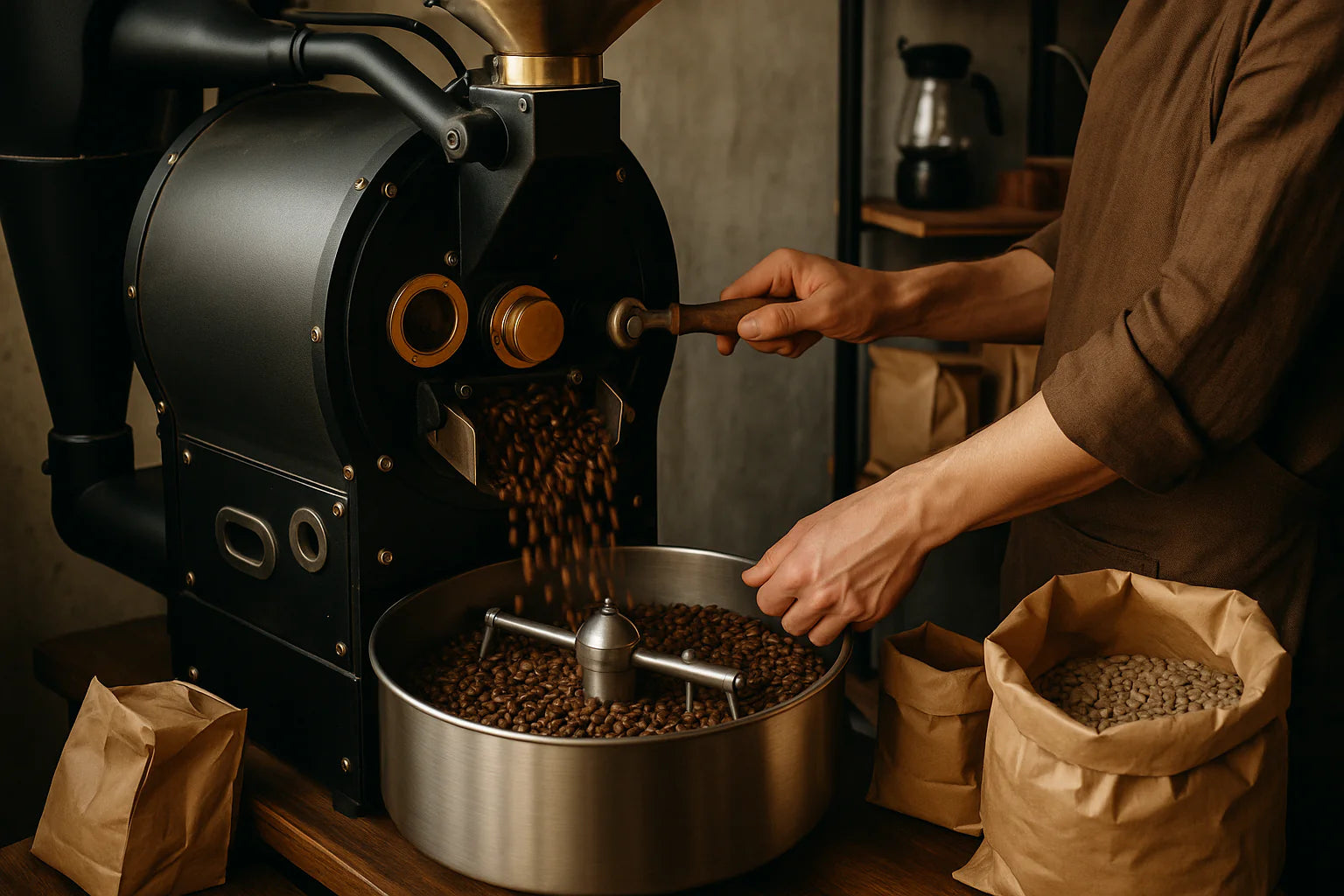
A specialty coffee roaster is not just a machine operator.
He is a craftsman, a scientist and a passionate, capable of revealing the full aromatic potential of a bean thanks to a perfect mastery of heat, time and airflow.
His goal? Highlighting the distinctive flavors and unique aromatic nuances of each origin — whether it's the fruity and floral notes of Ethiopia or the caramelized sweetness of Honduras.
Roasting is based on three fundamental pillars:
- Time: the length of time the grain is cooked.
- Temperature: direct influence on aromas.
- Air circulation: control of heat distribution.
The slightest adjustment in any of these parameters can totally transform the taste profile of a coffee.
2. Specialty Roasting vs Industrial Roasting
To understand the importance of specialty coffee, we need to compare the two approaches:
| Aspect | Specialty Roasters | Commercial Roasters |
|---|---|---|
| Roast batches | Small, precise batches | Large, uniform batches |
| Focus | Quality, flavor, sustainability | Volume and profit |
| Sourcing | Direct trade, traceable origins | Bulk coffee suppliers |
| Roasting style | Adjusted per origin and altitude | One-size-fits-all dark roast |
| Customer base | Coffee lovers and baristas | Mass-market consumers |
In short, specialty coffee roasters see coffee as a noble product, not a commodity.
3. The Roasting Process: When Science Meets Art
Each stage of roasting influences the final flavor. Here are the main phases of the process:
a) Drying
The green grain contains about 10-12% moisture. The roaster heats slowly to remove it without burning the bean.
b) The Maillard Reaction
This is where the magic happens. Sugars and amino acids react to create hundreds of aromatic compounds — that irresistible smell of freshly roasted coffee.
c) The "First Crack"
Around 196 °C, the grain expands and emits a loud cracking sound. This moment marks the transition between a light and medium roast.
d) Development
This last phase is crucial. Too short, the coffee will be acidic; too long, it will become bitter. The roaster adjusts the temperature curve to the second.
Each coffee has its own unique roast curve — a true taste signature.
4. The Origins of Coffee and Their Flavors
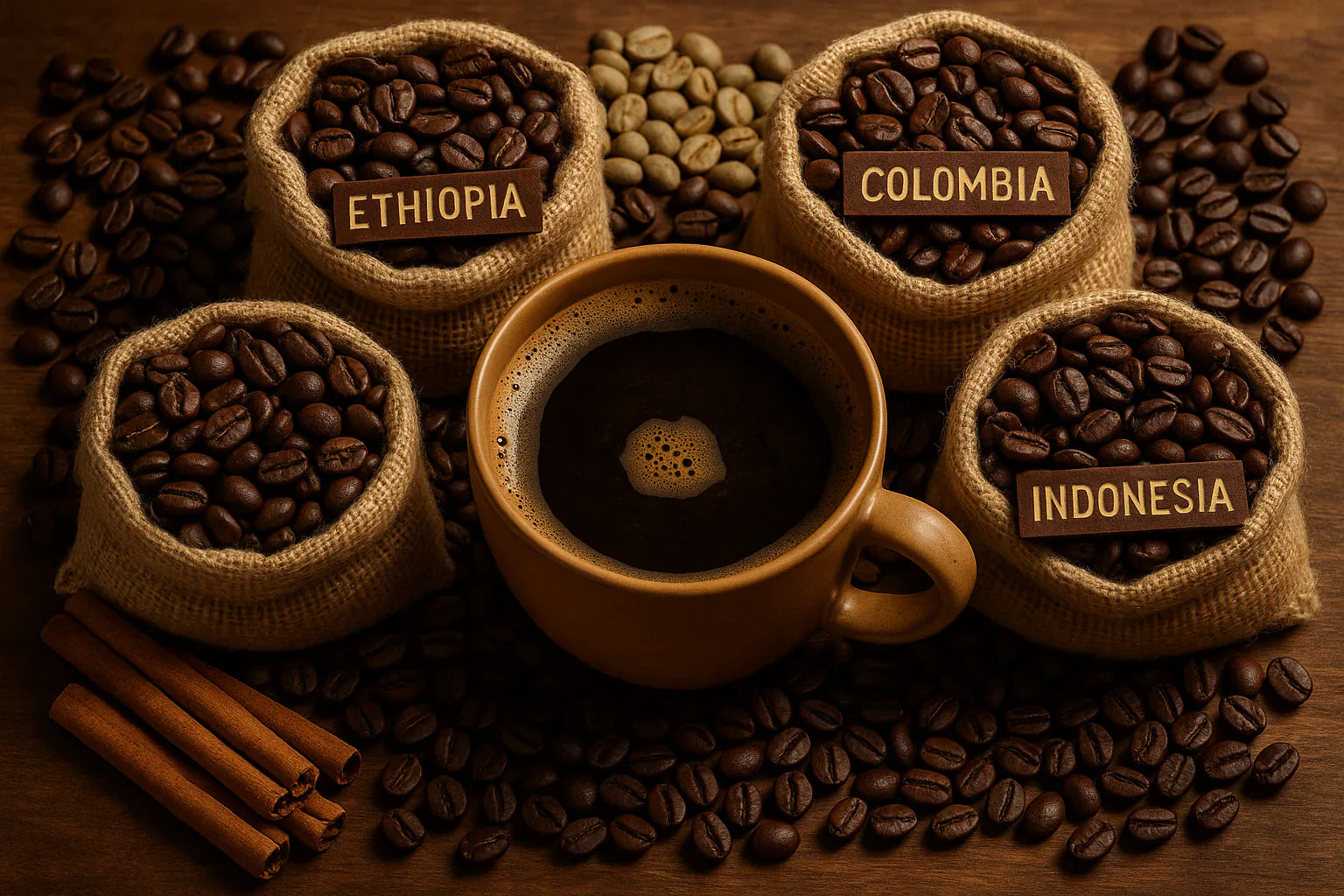
Specialty coffee roasters highlight the terroir and uniqueness of each origin.
- Ethiopia: floral, fruity and light.
- Colombia: balanced, sweet and chocolatey.
- Thailand: round, slightly spicy and sweet.
- Honduras: rich, soft and velvety.
- Costa Rica: Bright, tangy and citrusy.
To deepen your knowledge of coffee varieties and flavor profiles, check out this article:
? The different types of coffee explained
5. Why Specialty Coffee Roasters Are Essential?
a) They Guarantee Quality at Every Step
Specialty roasters ensure quality from farm to packaging. They often work in direct trade with producers.
b) They Preserve Freshness
Their coffee is roasted in small batches and delivered quickly, ensuring intact aromas.
c) They share their knowledge
These artisans educate consumers, explaining roasting methods, origins, and the best ways to prepare coffee.
d) They innovate
Experimental roasts, anaerobic fermentations, "honey" or "barrel aged" processes: their creativity is constantly redefining the standards.
6. How to Choose a Good Specialty Coffee Roaster
Here are some criteria for choosing the right one:
- Transparency: Does the roaster share details about the origin and process?
- Freshness: Is the roast date indicated?
- Diversity: Does it offer single-origin coffees and limited editions?
- Ethical commitment: does it focus on sustainability and fair trade?
- Education: Does it offer workshops or tasting sessions?
7. Preparing Your Coffee Properly: Honoring the Work of the Roaster
Even the best beans deserve careful preparation to reveal their full potential.
Preparation Tips:
- Grind just before extraction to preserve aromas.
- Use filtered water between 90°C and 96°C.
- Stick to the right ratio – 1 g of coffee to 16 g of water.
- Test several methods: espresso, filter, Chemex, or plunger.
To master the art of extraction, check out:
? How to make great coffee
8. Caffeine: The Secret of Energy
Why does coffee wake us up so well?
Caffeine blocks adenosine receptors — the molecule responsible for feeling tired — which boosts alertness and concentration.
To understand the effects of caffeine on your body, read this article:
? Why does caffeine keep us awake
9. The Best Specialty Coffee Roasters in Canada
Here are some of the key players in Canadian specialty coffee:
-
Speciality Coffee Canada – Ministry of Roasters
Small batch artisanal roast, with unique origins (Honduras, Ethiopia, Thailand). - Phil & Sebastian (Calgary) – Transparency and vibrant flavour profiles.
- 49th Parallel (Vancouver) – Consistent quality and direct trade.
- Pilot Coffee Roasters (Toronto) – Balance and sustainability.
- Detour Coffee (Ontario) – Simplicity and innovation.
Each of these roasters embodies the passion and rigor of specialty coffee.
10. The Future of Specialty Roasting
The future looks promising and technological:
- Carbon neutral roasting.
- Using AI for thermal control.
- Eco-friendly and compostable packaging.
- Direct collaboration with producer communities.
Consumers are now looking for transparency, ethics and aromatic complexity — and specialty coffee roasters are the first to respond.
Conclusion
Specialty coffee roasters are the true artisans of our caffeinated daily life. Their know-how transforms a simple green bean into a concentrate of emotion and pleasure.
Behind each aroma, there is a story: that of a producer, an origin, and a passionate roaster.
So, the next time you enjoy a perfectly balanced cup, take a moment to appreciate the work of these artists of taste — and support those who roast with heart and precision.
☕ FAQ — Specialty Coffee Roasters
1. What is a specialty coffee roaster?
He is an artisan who roasts in small batches to reveal the aromatic potential of each origin.
2. How do specialty roasters choose their beans?
Through direct trade and traceability, with a focus on quality and fairness.
3. How long does roasted coffee stay fresh?
Between 2 and 4 weeks after roasting, depending on storage conditions.
4. Which roast is ideal for an espresso?
A medium to dark roast for the perfect balance of sweetness and intensity.
5. Do specialty roasters offer decaffeinated coffee?
Yes, most of them use natural processes such as Swiss Water or CO₂.
6. How much caffeine is in a medium cup?
Approximately 80 to 120 mg per 250 ml, depending on the type and method of extraction.
7. Where to buy specialty coffee in Canada?
On SpecialityCoffee.ca, where each coffee is carefully selected and roasted.