How Long After Roasting Should You Drink Coffee? The Complete Guide to Resting Freshly Roasted Coffee
Freshly roasted coffee sounds ideal.
When people first discover specialty coffee, one of the most common assumptions is simple: the fresher the coffee, the better it must taste.
But specialty coffee is a little more complicated.
Coffee begins releasing carbon dioxide (CO₂) after roasting through a process commonly known as degassing. During the first days and weeks after roasting, the coffee is continuously changing.
That means a coffee roasted yesterday isn't necessarily going to taste better than the same coffee after 10, 20, or even 30 days.
In fact, some modern light-roasted specialty coffees can become easier to brew and more expressive after being allowed to rest.
Understanding this process can completely change the way you think about coffee freshness.
At Speciality Coffee, we bring together exceptional coffees from respected specialty coffee roasters around the world, giving Canadian coffee enthusiasts the opportunity to explore different origins, varieties, processing methods, and roasting philosophies.
Explore our latest coffees here:
And if you want to learn more about coffee brewing, processing, origins, roasting, and the world's leading specialty coffee roasters, visit our All About Speciality Coffee Blog:
https://specialitycoffee.ca/blogs/all-about-specialty-coffee
Quick Answer: How Long Should Coffee Rest After Roasting?
There is no universal resting period that works for every coffee.
Roast development, bean density, origin, processing, packaging, storage conditions, and brewing method can all influence how a coffee develops after roasting.
However, the following can be used as practical starting points rather than strict rules:
| Roast Style | Practical Starting Point |
|---|---|
| Dark Roast | Around 3–7 days |
| Medium Roast | Around 5–14 days |
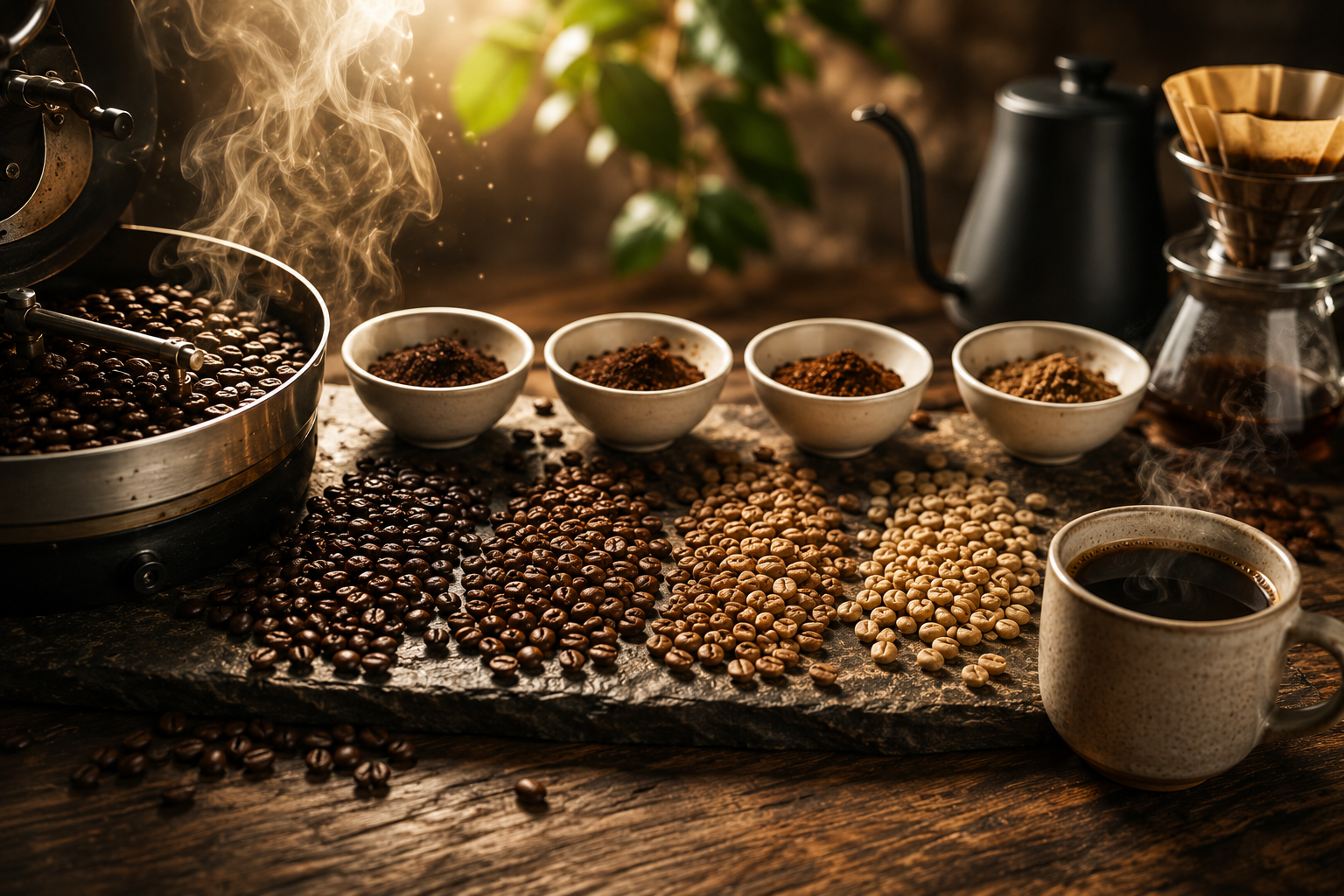
| Light Roast | Around 10–21 days |
| Very Light Roast | Around 2–4+ weeks |
These ranges should not be treated as expiration dates or official industry standards.
A coffee may taste excellent before or after these suggested windows.
The most useful approach is to observe how your particular coffee changes over time and adjust your brewing accordingly.
What Happens to Coffee Immediately After Roasting?
Coffee undergoes major physical and chemical changes during roasting.
Heat transforms the green coffee bean, creating many of the aromatic compounds we associate with roasted coffee.
At the same time, gases—particularly carbon dioxide—are produced and become trapped within the porous structure of the roasted bean.
After roasting ends, those gases don't disappear immediately.
They gradually escape.
This process is called degassing or off-gassing.
Research discussed by the Specialty Coffee Association shows that CO₂ loss from whole roasted coffee is particularly rapid during approximately the first 20 days after roasting before slowing substantially.
This helps explain why the first few weeks after roasting can be such a dynamic period.
Your coffee isn't simply getting "older."
It is continuously changing.
What Is Coffee Degassing?
Degassing is the gradual release of gases trapped inside roasted coffee.
Carbon dioxide is especially important.
When coffee beans are roasted, their internal structure becomes highly porous. CO₂ produced during roasting becomes trapped inside that structure and is progressively released during storage.
This is also why freshly roasted coffee often produces a dramatic bloom during pour-over brewing.
When hot water reaches freshly ground coffee, trapped CO₂ is released rapidly.
The same phenomenon contributes to crema during espresso extraction.
If you've ever poured water onto freshly ground coffee and watched the coffee bed expand dramatically, you've witnessed degassing in action.
But while some gas is completely normal, very fresh coffee can sometimes contain enough trapped gas to make brewing less predictable.
Can Coffee Be Too Fresh?
Yes, depending on the coffee and brewing method.
Coffee brewed extremely soon after roasting may behave differently from coffee that has rested.
A very fresh coffee can produce an aggressive bloom as trapped gas rapidly escapes.
That gas can interfere with how evenly water interacts with the coffee grounds.
As the coffee rests, some CO₂ naturally escapes.
Brewing can then become easier and more predictable.
This is one reason many specialty coffee enthusiasts don't immediately open a bag the day it arrives from the roaster.
They allow it to rest.
However, this doesn't mean coffee must always rest for several weeks.
A darker roast may develop relatively quickly, while a dense, very lightly roasted coffee may benefit from considerably more time.
Why Roast Level Matters
Roast development affects the physical structure of coffee and how gas is produced and released.
Research presented by the Specialty Coffee Association has demonstrated differences in degassing behaviour between light, medium, and darker roasted coffees.
Generally, darker roasting produces greater structural changes in the bean and can be associated with faster degassing.
Light-roasted coffees behave differently.
This helps explain why applying one universal freshness rule to every specialty coffee doesn't work particularly well.
How Long Should Dark Roast Coffee Rest?
Darker roasted coffees generally don't require the extended resting periods sometimes associated with modern light roasts.
As a practical starting point, you might begin brewing a darker roast approximately 3–7 days after roasting.
Again, this isn't a universal rule.
If the coffee already tastes balanced and extracts consistently earlier, there's no reason to wait simply because a calendar says you should.
Darker coffees can also lose desirable aromatic characteristics over time, particularly when exposed to oxygen, heat, and moisture.
For this reason, proper storage remains important even after the initial resting period.
How Long Should Medium Roast Coffee Rest?
For medium-roasted specialty coffee, approximately 5–14 days can be a useful starting range.
Medium roasts often occupy a comfortable middle ground.
They may release gas faster than very light coffees while maintaining enough structure to remain expressive for an extended period.
Depending on the coffee, you might notice its sweetness and balance improving during the second week.
The best approach remains tasting rather than blindly following a date.
How Long Should Light Roast Coffee Rest?
This is where coffee resting becomes particularly interesting.
Modern specialty coffee has increasingly embraced lighter roasting styles designed to preserve the characteristics created by origin, variety, processing, and terroir.
For many light-roasted coffees, approximately 10–21 days after roasting can be a useful place to begin experimenting.
Some coffees may taste excellent earlier.
Others may continue developing well beyond three weeks.
When a light roast is extremely fresh, you might notice that the coffee tastes less expressive than expected or is more difficult to extract consistently.
After additional rest, the same coffee may become more aromatic, sweeter, clearer, and easier to brew.
This is why experienced specialty coffee drinkers often taste a coffee repeatedly rather than deciding whether they like it based on the first brew.
How Long Should Very Light Roast Coffee Rest?
Very light roasting has become increasingly associated with some modern specialty coffee roasters.
These coffees can behave differently from traditional medium and dark roasts.
A practical starting point for very lightly roasted coffees may be two to four weeks after roasting, with some coffees continuing to develop beyond that period.
Again, this isn't a universal scientific rule.
Coffee density, roast profile, variety, processing, packaging, and brewing method all matter.
The key is experimentation.
Try the coffee.
Wait several days.
Try it again.
You may be surprised by how dramatically the same coffee changes.
Does Espresso Need More Rest Than Filter Coffee?
Often, coffee intended for espresso can benefit from additional rest.
Espresso extraction involves:
- very fine grinding;
- high pressure;
- concentrated brewing;
- relatively short extraction times.
Because of these factors, trapped gas can become especially noticeable.
A very fresh coffee may produce excessive crema or make extraction less predictable.
The same coffee might already work beautifully as a pour-over while still being challenging to dial in as espresso.
Allowing additional degassing can make espresso behaviour more stable.
For example, if you're brewing a lightly roasted coffee that tastes excellent as filter after around 10–14 days, you may find it becomes easier to dial in as espresso somewhat later.
But once again, the coffee itself should determine your decision—not a rigid calendar.
Filter Coffee vs Espresso: Should Resting Time Be Different?
Your brewing method matters almost as much as roast level.
Pour-Over
Methods such as V60, Kalita Wave, and Chemex can reveal delicate acidity, floral aromas, and subtle sweetness.
A coffee with substantial trapped gas can produce a very active bloom, so allowing light roasts some rest can make extraction more predictable.
AeroPress
The AeroPress is flexible and can work across a wide range of coffee ages.
Because recipes vary dramatically, you can often compensate for changes in coffee by adjusting grind size, temperature, contact time, and agitation.
Batch Brew
Modern batch brewers are excellent for showcasing clean, lightly roasted coffees.
As with pour-over, sufficiently rested coffee can help improve extraction consistency.
Espresso
Espresso tends to make the effects of freshness particularly obvious.
Resting can help stabilize extraction and make dialing in easier, especially with light roasts.
Does Coffee Go Bad After 30 Days?
Not automatically.
The idea that whole-bean specialty coffee becomes "bad" exactly 30 days after roasting is an oversimplification.
Coffee doesn't suddenly cross an invisible line between day 29 and day 30.
The Specialty Coffee Association's literature review describes roasted coffee as a shelf-stable product from a food-science perspective while also explaining that chemical reactions and physical changes progressively contribute to staling and deterioration in sensory quality.
In other words:
Coffee freshness is a curve, not a deadline.
Coffee continuously evolves.
A properly packaged whole-bean coffee may remain enjoyable well beyond one month after roasting.
Some coffees may even become more expressive after several weeks of rest before eventually beginning to lose aromatic intensity.
Storage conditions, packaging, roast profile, and how often the bag is opened all influence that evolution.
Why the "Drink Coffee Within Two Weeks" Rule Is Too Simple
You've probably heard advice such as:
"Coffee should always be consumed within two weeks of roasting."
That rule may be easy to remember, but modern specialty coffee demonstrates why freshness is more complicated.
Different coffees degas differently.
Different roast levels age differently.
Different packaging systems influence exposure to oxygen.
And different brewing methods respond differently to trapped CO₂.
A very dark coffee and an extremely light Scandinavian-style roast shouldn't automatically be treated exactly the same way.
Rather than thinking:
Fresh = good / old = bad
it is more useful to think:
How is this particular coffee developing?
That simple change in mindset can dramatically improve your brewing.
How Do You Know When Coffee Has Reached Its Best Drinking Window?
Don't rely exclusively on the roast date.
Taste the coffee.
When a coffee begins reaching a particularly enjoyable stage, you may notice several changes.
More Expressive Aromatics
The fragrance becomes easier to identify and more complex.
Increased Sweetness
Sweetness may become clearer as extraction becomes easier to manage.
Better Integrated Acidity
Instead of tasting sharp or disconnected, acidity can become more balanced with the coffee's sweetness and body.
Greater Flavour Clarity
Individual tasting notes may become easier to distinguish.
More Predictable Extraction
Your recipes may become easier to repeat consistently.
Better Overall Balance
The coffee simply begins to feel more complete.
Once you've reached that point, continue drinking it.
You don't need to wait for an imaginary "perfect day."
Coffee Resting Is Not the Same as Coffee Staling
This distinction is extremely important.
Resting refers to intentionally allowing freshly roasted coffee time to degas before brewing.
Staling refers to the gradual deterioration of desirable sensory characteristics over time.
They're related, but they aren't the same thing.
During the initial period after roasting, allowing gas to escape can sometimes improve brewing behaviour.
Eventually, however, oxidation, aroma loss, and other changes begin reducing the coffee's sensory quality.
The goal isn't to age coffee indefinitely.
It's to find the period where the coffee tastes best to you.
How Packaging Affects Coffee Freshness
Packaging plays an important role in preserving roasted coffee.
Many specialty coffee bags include one-way degassing valves.
These valves allow gases produced by roasted coffee to escape while helping limit outside air from entering the sealed package.
This is useful because freshly roasted coffee can continue releasing significant amounts of CO₂ after packaging.
Research reviewed by the Specialty Coffee Association also shows that oxygen exposure is an important factor in coffee staling.
This is why keeping coffee properly sealed matters.
How Should You Store Specialty Coffee?
Even perfectly rested coffee can lose quality quickly when stored poorly.
To protect your coffee:
- keep beans in a well-sealed container or their properly resealable coffee bag;
- minimize unnecessary exposure to air;
- keep coffee away from excessive heat;
- avoid direct sunlight;
- protect it from moisture;
- grind immediately before brewing whenever possible.
Temperature matters significantly.
Research reviewed by the SCA shows that increasing storage temperature accelerates both chemical reactions associated with staling and the release of volatile compounds.
Grinding also dramatically increases the rate at which coffee loses gas and aromatic compounds because it creates far more exposed surface area.
For this reason, buying whole beans and grinding immediately before brewing is generally preferable when maximizing freshness is the goal.
Should You Freeze Coffee?
Freezing can be useful when you want to preserve coffee for significantly longer periods.
Research discussed by the Specialty Coffee Association indicates that low-temperature storage can substantially slow the physical and chemical processes associated with coffee aging.
This can be especially useful when:
- buying multiple bags at once;
- saving a rare coffee;
- keeping part of a larger bag for later;
- building a collection of exceptional coffees.
For everyday coffee that you'll finish relatively quickly, freezing isn't necessarily required.
Good storage at normal room temperature may be sufficient.
Should You Open a Coffee Bag While It Is Resting?
Generally, if you're intentionally resting a sealed bag, there's little reason to repeatedly open it just to "help it degas."
Modern coffee bags commonly use degassing valves designed specifically to allow internal gas to escape.
Repeatedly opening the package introduces fresh oxygen.
If you're planning to rest a coffee, keeping the original package properly sealed until you're ready to begin drinking it is a sensible approach.
Why Specialty Coffee Changes So Much Over Time
One of the most enjoyable aspects of specialty coffee is discovering how dramatically the same beans can change.
Imagine opening a light-roasted coffee around day 10.
The first cup may be pleasant but slightly restrained.
Several days later, you might notice more fruit.
Later still, floral aromatics may become clearer.
Sweetness may increase.
Acidity may feel more integrated.
Eventually, the coffee may reach a stage where everything feels beautifully balanced.
After enough time, aromatic intensity will gradually decline.
Experiencing that progression teaches you far more about coffee than treating the roast date as a strict countdown timer.
The Best Way to Find Your Coffee's Ideal Resting Time
Experiment.
When you receive a new coffee, note the roast date.
Then brew it at different stages.
For example:
Day 7: Brew and take notes.
Day 14: Brew again using a similar recipe.
Day 21: Compare.
Day 28: Taste again.
For very lightly roasted coffee, you might continue beyond that.
Pay attention to:
- aroma;
- sweetness;
- acidity;
- body;
- clarity;
- extraction;
- aftertaste;
- overall balance.
You'll gradually learn not only how that particular coffee develops but also what you prefer.
That's far more useful than blindly following someone else's universal resting rule.
Explore Freshly Roasted Specialty Coffee in Canada
At Speciality Coffee, our goal is to make exceptional coffees from respected international and Canadian roasters more accessible to coffee enthusiasts across Canada.
Different roasters approach development and resting differently, which is part of what makes exploring specialty coffee so fascinating.
Browse our current specialty coffee selection:
And if you'd like to continue learning about coffee origins, processing, brewing, roasting, and the world's leading specialty coffee roasters, explore our All About Speciality Coffee Blog:
https://specialitycoffee.ca/blogs/all-about-specialty-coffee
Frequently Asked Questions About Resting Coffee
How long after roasting should I drink coffee?
There isn't one universal answer. Roast profile, coffee density, processing, packaging, storage, and brewing method can all influence how a coffee develops. As practical starting points, darker roasts may be approachable within several days, while light and very light specialty coffees may benefit from longer resting periods.
Can I drink coffee immediately after roasting?
You can, but extremely fresh coffee may contain substantial trapped CO₂ and may be less predictable to brew. Allowing some time for degassing can improve extraction behaviour.
How long should light roast coffee rest?
Around 10–21 days can be a useful starting point for many modern light roasts, but this is not a universal rule. Some coffees can become highly expressive later.
Can very light coffee rest for a month?
Yes. Some very lightly roasted specialty coffees may continue developing for several weeks. Thirty days after roasting doesn't automatically mean a whole-bean coffee is stale.
Does espresso need longer to rest?
It can. Excess gas can make espresso extraction more difficult to control, so some coffees become easier to dial in after additional rest compared with filter brewing.
Is coffee bad after 30 days?
Not necessarily. Roasted coffee gradually changes and loses freshness rather than suddenly becoming bad on a particular day. Proper packaging and storage can substantially influence how quickly sensory quality declines.
Should I grind coffee before resting it?
No. Grinding dramatically increases exposed surface area and accelerates gas and aroma loss. Keeping coffee whole until shortly before brewing better preserves its aromatic qualities.
Should I keep coffee in the refrigerator?
For normal short-term storage, protecting coffee from oxygen, moisture, light, and excessive heat is more important. Refrigerated environments can introduce other storage complications. For genuinely long-term preservation, carefully managed freezing is commonly more useful.
The Bottom Line: Freshly Roasted Doesn't Always Mean Ready to Brew
The roast date matters, but it shouldn't be treated as an expiration date.
Coffee begins changing immediately after roasting as carbon dioxide and volatile compounds gradually escape from its porous structure.
Darker roasts generally develop differently from very light roasts. Filter coffee may behave differently from espresso. Packaging, temperature, storage, origin, processing, and roast development can all influence the coffee's evolution.
That's why there is no universal "perfect day" after roasting.
For many specialty coffees, patience can be rewarding.
Allow the coffee to rest.
Taste it.
Observe how it changes.
Adjust your brewing.
And use the roast date as a reference rather than a deadline.
Ready to discover your next coffee?
Explore exceptional specialty coffees from respected roasters around the world at Speciality Coffee:
For more educational guides, brewing advice, coffee origins, processing methods, and roaster stories, continue exploring the All About Speciality Coffee Blog:
https://specialitycoffee.ca/blogs/all-about-specialty-coffee