How Long Do Coffee Beans Stay Fresh? Storage Guide
You've just found a forgotten bag of specialty coffee in your cupboard.
You check the roast date.
Six weeks ago.
Your first reaction might be:
“Is this coffee too old?”
Should you throw it away?
Probably not.
Coffee freshness is much more complicated than the popular idea that roasted coffee must be consumed within two weeks of roasting.
In specialty coffee, freshest doesn't always mean best.
Some coffees can taste wonderful relatively soon after roasting. Others—particularly certain light-roasted coffees—may become more expressive after a longer resting period.
And even after a coffee moves beyond its ideal drinking window, it doesn't suddenly become unusable.
Understanding how long coffee beans stay fresh means understanding what happens after roasting, how oxygen affects coffee, why whole beans last longer than ground coffee, and how proper storage can help preserve flavour.
At Speciality Coffee, we offer freshly roasted coffees from specialty roasters around the world.
Explore our complete coffee selection:
For more guides about roasting, brewing, processing, and specialty coffee, visit our All About Speciality Coffee Blog:
https://specialitycoffee.ca/blogs/all-about-specialty-coffee
So, how long do roasted coffee beans actually stay fresh?
Let's take a closer look.
How Long Do Whole Coffee Beans Stay Fresh?
There isn't one universal number.
That's the most important thing to understand.
You may have heard rules such as:
“Coffee must be consumed within two weeks.”
or:
“Coffee is stale after 30 days.”
These rules are convenient, but they oversimplify what actually happens to roasted coffee.
A better distinction is between:
safe to consume
and:
at its preferred flavour window.
Properly stored roasted coffee doesn't suddenly become “bad” because it reaches a specific number of days after roasting.
Instead, coffee continuously changes.
Its aromas evolve.
Carbon dioxide escapes.
Exposure to oxygen gradually affects flavour.
Some characteristics become easier to extract and perceive.
Eventually, many of the volatile aromas and distinctive sensory characteristics that made the coffee exciting begin to fade.
The process is gradual.
There isn't a magical expiration point where excellent coffee suddenly becomes stale overnight.
Coffee Freshness Is a Window, Not a Deadline
Instead of thinking about freshness as a countdown toward an expiration date, think about coffee as moving through different stages.
Immediately after roasting, the coffee is extremely fresh—but that doesn't necessarily mean it is ready to deliver its best cup.
Then the coffee rests.
As it releases gas and stabilizes, brewing behaviour can change.
At some point, the coffee may enter a period where its aromas, sweetness, acidity, clarity, and other characteristics become particularly expressive.
Eventually, those qualities begin to decline.
A useful way to imagine this is:
Roasting → Resting → Opening Up → Preferred Drinking Window → Gradual Decline
The important word here is gradual.
And the timing isn't identical for every coffee.
What Happens to Coffee After Roasting?
Roasting transforms green coffee dramatically.
Heat creates an enormous range of physical and chemical changes inside the bean.
After roasting, gases produced during the roasting process remain trapped within the porous structure of the coffee.
Carbon dioxide is particularly important.
Once the coffee leaves the roaster, it begins releasing this trapped gas.
This process is known as degassing.
Degassing begins rapidly and then slows over time.
But gas loss isn't the only thing happening.
Coffee also contains many volatile aromatic compounds responsible for the flavours and aromas we enjoy.
As coffee ages and interacts with its environment, those compounds can change or disappear.
Oxygen exposure can accelerate deterioration.
This means coffee is constantly evolving after roasting.
What Is Coffee Degassing?
Degassing is the release of gases from roasted coffee, particularly carbon dioxide.
You've probably seen evidence of this during pour-over brewing.
When hot water first touches freshly roasted coffee, the grounds may expand and release visible bubbles.
This is one reason many pour-over recipes begin with a bloom.
The bloom wets the coffee and allows gas to escape before the main part of the brew continues.
Very recently roasted coffee can contain substantial amounts of trapped gas.
That can influence how water interacts with the coffee during brewing.
As the coffee rests and releases more gas, extraction behaviour can change.
This is one reason extremely fresh coffee isn't automatically the easiest coffee to brew.
Is Coffee Best Immediately After Roasting?
Not necessarily.
This is one of the biggest misconceptions surrounding specialty coffee.
People often assume:
the closer to the roast date, the better the coffee.
But a coffee brewed immediately after roasting may still be releasing large amounts of gas.
That can sometimes make extraction more difficult or inconsistent.
This can be particularly noticeable with espresso, where small changes in coffee behaviour can have a substantial impact on extraction.
Certain light-roasted specialty coffees can also benefit from longer resting periods before their aromatic complexity becomes fully expressive.
So the freshness curve isn't simply:
Day 1 = perfect, followed by continuous decline.
Coffee can actually become easier to brew and more expressive after some rest.
Why Do Specialty Coffees Need to Rest?
Resting allows roasted coffee to release some of the gas trapped inside its structure.
This can improve brewing behaviour and help water interact more effectively with the coffee.
But there isn't one universal resting period.
A darker roast may behave differently from a very light roast.
A dense, lightly roasted coffee may evolve differently from a more developed roast.
Espresso may benefit from a different resting period than filter brewing.
Packaging also matters.
This is why many specialty roasters provide their own resting recommendations.
If your roaster suggests waiting a particular amount of time before brewing, that recommendation can be a useful starting point.
They know how they roasted the coffee and how they expect it to develop.
How Long Should Light Roast Coffee Rest?
Light-roasted specialty coffee can sometimes benefit from a relatively substantial resting period.
This is especially relevant to very light roasting styles designed to emphasize origin, variety, processing, acidity, florals, and other delicate characteristics.
Some light coffees may taste excellent after a relatively short rest.
Others can continue developing over several weeks.
The mistake is assuming every light roast should follow the same schedule.
There is enormous variation between roasters.
If you enjoy coffees with high clarity, fruit, florals, and origin character, explore our Light Roast Coffee Collection:
https://specialitycoffee.ca/collections/light-roast
Then pay attention to how individual coffees evolve after opening.
You may be surprised by how much the same coffee can change over time.
Does Medium Roast Coffee Need to Rest?
Medium-roasted coffee also benefits from some post-roast degassing.
However, its ideal resting period may differ from that of an extremely light specialty roast.
Again, there is no universal rule.
Roast development, bean structure, processing, packaging, and intended brewing method all influence how the coffee evolves.
The best approach is to use the roast date as information rather than treating it as a countdown.
Explore our Medium Roast Coffee Collection:
https://specialitycoffee.ca/collections/medium-roast
What About Dark Roast Coffee?
Darker roasting changes the physical structure of coffee more substantially and can accelerate degassing.
Dark-roasted coffee may therefore behave differently from dense, lightly roasted coffee during storage.
If you enjoy deeper roast characteristics, chocolate, toast, and more developed flavours, explore our Dark Roast Coffee Collection:
https://specialitycoffee.ca/collections/dark-roast
Regardless of roast level, however, protection from oxygen, heat, moisture, and unnecessary environmental exposure remains important.
Is 30-Day-Old Coffee Still Fresh?
It absolutely can be.
You shouldn't automatically discard specialty coffee simply because it passed an arbitrary 30-day threshold.
A properly stored bag of whole-bean specialty coffee can still taste excellent after 30 days.
In some cases, particularly with certain light-roasted coffees, the coffee may still be performing extremely well.
What matters is how the coffee was roasted, packaged, stored, and handled.
A sealed bag that has been carefully stored may behave very differently from a bag that has been opened repeatedly and left exposed to air.
So rather than asking:
“Is 30 days too old?”
ask:
“How does the coffee taste now?”
Taste is ultimately more useful than an arbitrary calendar rule.
Is Six-Week-Old Coffee Still Good?
Potentially, yes.
Six weeks after roasting doesn't automatically mean a coffee is stale.
A high-quality light roast stored properly may still be aromatic and enjoyable.
Another coffee may have lost a noticeable amount of its original intensity by that point.
The answer depends on the coffee.
If you find a six-week-old bag, don't throw it away without trying it.
Grind it.
Smell it.
Brew it.
Taste it.
If the coffee still has sweetness, aroma, acidity, and enjoyable flavour, there is no reason to reject it simply because of the roast date.
How Long Does Coffee Last After Opening?
Opening the bag changes the coffee's exposure to the surrounding environment.
Every time the package is opened, fresh air enters.
The more frequently coffee is exposed to oxygen, the more opportunity there is for oxidation and aroma loss.
This doesn't mean opening a bag once immediately ruins it.
Specialty coffee packaging is designed to make normal use practical.
But how you handle the bag matters.
Open it when needed, remove the beans you plan to use, and close it properly afterward.
Leaving a bag completely open on the kitchen counter for hours is very different from keeping it carefully sealed between brews.
Whole Bean vs Ground Coffee: Which Stays Fresh Longer?
Whole-bean coffee.
And the difference is significant.
A whole roasted coffee bean protects much of its internal structure from immediate environmental exposure.
Once you grind it, you dramatically increase its surface area.
Much more coffee is suddenly exposed to oxygen.
Aromas can escape much faster.
Gas can escape faster.
The coffee begins changing much more rapidly.
That's why one of the simplest ways to improve coffee quality at home is:
buy whole beans and grind immediately before brewing.
You don't need an extremely complicated routine.
Simply delaying grinding until close to brewing can help preserve more of the coffee's aromatic character.
How Long Does Ground Coffee Stay Fresh?
Ground coffee loses aromatic quality much faster than whole-bean coffee.
There isn't one exact number because grind size, packaging, oxygen exposure, temperature, and other factors all matter.
But the practical lesson is simple:
If flavour quality matters to you, avoid grinding an entire bag days or weeks before you plan to use it.
Grinding immediately before brewing gives you a much better chance of experiencing the coffee as intended.
This is particularly important with high-quality specialty coffee, where delicate floral, fruit, and aromatic characteristics are part of what you're paying for.
Why Does Ground Coffee Go Stale Faster?
Imagine a whole coffee bean.
Only its exterior surface is directly exposed to the surrounding air.
Now grind that bean into hundreds of smaller particles.
The total exposed surface area increases dramatically.
This accelerates the coffee's interaction with its environment.
Aromatic compounds can escape more quickly, and oxidation can affect the coffee more rapidly.
This is why freshly ground coffee often smells dramatically stronger than beans sitting in the hopper.
Many aromatic compounds are being released as soon as the coffee is ground.
That aroma is wonderful.
But it also demonstrates why pre-ground coffee loses freshness faster.
What Is the Best Way to Store Coffee Beans?
For everyday storage, simplicity works extremely well.
Keep the coffee sealed.
Keep it away from excessive heat.
Protect it from moisture.
Avoid unnecessary exposure to light and air.
For most people, the original high-quality coffee bag is already an excellent storage solution.
Many specialty coffee bags are designed to reduce environmental exposure while allowing gases released by freshly roasted coffee to escape through a one-way valve.
You don't automatically need to transfer your coffee into another container.
If the original bag closes securely, it can often be perfectly suitable for everyday use.
Should You Store Coffee in an Airtight Container?
You can.
A good airtight coffee container can be useful, particularly if the original bag doesn't seal well.
But transferring coffee isn't automatically an upgrade.
Every transfer creates another opportunity for the beans to be exposed to air.
If your coffee arrives in a high-quality resealable bag, simply keeping it in that bag and closing it properly after each use may be the easiest option.
If you use another container, choose one that seals effectively and protects the coffee from unnecessary light exposure.
Where Should You Store Coffee in the Kitchen?
A cool, dark cupboard is generally a sensible location.
Avoid places that regularly become hot.
For example, storing coffee immediately beside an oven or another heat-producing appliance isn't ideal.
Direct sunlight is also unnecessary.
A beautiful transparent container filled with coffee beans may look great beside a sunny kitchen window, but it isn't necessarily the best environment for preserving flavour.
Coffee storage doesn't need to be complicated.
Cool, dark, dry, and sealed is a useful principle.
Should You Store Coffee in the Refrigerator?
For normal daily storage, the refrigerator usually isn't necessary.
Refrigerators contain moisture and many different food aromas.
Coffee can interact with its surrounding environment, especially if the packaging isn't properly sealed.
Repeatedly removing coffee from a cold refrigerator, opening it, and returning it can also create unnecessary temperature changes and potential condensation concerns.
If you're going to consume a bag normally over the coming weeks, storing it properly sealed at room temperature is generally much simpler.
Freezing is a different situation.
Can You Freeze Coffee Beans?
Yes.
Freezing coffee beans can be extremely useful.
If you buy more specialty coffee than you can reasonably drink during its preferred window, freezing allows you to preserve portions for later.
This is particularly useful when you purchase:
a rare coffee,
an expensive competition-style lot,
a limited release,
or simply several bags at the same time.
Instead of rushing to drink everything, you can freeze part of your coffee and return to it later.
The key is doing it properly.
Why Freeze Specialty Coffee?
Suppose you buy three bags from a roaster you love.
Opening all three and slowly drinking them over several months may mean the final bag is well beyond the flavour window you wanted.
Freezing gives you another option.
You can drink one bag now and preserve the others.
This is also useful for rare coffees.
Maybe you find an exceptional Gesha, Pink Bourbon, or experimental lot that you want to revisit months later.
Freezing portions can make that possible.
The goal is to slow the processes that gradually reduce aromatic quality.
How Should You Freeze Coffee Beans?
The most important considerations are air and moisture.
Coffee should be well sealed before freezing.
Rather than repeatedly opening one large frozen bag, dividing coffee into smaller portions can make storage easier.
The portion size depends on how you drink coffee.
If you always brew one specific dose, individual portions can be convenient.
If you prefer using the same coffee for several days, larger portions may make more sense.
The principle is more important than the exact quantity:
freeze the coffee in portions that allow you to remove only what you need.
That way, the rest remains sealed and frozen.
Can You Freeze Individual Coffee Doses?
Yes.
This has become particularly useful among specialty coffee enthusiasts who collect rare or expensive coffees.
You might portion enough beans for one brew into a properly sealed container and freeze it.
Later, you can remove exactly one dose while leaving the rest untouched.
This is particularly convenient if you own many coffees and don't want to drink an entire bag consecutively.
But individual dosing isn't mandatory.
For everyday coffee, freezing somewhat larger portions can be simpler and require much less packaging.
Choose the system that matches how you actually brew.
Can You Freeze a Whole Coffee Bag?
Yes, provided the coffee is properly sealed and protected from moisture and air.
However, think about what happens after you remove it.
If you freeze an entire bag, take it out, open it repeatedly, warm it, and then return it to the freezer, you're creating unnecessary environmental changes.
If you plan to consume the whole bag after removing it from the freezer, that approach can be perfectly practical.
If you only want occasional doses, smaller portions are usually more convenient.
Can You Freeze Coffee More Than Once?
Repeated freezing, warming, opening, and refreezing is generally something worth avoiding.
The biggest concerns are environmental exposure and moisture.
Instead, plan ahead.
Divide a larger amount into smaller sealed portions before freezing.
Then remove only the portion you intend to use.
This minimizes the number of times the remaining coffee experiences temperature changes or exposure to outside air.
Should You Grind Coffee Before Freezing?
For maximum flexibility, keeping coffee whole before freezing is usually preferable.
Whole beans generally preserve their aromatic qualities better than pre-ground coffee.
You can then grind the coffee when you're ready to brew it.
This follows the same principle as normal room-temperature storage:
keep coffee whole for as long as practical and grind close to brewing.
Should You Thaw Frozen Coffee Before Brewing?
Frozen coffee can be handled in different ways depending on your storage system and brewing routine.
Some specialty coffee enthusiasts grind individual frozen doses directly from the freezer.
If you're removing an entire sealed container that will be opened and used normally, allowing it to come toward room temperature before opening can help reduce the risk of condensation forming on cold beans.
The important consideration is moisture.
You don't want cold coffee repeatedly exposed to humid air and then returned to storage.
This is another reason portioning coffee before freezing can be so useful.
What Are the Biggest Enemies of Coffee Freshness?
Several environmental factors can accelerate quality loss, but oxygen is particularly important.
Once roasted coffee is exposed to air, oxidation contributes to gradual changes in flavour and aroma.
Heat can accelerate chemical reactions, which is why coffee shouldn't be stored unnecessarily close to heat sources.
Moisture is another concern, especially when storing coffee for extended periods or moving it repeatedly between cold and warm environments.
Light can also contribute to degradation depending on the storage conditions and packaging.
You don't need a laboratory to protect your coffee.
A properly sealed bag stored in a cool, dark cupboard solves most everyday storage problems.
How Can You Tell If Coffee Beans Are Too Old?
Your senses are more useful than a rigid calendar.
Start by smelling the beans.
Then grind them.
Fresh, expressive specialty coffee often produces an intense aroma immediately after grinding.
As coffee ages, that aromatic intensity may decrease.
When brewed, older coffee may taste flatter or less expressive.
Sweetness can become less obvious.
Fruit and floral characteristics may fade.
The coffee may begin to feel dull, papery, woody, or simply less interesting.
But the decline is gradual.
A coffee doesn't suddenly stop tasting like coffee because it reached Day 31.
Does Stale Coffee Mean Unsafe Coffee?
Stale and unsafe don't mean the same thing.
When coffee enthusiasts describe beans as “stale,” they're generally talking about sensory quality.
The coffee has lost much of the aroma, sweetness, clarity, or complexity it once had.
That doesn't automatically mean the beans suddenly became unsafe to consume.
However, coffee that has been improperly stored, exposed to significant moisture, or shows signs of contamination should be treated differently.
As with other food products, if something smells clearly abnormal or shows signs of moisture-related spoilage, don't rely on the roast date alone.
For normal properly stored roasted coffee, however, the common concern is usually declining flavour rather than an abrupt expiration point.
Roast Date vs Best-Before Date
These two dates answer different questions.
A roast date tells you when the coffee was roasted.
For specialty coffee drinkers, this is particularly valuable because it allows you to understand approximately where the coffee sits in its post-roast development.
A best-before date serves a different purpose.
It relates more broadly to the packaged product's expected shelf life and isn't a precise indication of when the coffee will taste best.
If you're choosing specialty coffee based on flavour, the roast date is generally much more informative.
Why Specialty Coffee Uses Roast Dates
Specialty coffee is highly focused on sensory quality.
Knowing the roast date allows you to decide whether you want to rest the coffee, begin brewing it immediately, or freeze it for later.
It also helps when comparing your brewing results over time.
Maybe a coffee tastes slightly closed after seven days.
You try it again after two weeks and suddenly the florals become much more expressive.
At three weeks, the sweetness becomes even clearer.
By tracking the roast date, you can understand that evolution.
That's much more useful than simply thinking:
fresh = good, old = bad.
Does the Processing Method Affect Freshness?
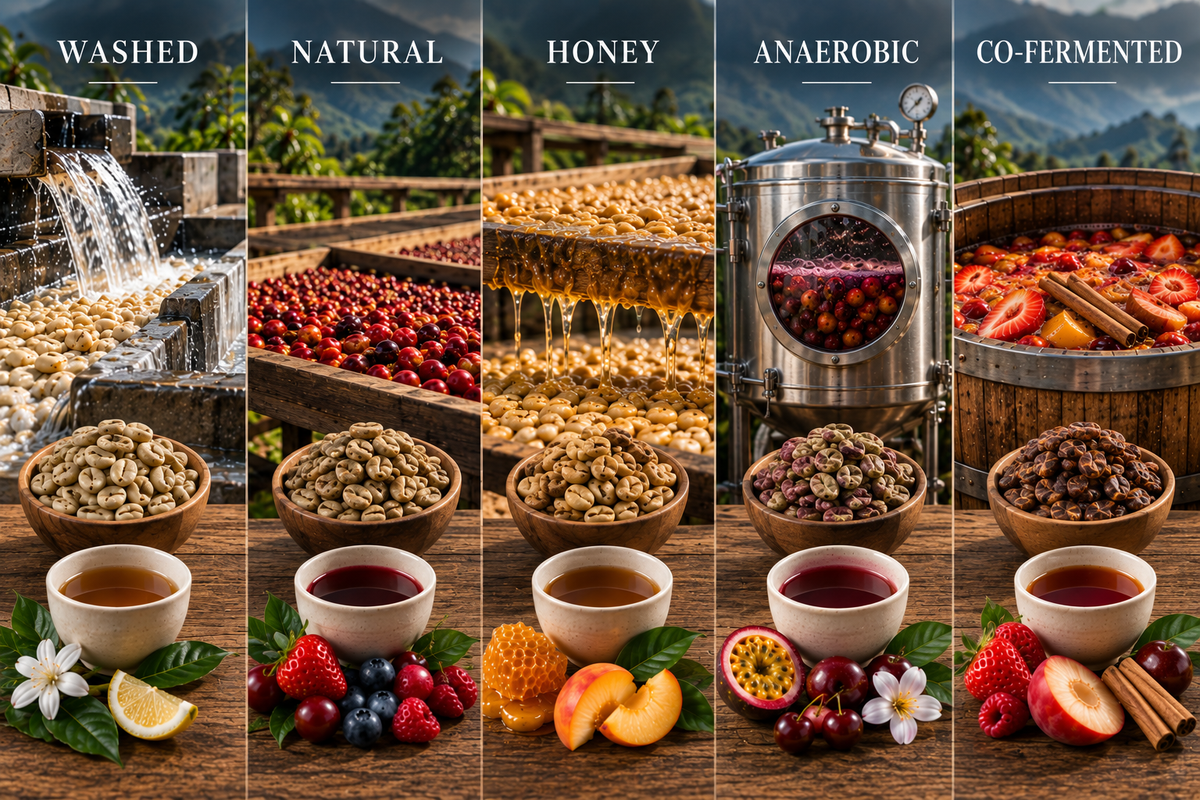
Processing can influence coffee structure and flavour development, but it isn't useful to assign one universal freshness window to washed, natural, honey, anaerobic, or co-fermented coffees.
Each coffee behaves differently.
However, processing can influence how a coffee presents itself over time.
A highly expressive natural or experimental coffee may evolve differently in the cup from a delicate washed coffee.
The important thing is to observe the individual coffee.
If you want to explore how processing influences flavour, discover:
Washed Coffee
https://specialitycoffee.ca/collections/washed
Natural Coffee
https://specialitycoffee.ca/collections/natural
Honey Process Coffee
https://specialitycoffee.ca/collections/honey
Anaerobic Coffee
https://specialitycoffee.ca/collections/anaerobic
Co-Fermented Coffee
https://specialitycoffee.ca/collections/co-ferment
Does Coffee Packaging Matter?
Absolutely.
Good packaging helps reduce unnecessary environmental exposure.
Many specialty coffee bags use a one-way degassing valve.
Freshly roasted coffee continues releasing gas after packaging.
A one-way valve allows pressure to escape without requiring the bag to remain open to the surrounding environment.
Resealable closures are also useful once you begin drinking the coffee.
But even excellent packaging can't completely stop coffee from evolving.
Packaging helps preserve quality.
It doesn't freeze time.
Should You Keep Coffee in the Original Bag?
In many cases, yes.
If the bag is high quality, opaque, and resealable, there may be no reason to transfer the coffee.
The original packaging was selected by the roaster specifically for storing coffee.
Simply squeeze out unnecessary air where practical, close the bag securely, and keep it somewhere cool and dark.
If the bag doesn't reseal effectively, a good airtight container can be useful.
The important thing isn't whether the coffee lives in a bag or container.
It's how effectively you're protecting it from unnecessary exposure.
How Much Coffee Should You Buy at Once?
This depends on how much coffee you drink.
If you brew every day, buying enough for a few weeks can be practical.
If you drink coffee occasionally, buying enormous quantities at once may not make sense unless you plan to freeze part of it.
The goal isn't to buy the smallest bag possible.
The goal is to match your purchasing habits to your consumption.
If you discover several coffees you want to try at the same time, freezing gives you much more flexibility.
You don't need to rush through exceptional coffees simply because you're worried about an arbitrary freshness deadline.
How to Keep Specialty Coffee Fresh for Longer
The most effective coffee storage strategy is also one of the simplest.
Keep the coffee whole until you're ready to brew.
Close the package carefully after each use.
Store it somewhere cool, dry, and dark.
Avoid unnecessary exposure to air.
Don't leave beans sitting uncovered.
Don't store them beside strong heat sources.
And if you have significantly more coffee than you'll consume during the period when you expect it to perform well, freeze part of it in well-sealed portions.
You don't need complicated equipment.
Good habits make the biggest difference.
Is Specialty Coffee Still Good After Two Months?
It can still be enjoyable.
Whether it remains close to its peak sensory expression is another question.
A carefully stored light-roasted coffee may remain surprisingly expressive after two months.
Another coffee may have lost substantial aroma and complexity by that point.
If the coffee was frozen appropriately, it may retain quality for much longer.
This is why blanket rules don't work particularly well.
Instead of automatically throwing away two-month-old coffee, brew it.
Taste it.
If it still tastes great, enjoy it.
If it feels flat and lifeless, you've learned something about that coffee's useful flavour window.
Is Specialty Coffee Still Good After Three Months?
Again, the answer depends on storage.
Three-month-old coffee stored at room temperature may have lost a noticeable amount of its original aromatic intensity.
But that doesn't automatically mean it will taste terrible.
Coffee that was frozen appropriately may tell a very different story.
For long-term preservation, freezing becomes increasingly useful.
This is especially true if you're collecting rare or expensive specialty coffees that you want to revisit later.
A Better Way to Think About Coffee Freshness
Instead of asking:
“How many days until my coffee expires?”
ask:
“Where is this coffee in its flavour evolution?”
That's a much more useful question.
Immediately after roasting, the coffee is degassing heavily.
Then it rests.
Its brewing behaviour evolves.
It may become more expressive.
Eventually, it reaches a period where you particularly enjoy it.
Later, aromatic intensity gradually decreases.
The exact timing depends on the coffee.
Once you understand that, coffee freshness becomes much less stressful.
Frequently Asked Questions About Coffee Freshness
How long do coffee beans stay fresh after roasting?
There isn't one universal freshness window. Whole coffee beans can remain enjoyable for weeks after roasting, and some light-roasted specialty coffees can perform very well after a relatively long rest. Roast profile, packaging, oxygen exposure, storage conditions, and brewing method all influence how the coffee develops.
Is coffee still good 30 days after roasting?
Yes, it can be. A properly stored whole-bean specialty coffee can still taste excellent after 30 days. Some coffees may even be within a particularly enjoyable drinking period at that point.
Is coffee still good six weeks after roasting?
Potentially. Six weeks doesn't automatically make coffee stale. Brew it and evaluate its aroma, sweetness, clarity, and overall flavour instead of judging it only by the calendar.
Should coffee beans be stored in the refrigerator?
For normal everyday use, refrigeration usually isn't necessary. A properly sealed bag or container stored in a cool, dark, dry location is generally simpler. Freezing is more useful when you want to preserve coffee for longer periods.
Can you freeze coffee beans?
Yes. Freezing properly sealed coffee can be an effective way to preserve specialty coffee for longer storage. Dividing coffee into smaller portions can reduce repeated exposure to air and moisture.
Should I freeze whole beans or ground coffee?
Keeping coffee whole until close to brewing is generally preferable for preserving aromatic quality. Whole beans can be frozen in properly sealed portions and ground when needed.
Does ground coffee go stale faster than whole beans?
Yes. Grinding dramatically increases the coffee's exposed surface area, accelerating aroma loss and its interaction with oxygen. For the best flavour, grind coffee close to brewing.
What is the difference between a roast date and a best-before date?
The roast date tells you when the coffee was roasted and helps you understand its post-roast development. A best-before date relates more broadly to packaged shelf life. For specialty coffee flavour, the roast date is generally the more useful piece of information.
The Bottom Line: How Long Do Coffee Beans Stay Fresh?
Coffee freshness isn't a race.
And coffee doesn't suddenly become bad because it crosses an arbitrary two-week or 30-day threshold.
After roasting, coffee continues changing.
It releases carbon dioxide.
Its brewing behaviour evolves.
Aromas develop and eventually begin to fade.
Some coffees become enjoyable relatively quickly.
Others—particularly certain light specialty coffees—can benefit from a longer rest and remain expressive for several weeks.
The most important thing is how you store and handle the coffee.
Buy whole beans whenever possible.
Grind close to brewing.
Keep the coffee properly sealed.
Protect it from excessive heat, moisture, light, and unnecessary oxygen exposure.
And if you have more coffee than you can reasonably drink, consider freezing well-sealed portions for later.
Most importantly, don't judge your coffee exclusively by the date printed on the bag.
Open it.
Smell it.
Brew it.
Taste it.
The cup will tell you much more than the calendar.
Explore freshly roasted specialty coffee from leading roasters at:
Discover our Light Roast Coffee Collection:
https://specialitycoffee.ca/collections/light-roast
Or continue learning through our All About Speciality Coffee Blog:
https://specialitycoffee.ca/blogs/all-about-specialty-coffee