Coffee Terroir: How Altitude, Soil and Climate Affect Flavour
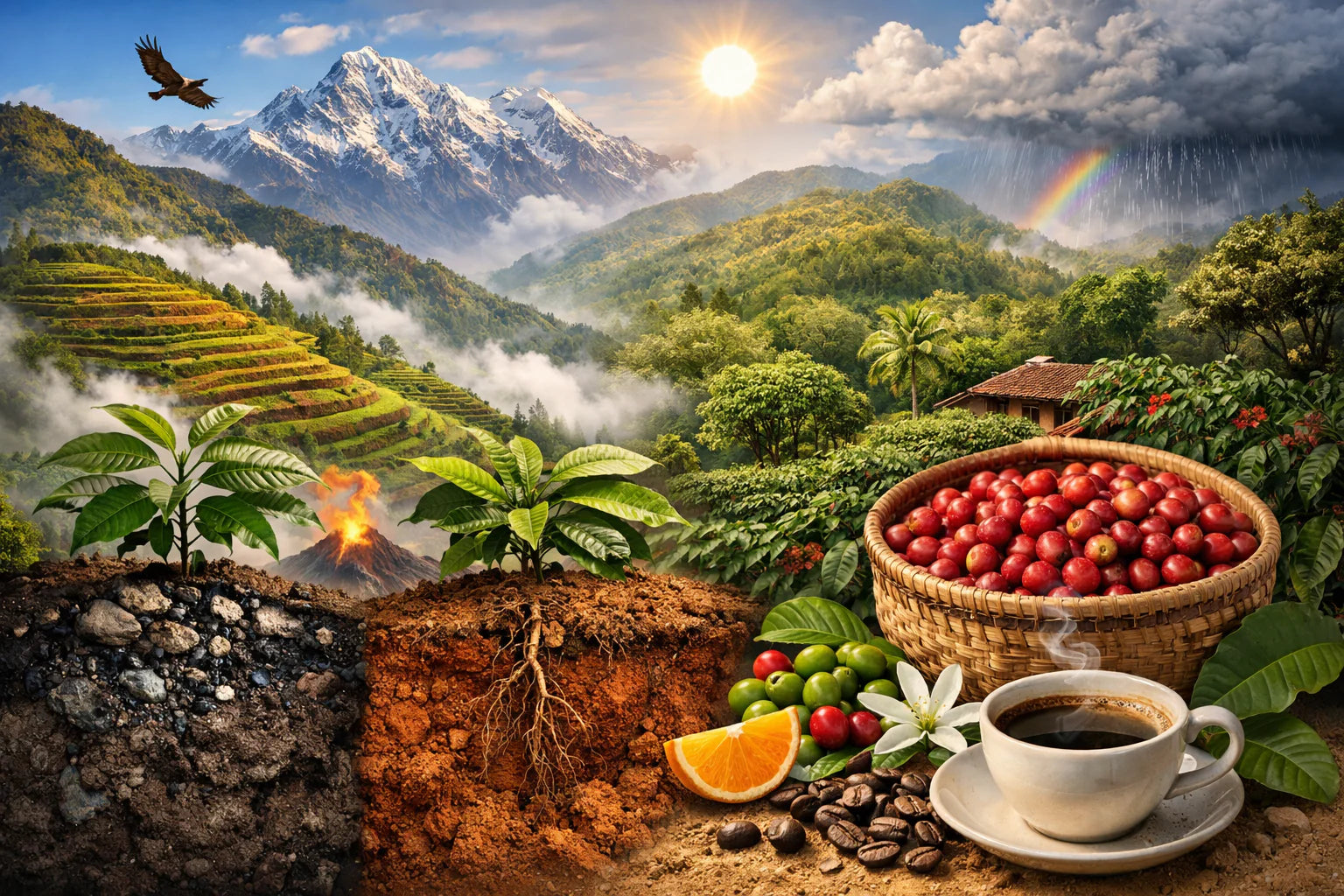
Coffee terroir is the growing environment of a coffee, including climate, soil, elevation and local conditions. It helps explain differences between origins, but it does not act alone. Variety, farming, cherry ripeness, processing, roasting and brewing all contribute to the cup.
Altitude and growing conditions
Elevation is useful context because it often relates to temperature. Cooler conditions can slow cherry development, but the same elevation does not produce the same conditions everywhere. Latitude, shade, slope and local weather matter too.
A higher number on the bag is not a quality score. Research in southwestern Ethiopia found that the effects of altitude and shade depended on growing conditions and post-harvest processing. Avoid choosing coffee from rigid altitude bands that promise chocolate below one height and florals above another.
Soil and plant health
Soil supports roots and affects water and nutrient availability. Drainage, structure and management matter to plant health. However, “volcanic soil” does not guarantee sweetness, and clay does not reliably predict chocolate notes. Mineral content in the ground is not a tasting menu for the finished drink.
Climate and microclimate
Temperature and rainfall influence plant growth and the harvest. Shade, wind exposure and slope can create different conditions within a small area. Two nearby farms can therefore produce different coffees, particularly when varieties and farming practices also differ.
Climate information is most useful when paired with details about the producer and harvest. It cannot replace tasting the lot or reading the roaster’s description.
Terroir, variety and processing
- Terroir: the conditions where the coffee grows.
- Variety: the plant’s genetic background.
- Processing: how the harvested fruit becomes dried green coffee.
- Roasting and brewing: how the coffee is developed and extracted for drinking.
These factors interact. Comparing a washed coffee with an experimental natural from another farm will not isolate terroir. Read our processing guide to separate the terms.
Choosing coffee with origin information
- Start with tasting notes you enjoy and a roast intended for your brew method.
- Look for the producer, region, variety and process, alongside elevation.
- Choose two coffees with a similar roast and process if you want to explore regional differences.
- Use the same water, dose and brewer, then adjust the grind as needed for each coffee.
- Record acidity, sweetness, body and finish rather than trying to confirm a predetermined flavour.
This is a useful home comparison, not a controlled experiment. Different harvests and roasting choices can still affect the result.
Continue with our Ethiopian coffee regions guide or guide to coffee origins.
Research reference: study of altitude, shade and processing effects on arabica coffee quality.