Coffee Processing Methods: Washed, Natural and Beyond
Coffee processing is the work between harvesting the fruit and preparing stable green coffee for storage, milling and export. It helps shape flavour, but it is not a flavour guarantee. A process name is most useful when it comes with a clear description of what the producer actually did.
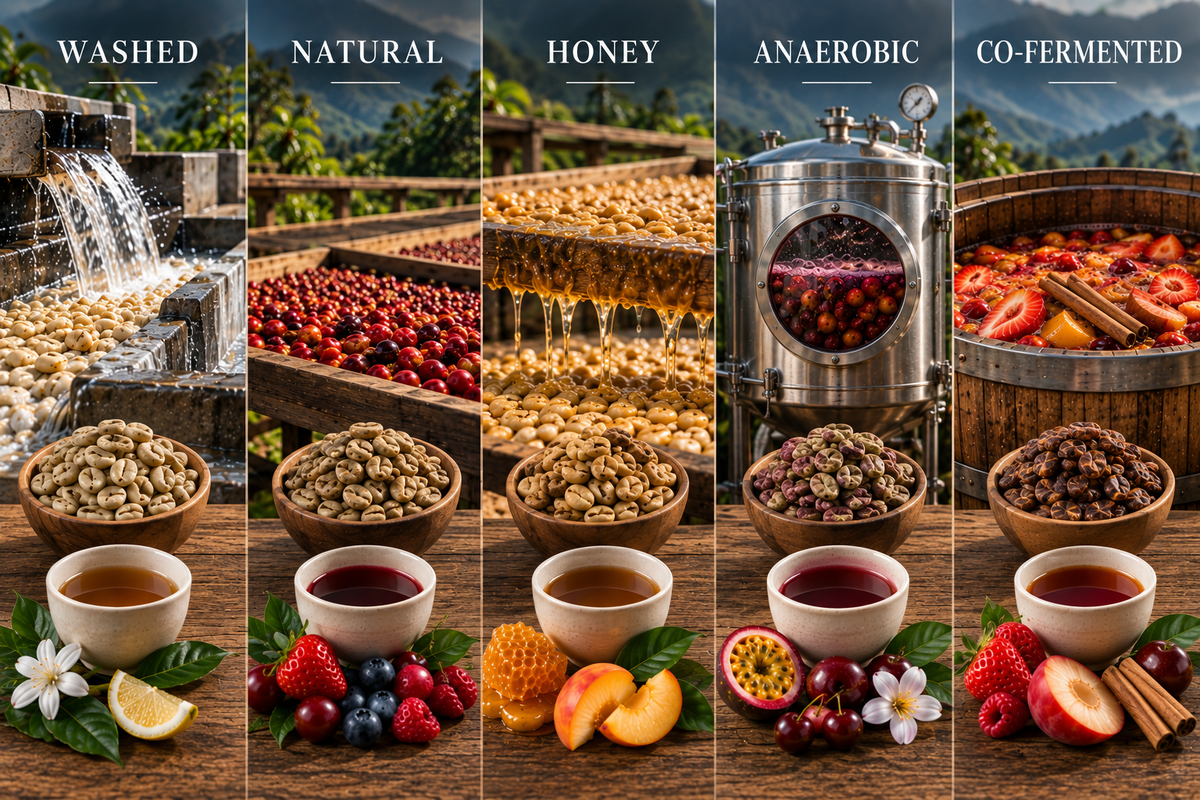
The familiar words washed, natural and honey describe how fruit material is handled around the seed. Terms such as anaerobic and co-fermented add other information, so several of these words can legitimately appear on the same bag.
The three main starting points
Washed coffee has the outer fruit removed, with the remaining mucilage removed before drying. Fermentation followed by washing is common, but mechanical mucilage removal also exists. Cenicafé’s work on mechanical demucilaging is a useful reminder that washed coffee does not follow one universal tank recipe.
Natural coffee is dried inside the whole cherry before the dried fruit layers are removed. Honey coffee is pulped but dried with some mucilage remaining. Honey describes that sticky fruit material and the processing style; it does not mean honey was added to the beans.
Fermentation adds another layer
In coffee marketing, anaerobic usually indicates a deliberately oxygen-limited fermentation stage, often in a sealed vessel. The coffee can subsequently be processed as washed, honey or natural. “Anaerobic natural,” for example, gives information about fermentation and drying rather than naming two contradictory methods.
A stated number of hours is only part of the picture. Whole cherries and pulped coffee are different starting materials, and temperature, microorganisms and subsequent drying also matter. Longer fermentation does not automatically mean better quality or stronger fruit flavour. Read our anaerobic coffee guide for that distinction.
Added ingredients deserve clear disclosure
Some producers use fruit or other inputs during co-fermentation. The practical question for the drinker is what was added and at which stage. A fruit-like tasting note alone does not establish that fruit was used; equally, a processing description should not hide an addition behind an evocative flavour name.
Terms including co-fermented and infused are not used identically by every seller. Check the producer’s account and the exact lot disclosure rather than assuming one word supplies a complete protocol. Our co-fermentation article explains how to read these descriptions.
Taste tendencies without turning them into rules
Washed coffees often attract drinkers seeking clarity and a distinct acidity. Naturals are frequently chosen for expressive fruit and a rounder impression, while honey coffees can offer their own combination of sweetness, texture and definition. These are directions to explore, not rankings or guaranteed results.
A natural can be delicate and a washed coffee can be intensely fruity. The variety, growing conditions, producer’s execution, roast and brewing all remain part of the cup. Process names cannot isolate those factors or tell you that one coffee is objectively better.
Choose and compare with purpose
Start with two coffees whose tasting descriptions interest you. If possible, compare similar roast styles and the same origin or producer, while recognising that even this is not a controlled scientific trial. Brew with the same water and a familiar method, adjusting the grind when necessary rather than forcing identical settings.
Our washed, natural, honey and anaerobic collections offer routes into those comparisons. Read the specific lot information before buying, then note aroma, texture, acidity and finish as each cup cools. Your preferences will become more informative than a growing list of processing buzzwords.
Sources and further reading: Nordic Approach: processing; Cenicafé: mechanical mucilage removal.