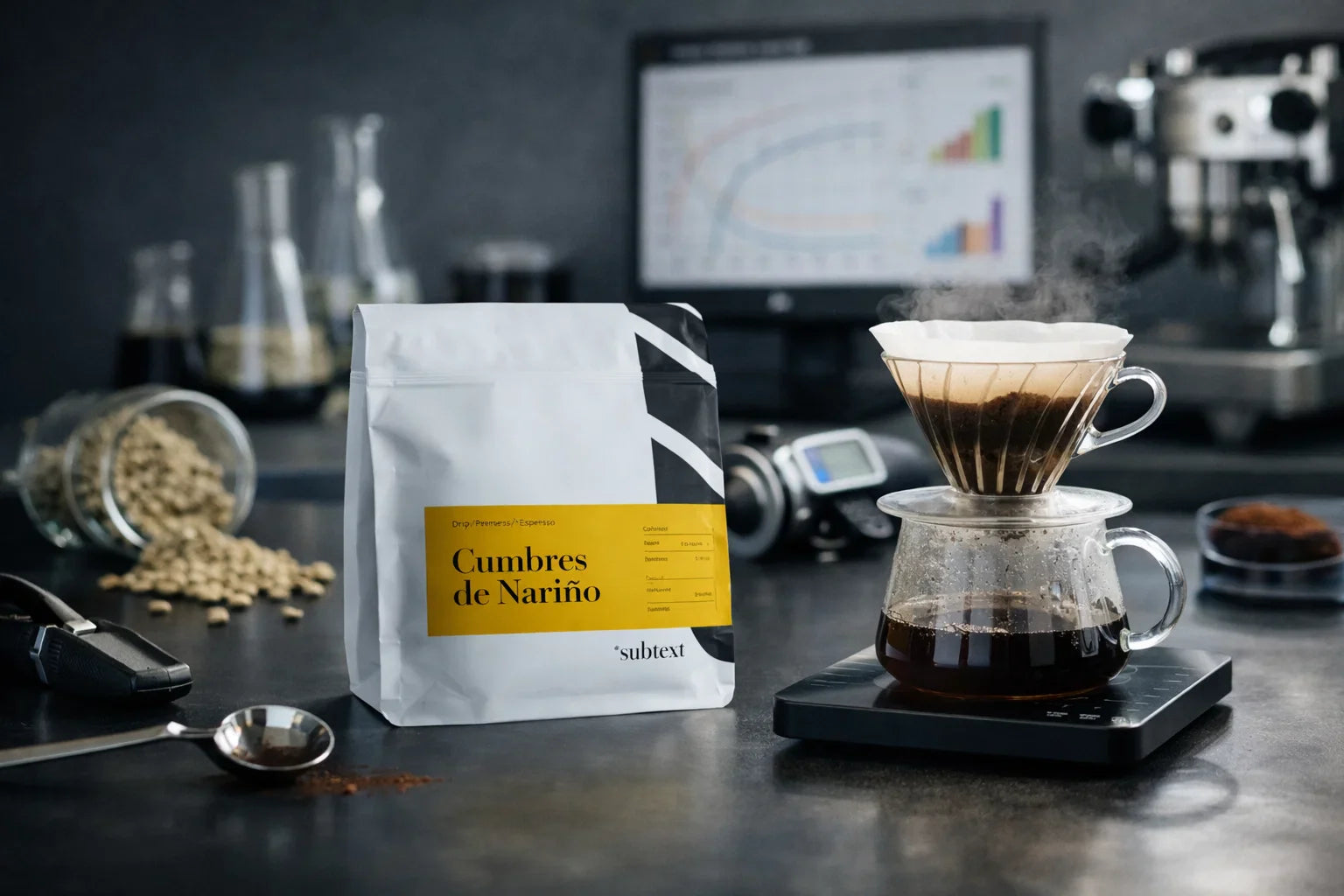
Subtext Coffee Roasters: Toronto, Sourcing and Brewing
Subtext Coffee Roasters puts the agricultural identity of coffee at the centre of its Toronto project. Its approach is useful for drinkers who want to understand a producer and a lot, then explore that coffee through careful brewing. A technical vocabulary is optional; curiosity and repeatable preparation are enough to begin.
Keep the producer visible
Subtext says it avoids blending, renaming coffees and dark roasting because it wants producers and origin to remain visible. It describes buying both directly and through selected importers. These are the company’s stated choices, not a universal definition of quality for all specialty coffee.
When comparing bags, start with the producer name and specific place, then variety and processing. This makes it easier to follow a coffee you enjoyed or compare related lots across harvests. Similar names do not necessarily identify identical beans.
Use the brewing category and the guide together
The shop separates filter and espresso offerings. Its grind-and-brew guide explains that grinder calibration, burr condition, paper, technique and batch size can change the setting required. A number from another brewer is therefore a starting point, not a transferable measurement of particle size.
Choose a recipe that fits your device, keep the dose and water amount steady, then adjust grind in small steps. Record what happens to flavour and flow. Changing several variables at once makes it harder to learn which adjustment helped.
Resting is part of the preparation
Subtext’s own guide says its coffees tend to taste best after about two weeks of rest and can remain enjoyable beyond six weeks. It recommends resting in the sealed valve bag. This is roaster-specific guidance, not an expiry date or a guarantee for every storage condition.
Read any advice accompanying the particular release. Our resting guide explains why opening the newest possible roast is not always the easiest route to a balanced cup.
Choose a meaningful first comparison
A washed coffee and another process from a related origin can create an interesting tasting. Keep in mind that variety, individual lot and roast also contribute; a home comparison does not isolate processing as the only cause.
Browse our Subtext collection, check the current roast information and choose the profile that interests you. Start with one bag, learn how it behaves in your brewer, and use that experience to guide the next purchase.
Sources and further reading: Subtext: sourcing and roasting philosophy; Subtext: grind, brewing and resting guidance.