Blend or Single Origin: Choose Coffee for Your Daily Cup
Choosing between a blend and a single origin becomes easier when you start with your daily cup. The right bag should suit your brewer, the flavours you enjoy and how much change you want from one purchase to the next.
For an espresso you return to every day
If you want familiar sweetness and body in milk, compare coffees described for that purpose rather than choosing a blend automatically. A recurring blend can be a convenient starting point because the roaster may adjust its components to maintain a recognisable profile.
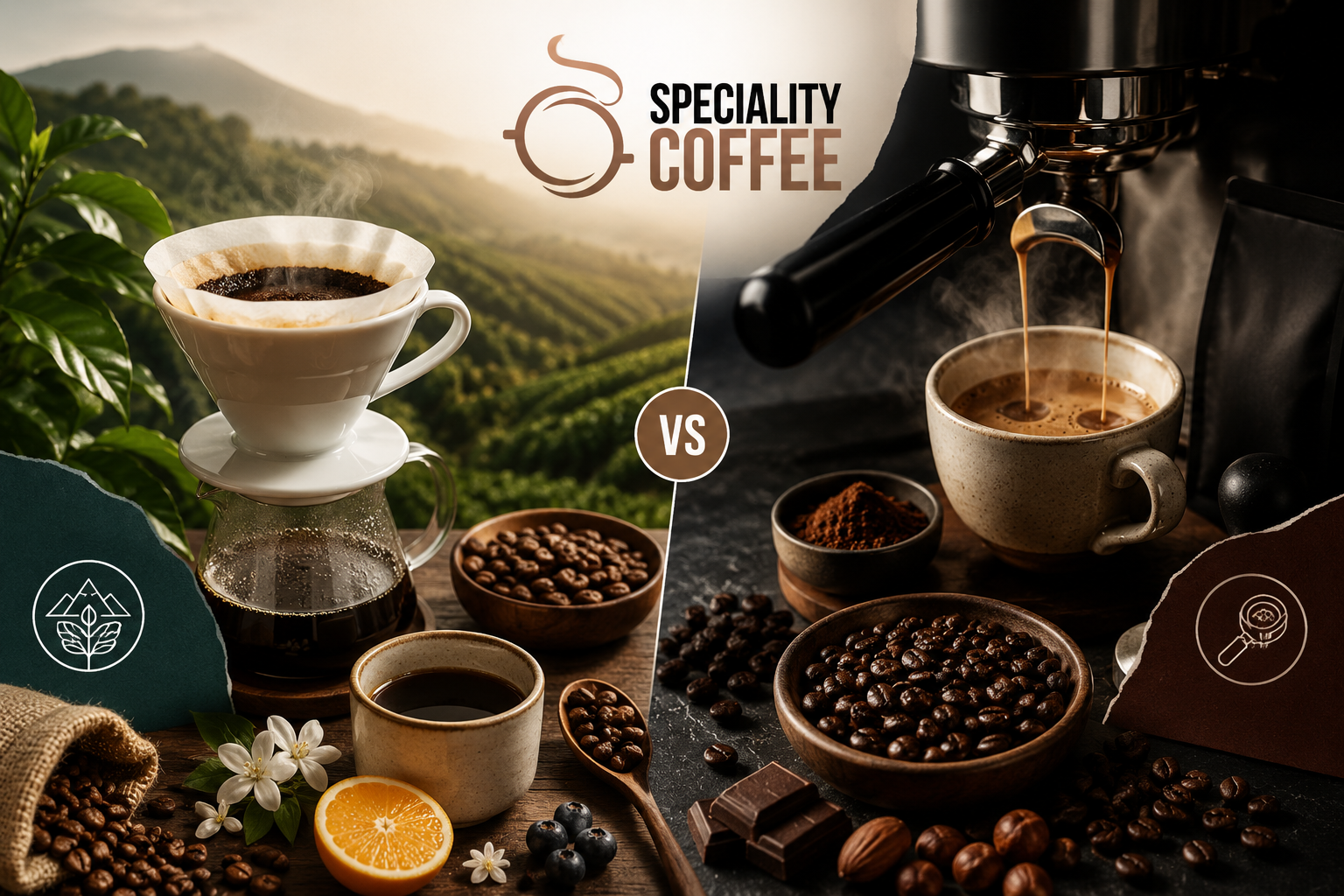
De Mello, Monogram and Phil & Sebastian offer espresso directions to explore. Read the current coffee’s roast and flavour notes. A fruit-forward blend and a chocolate-led single origin can reverse the usual assumptions about these categories.
For discovering a producer or growing region
A documented single origin is useful when you want to follow a farm, station, cooperative or region. Look for the actual sourcing detail: “single origin” alone does not promise one farm or one variety.
Compare selections from Subtext, September and Tim Wendelboe. Choose the lot that fits your preferred flavour and brewing method. You can enjoy a single origin in espresso or a blend in filter; the recipe and roast matter more than the category.
Read five details before buying
Start with the recommended brewing method and flavour notes. Then check the origin and processing, the roast information, and the bag weight. Comparing price per 100 g helps when one option is a small tasting format and another is intended for daily drinking.
Check availability and any preorder notice too. A familiar name may return with different seasonal components. That does not make it worse, but it may explain why your old grinder setting needs adjustment.
Build a two-bag tasting
Choose one familiar coffee and one deliberate contrast. If you usually drink a rounded blend, try a washed single origin with notes you already like. If you regularly chase unusual microlots, try a blend selected for balance and repeatability.
Use the same water and brewer, keep a simple recipe record, and taste both as they cool. Buying the most expensive or rarest bag is less useful than learning which profile you want to drink again.
Understand the labels before comparing
Our single-origin and blend explainer goes deeper into traceability, seasonality and the meaning of each term.
Sources and further reading: Counter Culture: single-origin scope; Counter Culture: seasonal blend components.