Choose Your Coffee Roast: Light, Medium or Dark
Light, medium and dark are useful shopping clues, but they are not a shared scale used identically by every roaster. Begin with the flavours you want, then read the roast label alongside the coffee’s description and recommended brewing method.
Choose a flavour direction
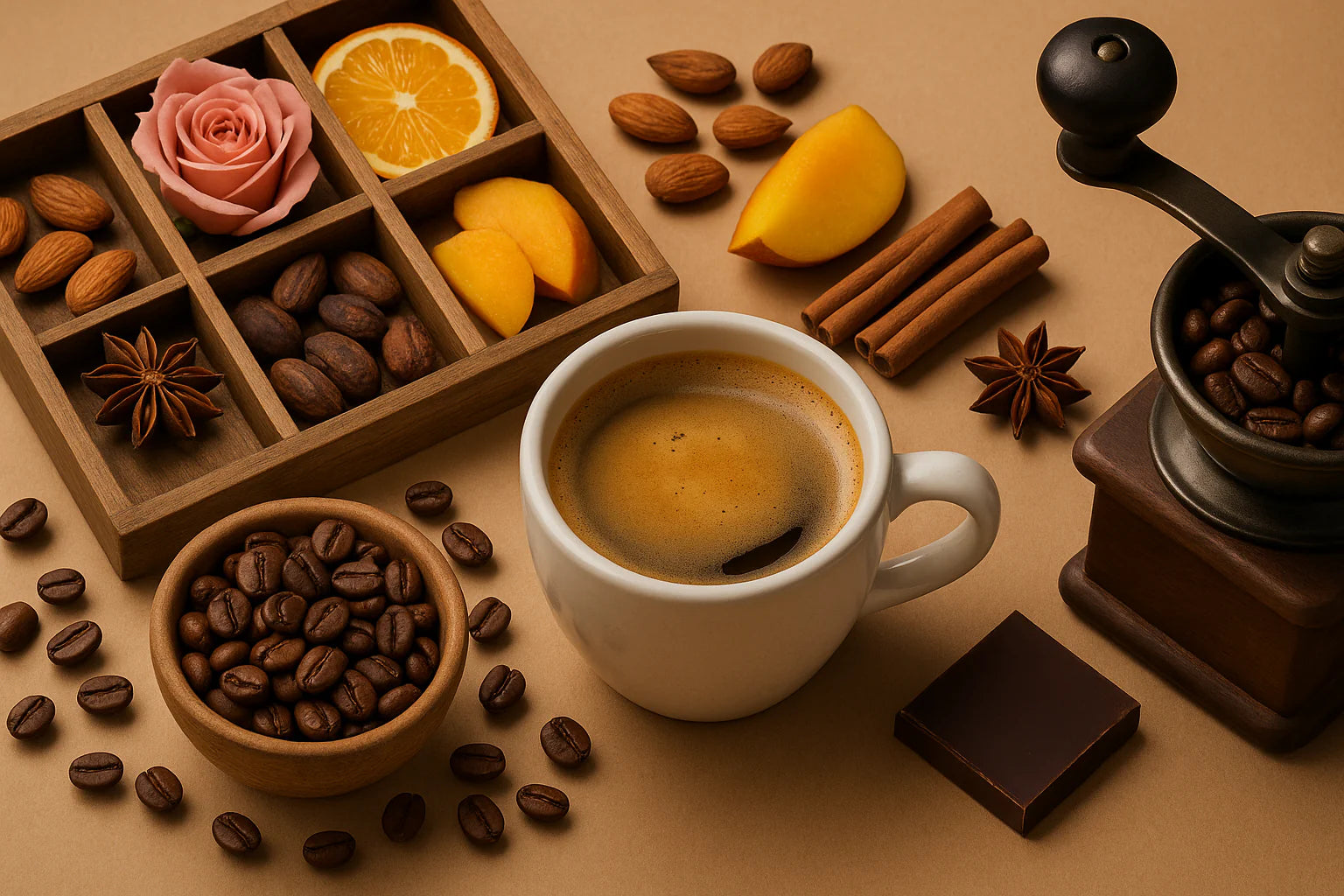
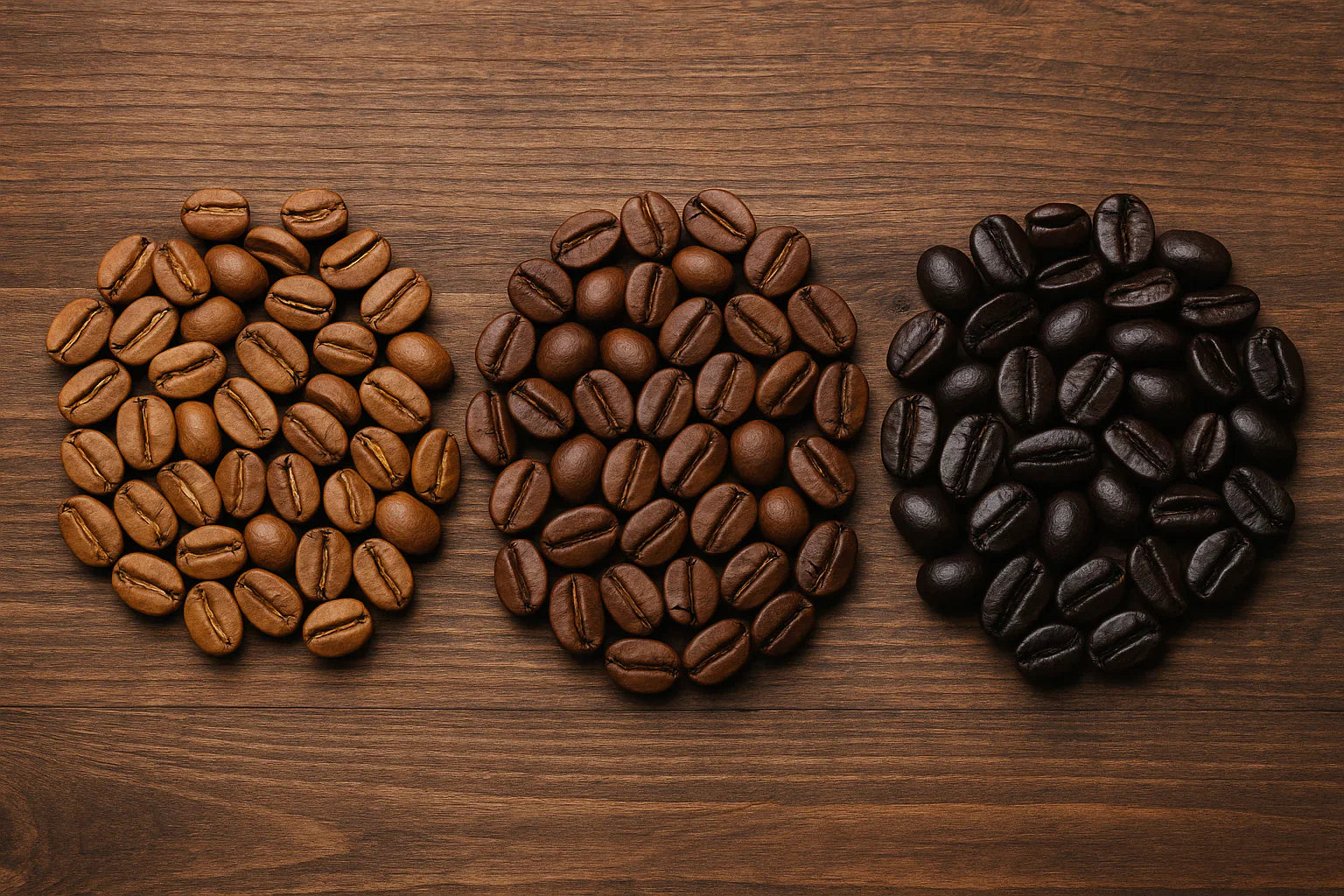
A lighter profile can make fruit, flowers and lively acidity more prominent. A medium profile may combine those qualities with more rounded caramel or nut-like impressions. A darker profile generally brings roast-derived flavours further forward, sometimes including bitter chocolate, smoke or a toasted finish.
These are tendencies rather than promises. A light coffee can have plenty of body, and a darker coffee can be carefully roasted. Quality is not a contest in which the palest bean always wins.
Match the bag to your routine
| Your preference | A useful starting point |
|---|---|
| Floral or fruit-led black coffee | A lighter profile with matching notes |
| A rounded everyday cup | A medium description with caramel, nuts or chocolate |
| A developed, roast-led flavour | A darker profile whose notes sound appealing |
| Milk drinks | An espresso recommendation that fits your preferred milk quantity |
Espresso does not require dark beans, and filter does not require light ones. An espresso or filter label describes intended brewing use separately from roast level. Some coffees are roasted for both methods.
Expect to adjust the recipe
When moving to a different profile, keep a clear record of dose, water or espresso yield, and grind. Some lighter coffees need more effort to extract well; more developed coffees may suit a gentler recipe. Follow the roaster’s guidance and change one variable at a time.
If a cup is sour and thin, investigate brewing before deciding the roast is wrong. If several balanced brews still taste too smoky for your preference, a lighter profile may be the more useful change.
Do not choose caffeine by roast colour
A dark appearance does not mean more caffeine, and a light label does not provide a dependable caffeine dose. Coffee type, the mass used, brewing and serving size all affect the finished drink. For a deliberate reduction, compare decaffeinated coffees rather than rely on roast level.
Compare two bags you would enjoy
Try a familiar profile beside one small step lighter or darker. Browse Monogram, Phil & Sebastian or our decaf collection. Our detailed roast comparison provides further context.
Sources and further reading: Barista Hustle: roast colour and development; Research: roasting, brewing and caffeine.