Why Does My Coffee Taste Bitter? 7 Causes & How to Fix It
You buy a great bag of specialty coffee.
You grind the beans, carefully prepare your brewer, pour the water, and wait.
Then you take the first sip.
Bitter.
Not pleasantly bittersweet like dark chocolate. Not balanced by sweetness or acidity. Just overwhelmingly bitter, dry, harsh, or even slightly burnt.
So what happened?
The first thing to understand is that bitterness is a natural part of coffee. Coffee contains compounds that contribute bitter sensations, and completely eliminating bitterness isn't necessarily the goal.
The problem begins when bitterness becomes so dominant that it overwhelms everything else the coffee has to offer.
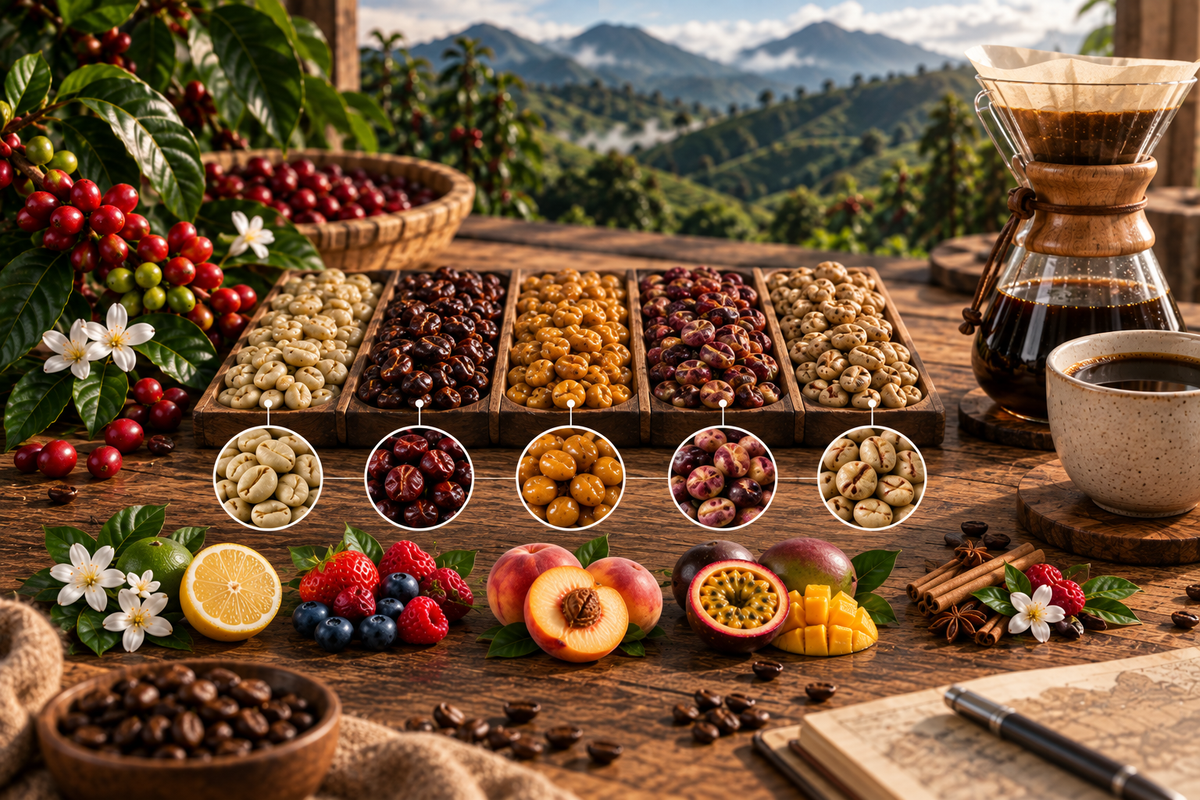
A specialty coffee that should remind you of peach, berries, florals, caramel, or chocolate can become unpleasantly bitter when the coffee, brewing method, or extraction isn't working as intended.
The good news is that bitter coffee can often be improved.
Sometimes the solution is surprisingly simple.
A small adjustment to your grind size, brewing time, water temperature, coffee-to-water ratio, or cleaning routine can completely transform the cup.
At Speciality Coffee, we believe understanding why coffee tastes the way it does is one of the best ways to improve your brewing.
Browse our specialty coffee selection:
And discover more brewing, processing, roasting, and coffee guides through our All About Speciality Coffee Blog:
https://specialitycoffee.ca/blogs/all-about-specialty-coffee
So, why does your coffee taste bitter?
Let's troubleshoot it.
Is Coffee Supposed to Taste Bitter?
Yes—to some extent.
Bitterness is one of the fundamental taste sensations we can perceive, and coffee naturally contains compounds that contribute to it.
A small amount of bitterness can actually contribute structure and complexity to a cup.
Think about dark chocolate.
Its bitterness isn't necessarily unpleasant because it exists alongside sweetness, aroma, acidity, and other flavours.
Coffee can work similarly.
The problem isn't simply that bitterness exists.
The problem is imbalance.
When bitterness dominates everything else, the coffee may feel harsh, drying, burnt, hollow, or unpleasant.
A well-brewed specialty coffee can contain bitterness while still allowing sweetness, acidity, fruit, florals, chocolate, spice, and other characteristics to remain clearly noticeable.
So instead of asking:
“How do I remove all bitterness from coffee?”
a more useful question is:
“Why is bitterness dominating my coffee?”
Several variables can be responsible.
1. Your Coffee Grind May Be Too Fine
One of the first things to investigate when coffee tastes excessively bitter is grind size.
Grind size influences how quickly water can extract soluble compounds from coffee.
Smaller coffee particles provide more surface area relative to their size and can generally extract more quickly than larger particles.
If your grind is too fine for your brewing method and recipe, you may extract the coffee differently than intended.
The result can sometimes taste bitter, drying, harsh, or otherwise unbalanced.
This is particularly important with methods where water spends substantial time interacting with the coffee bed.
How to Fix a Grind That Is Too Fine
Try moving your grinder slightly coarser.
Don't make an enormous adjustment immediately.
Change the grind gradually, brew again, and compare.
If the bitterness decreases while sweetness and clarity become more noticeable, you're probably moving in the right direction.
This is one of the most important habits you can develop when learning to brew specialty coffee:
change one variable at a time.
If you simultaneously change grind size, temperature, dose, water quantity, and brewing time, you won't know which adjustment actually improved the coffee.
Make one change.
Taste.
Then adjust again if necessary.
Can Grinding Too Coarse Make Coffee Bitter?
Usually, an excessively coarse grind is more likely to contribute to weak, sharp, sour, or otherwise underdeveloped extraction than classic excessive bitterness.
But coffee extraction isn't always as simple as:
fine = bitter
and:
coarse = sour.
Brewing involves many interacting variables.
An inconsistent grinder can also produce a mixture of very small and very large particles, making extraction less uniform.
That's why grind size should always be considered together with brewing time, water, temperature, dose, agitation, and the brewing method itself.
Still, when a brew tastes strongly bitter and is also running much longer than expected, moving slightly coarser is often a sensible first adjustment.
2. You're Brewing the Coffee for Too Long
Another common cause of bitter coffee is excessive brewing time.
The longer water remains in contact with coffee, the more opportunity it has to dissolve soluble material.
That doesn't mean every long brew automatically tastes bitter.
Different brewing methods are designed around different contact times.
A French press naturally uses a different brewing time from espresso.
A V60 follows a different extraction pattern from cold brew.
What matters is whether your brew time makes sense for the method and recipe you're using.
If a pour-over that normally finishes within a certain range suddenly takes dramatically longer, something may have changed.
The grind may be too fine.
The filter may be clogging.
Your pouring technique may have changed.
Whatever the cause, the resulting extraction may become less balanced.
How to Fix a Brew That Takes Too Long
First, look at your grind.
If water is moving through the coffee bed unusually slowly, try grinding slightly coarser.
With pour-over, also pay attention to your pouring and agitation.
Excessive agitation can contribute to the migration of fine particles and may slow the drawdown depending on the coffee, grinder, filter, and technique.
The goal isn't to chase one exact brewing time for every coffee.
Different coffees behave differently.
Instead, use brew time as a diagnostic clue.
If your coffee suddenly tastes bitter and your brew is also taking significantly longer than usual, the two observations may be connected.
3. Your Water Temperature May Be Too High for That Coffee
Water temperature influences extraction.
Generally, hotter water can increase the rate at which soluble material is extracted from coffee.
But there is an important misconception to avoid:
Boiling or near-boiling water does not automatically ruin specialty coffee.
In fact, very light-roasted specialty coffees can sometimes perform extremely well with relatively hot brewing water.
The ideal temperature depends on the coffee, roast development, brewing method, and recipe.
The situation can change considerably with darker-roasted coffee.
Darker roasting changes the structure and chemical composition of the beans and generally makes them easier to extract.
If you're brewing a darker coffee with very hot water and the result tastes aggressively bitter or roasty, reducing your water temperature may help.
How to Adjust Water Temperature
If you're brewing a light specialty coffee, don't immediately lower the temperature simply because you detect some bitterness.
Investigate grind size, brew time, and your overall recipe first.
If you're brewing a medium-dark or dark coffee and the cup feels harsh, burnt, or excessively bitter, try reducing the water temperature slightly and taste again.
The important principle is the same:
make small adjustments and compare the results.
Coffee brewing is easier to improve when you treat each brew as an experiment rather than changing everything at once.
4. Your Coffee May Simply Be Dark Roasted
Sometimes your brewing technique isn't the main problem.
The coffee itself may have a darker roast profile.
Roasting dramatically transforms coffee.
As roast development increases, the balance between origin characteristics and roast-derived characteristics changes.
Lighter roasts generally preserve more of the delicate attributes associated with origin, variety, and processing.
Darker roasts tend to emphasize more roast-derived flavours.
Depending on the coffee and roast profile, those characteristics may remind you of dark chocolate, toast, caramelized flavours, roasted nuts, smoke, or other darker sensory impressions.
Bitterness can also become more pronounced.
So if you consistently find dark-roasted coffee too bitter, adjusting your brewing recipe may help—but the simplest solution may be choosing a different roast profile.
Try a Lighter Roast
If you want more fruit, florals, acidity, sweetness, and origin character, explore lighter-roasted coffee.
At Speciality Coffee, you can compare different roast levels and discover what fits your preferences.
Explore our Light Roast Coffee Collection:
https://specialitycoffee.ca/collections/light-roast
If you prefer something with more roast development while maintaining balance, explore:
https://specialitycoffee.ca/collections/medium-roast
And if you specifically enjoy deeper roast characteristics, discover:
https://specialitycoffee.ca/collections/dark-roast
There isn't one roast level that is universally better.
The important thing is understanding what you enjoy.
Does Dark Roast Always Mean Bitter Coffee?
No.
A darker roast isn't automatically unpleasant.
Well-roasted dark coffee can still be sweet, balanced, rich, and enjoyable.
The problem is treating all roast levels as though they should be brewed exactly the same way.
A recipe that works beautifully for a very light Scandinavian-style roast may not be ideal for a significantly darker coffee.
Changing temperature, grind, ratio, or contact time can help you adapt your brewing approach.
But if you simply dislike roast-derived bitterness, moving toward lighter coffee may suit your preferences better.
5. Your Coffee-to-Water Ratio May Be Working Against You
Your coffee-to-water ratio is another important variable.
If you don't measure your coffee and water, your recipe can change considerably from one brew to another without you realizing it.
One morning you might use 18 grams of coffee.
The next morning your scoop contains 22 grams.
Your water quantity might also vary.
The result is inconsistency.
And inconsistency makes troubleshooting difficult.
Using a digital scale is one of the simplest ways to improve home brewing.
It doesn't need to be complicated.
Knowing exactly how much coffee and water you're using gives you a repeatable starting point.
Does Using More Coffee Make Coffee More Bitter?
Not automatically.
This is where coffee brewing becomes more nuanced.
Using more coffee changes the brew ratio and concentration, but bitterness isn't determined by dose alone.
Extraction and strength are related but different concepts.
A coffee can be strong without necessarily being unpleasantly bitter.
Likewise, a relatively weak coffee can still taste bitter.
Instead of assuming that “too much coffee” is always the problem, look at the complete recipe.
If your coffee tastes excessively intense, bitter, and unbalanced, consider your ratio alongside grind size, brewing time, temperature, and roast level.
Why a Coffee Scale Helps
A scale makes brewing repeatable.
Suppose you make an incredible cup today.
Without measuring your coffee and water, reproducing it tomorrow becomes difficult.
With a scale, you know exactly what you did.
And if the coffee tastes wrong, you have a reliable baseline from which to adjust.
Consistency is one of the biggest differences between random brewing and intentional brewing.
You don't need laboratory-level precision.
You simply need enough consistency to understand what your changes are doing.
6. Your Coffee Equipment May Need Cleaning
You can buy exceptional coffee.
You can use the correct grind.
You can carefully control your brewing time.
And the coffee can still taste unpleasant if your equipment is dirty.
Coffee contains oils and other compounds that can accumulate on equipment over time.
Residue can build up inside grinders, brewers, carafes, espresso-machine components, and other surfaces that regularly contact coffee.
As this material ages, it can contribute stale, rancid, harsh, or unpleasant flavours.
Sometimes people blame the coffee when the real problem is their equipment.
Clean Equipment Makes a Bigger Difference Than You Think
Think about everything your coffee touches before reaching your cup.
Your grinder matters.
Your brewer matters.
Your filter holder matters.
Your espresso machine matters.
Your carafe matters.
Even your reusable coffee container or cup can influence flavour if old coffee residue remains inside.
Regular cleaning helps prevent old coffee oils and residue from interfering with fresh coffee.
If your coffee suddenly tastes stale, dirty, or strangely bitter despite using a recipe that normally works, cleaning your equipment is worth investigating.
Don't Forget Your Grinder
The grinder is particularly easy to overlook.
Coffee particles and oils can accumulate around burrs and internal surfaces over time.
That doesn't mean you need to completely disassemble your grinder after every brew.
But following the manufacturer's recommended cleaning routine can help maintain consistent performance and prevent excessive buildup.
A clean grinder and clean brewing equipment give your coffee a much better opportunity to taste like the roaster intended.
7. You May Be Confusing Bitterness With Sourness or Astringency
This is one of the most important points in coffee troubleshooting.
Sometimes the problem isn't that your coffee is bitter.
You may actually be experiencing sourness or astringency.
These sensations can be difficult to distinguish when you're beginning to taste coffee more carefully.
But learning the difference makes brewing adjustments considerably easier.
What Does Bitter Coffee Taste Like?
Bitterness can remind you of sensory experiences associated with things such as tonic water, very dark chocolate, or strongly roasted flavours.
Some bitterness is completely normal in coffee.
The problem is when that bitterness becomes dominant and suppresses sweetness, acidity, and aroma.
What Does Sour Coffee Taste Like?
Sourness is different.
Think about biting into a lemon or tasting very sharp, underripe fruit.
Coffee naturally contains acidity, and pleasant acidity is one of the characteristics that can make specialty coffee exciting.
But when acidity becomes sharp, thin, aggressive, or unpleasantly sour, the coffee may not be extracting in the way you want.
If you mistake sourness for bitterness and respond by grinding coarser, you may move the extraction even further away from your target.
That's why learning the difference matters.
What Is Astringency in Coffee?
Astringency is primarily a mouthfeel sensation.
Rather than simply tasting bitter or sour, your mouth may feel dry, rough, puckering, or slightly sandpapery.
Think about the drying sensation you might experience from strongly brewed tea.
Coffee can become astringent for several reasons, including uneven extraction.
A cup can also be both bitter and astringent.
That combination can make troubleshooting particularly confusing.
Bitter vs Sour vs Astringent Coffee
A useful way to think about the difference is:
Bitter is primarily a taste.
Sour is primarily an acidic taste sensation.
Astringent describes a drying or puckering tactile sensation in the mouth.
Learning these distinctions won't happen instantly.
The more coffees you taste, the easier it becomes.
And once you can identify what you're actually experiencing, adjusting your brew becomes much more effective.
Why Does My Pour-Over Coffee Taste Bitter?
If your pour-over tastes bitter, begin with grind size and brew time.
Was the grind considerably finer than usual?
Did the water take much longer to pass through the coffee bed?
Did you use a different pouring technique?
Did you agitate the coffee much more than usual?
Then consider water temperature and roast level.
If you're using a darker roast, slightly cooler water may produce a more balanced result.
If you're using a very light roast, don't automatically assume high water temperature is the problem.
Make one adjustment at a time and taste again.
Why Does My V60 Taste Bitter?
With a V60, bitterness can sometimes appear alongside an unusually slow drawdown.
If your brew takes significantly longer than expected and tastes harsh or drying, try moving slightly coarser.
Also consider whether your pouring technique is creating excessive agitation.
Different coffees can produce different amounts of fine particles, and some coffees naturally drain more slowly than others.
Don't become obsessed with hitting one exact brew time.
Taste should guide your adjustments.
The timer is diagnostic information—not the final judge.
Why Does My French Press Taste Bitter?
French press uses immersion brewing, meaning the coffee and water remain in contact throughout most of the brewing process.
If your French press tastes too bitter, consider your grind, brewing time, water temperature, roast level, and coffee-to-water ratio.
If you're using a very dark roast, reducing the brewing temperature slightly may help soften aggressive roast characteristics.
Also make sure your French press is thoroughly cleaned.
The mesh filter and other components can retain coffee oils over time.
Why Does My Espresso Taste Bitter?
Espresso concentrates flavour.
That means brewing problems can become extremely obvious.
A bitter espresso may be associated with extraction that is running differently from your intended recipe.
If the espresso is flowing extremely slowly, grind size is one of the first variables to investigate.
Try moving slightly coarser and compare.
But don't rely exclusively on shot time.
Dose, yield, grind size, temperature, pressure, coffee age, roast level, and puck preparation can all influence the result.
Taste remains the final guide.
Why Does My Espresso Taste Bitter and Burnt?
First, consider the coffee itself.
If you're using a very dark roast, some of what you're perceiving may come from roast-derived characteristics rather than brewing alone.
If you dislike smoky, heavily roasted, or intensely bitter profiles, try a lighter roast before endlessly adjusting your espresso machine.
Explore lighter-roasted coffees:
https://specialitycoffee.ca/collections/light-roast
You may discover that the issue wasn't espresso itself.
It was simply the style of coffee you were using.
Can Water Make Coffee Taste Bitter?
Absolutely.
Water makes up the vast majority of brewed coffee, so its composition can significantly influence extraction and flavour.
Water that is extremely hard, extremely soft, or otherwise poorly suited to brewing can change how coffee tastes.
Mineral composition matters because different ions interact with coffee extraction and acidity in different ways.
This means two people can use the same coffee, grinder, brewer, and recipe but obtain noticeably different results simply because they're using different water.
If you've adjusted your recipe repeatedly and the coffee still tastes consistently wrong, water is worth considering.
Can Old Coffee Taste Bitter?
Coffee changes after roasting.
As time passes, volatile aromatic compounds decline and oxidation can contribute to stale characteristics.
Old coffee doesn't necessarily become simply “more bitter,” but it can lose much of the sweetness, aroma, fruit, and complexity that once balanced its bitterness.
The result may feel flatter, duller, or harsher.
Freshness matters—but that doesn't mean coffee should always be brewed immediately after roasting.
Many specialty coffees benefit from an appropriate resting period before brewing.
The goal is not simply:
as fresh as possible.
The goal is drinking the coffee during a period where it performs well.
Does Freshly Roasted Coffee Taste Bitter?
It can, but bitterness alone isn't a reliable indicator that coffee is too fresh.
Very recently roasted coffee contains substantial trapped gas and continues degassing after roasting.
This can affect brewing behaviour and extraction.
Certain light specialty coffees may become easier to brew and more expressive after resting.
If a coffee was roasted extremely recently and isn't tasting the way you expected, give it some time and try again.
But don't assume resting will fix every bitter coffee.
Grind, extraction, temperature, water, roast style, and equipment still matter.
Is Light Roast Coffee Less Bitter?
Light-roasted coffee often contains fewer intense roast-derived characteristics than dark-roasted coffee.
That can make bitterness feel less dominant, especially when the coffee is brewed well.
Light roasts can instead emphasize characteristics related to origin, variety, processing, fruit, florals, and acidity.
However, light roast doesn't mean “zero bitterness.”
Coffee naturally contains bitter compounds.
And poorly brewed light coffee can still taste unpleasant.
If you want to explore coffees where origin characteristics are particularly prominent, browse our Light Roast Coffee Collection:
https://specialitycoffee.ca/collections/light-roast
Is Specialty Coffee Supposed to Be Bitter?
Specialty coffee can contain bitterness.
But exceptional coffee should offer much more than bitterness alone.
Depending on the coffee, you might experience fruit, florals, citrus, chocolate, caramel-like sweetness, spices, tea-like characteristics, berries, tropical fruit, or many other sensory impressions.
Processing also plays an important role in how these characteristics are expressed.
A washed coffee might emphasize clarity and florals.
A natural coffee may emphasize fruit and sweetness.
Honey processing can offer a balance between sweetness, body, and clarity.
Experimental anaerobic and co-fermented coffees can create even more unconventional sensory experiences.
If every specialty coffee you brew tastes exactly the same—especially if everything tastes aggressively bitter—your brewing setup may be hiding much of the difference between coffees.
Processing Can Change the Coffee Experience
Understanding processing can help you find coffees that better match your preferences.
If you enjoy clean, precise, floral coffees, explore our Washed Coffee Collection:
https://specialitycoffee.ca/collections/washed
If you prefer ripe fruit and pronounced sweetness, discover:
https://specialitycoffee.ca/collections/natural
For balanced sweetness and fruit, explore:
https://specialitycoffee.ca/collections/honey
And if you enjoy more experimental flavour profiles, explore:
https://specialitycoffee.ca/collections/anaerobic
or:
https://specialitycoffee.ca/collections/co-ferment
The coffee you choose matters just as much as how you brew it.
Quick Bitter Coffee Troubleshooting Guide
| What You Notice | What to Investigate First |
|---|---|
| Coffee tastes bitter and harsh | Try grinding slightly coarser |
| Pour-over takes unusually long | Try a slightly coarser grind |
| Dark roast tastes too aggressive | Try slightly cooler brewing water |
| Espresso runs extremely slowly | Try grinding slightly coarser |
| Coffee tastes burnt or very roasty | Consider a lighter roast |
| Coffee tastes stale or rancid | Clean your equipment and check coffee freshness |
| Coffee feels dry and puckering | Investigate uneven extraction and astringency |
| Coffee tastes sharply sour | Don't automatically grind coarser; you may need more extraction |
The Best Way to Fix Bitter Coffee
When a coffee tastes wrong, resist the temptation to change everything.
Start with one variable.
Grind size is often the easiest.
Move slightly coarser and brew again.
If the coffee improves, continue making small adjustments.
If it doesn't, return to your previous grind and investigate another variable.
Look at brewing time.
Then temperature.
Then ratio.
Consider your water.
Check whether your equipment needs cleaning.
Think about the roast profile.
This systematic approach teaches you much more than randomly changing the recipe.
Eventually, you'll begin recognizing patterns.
You'll know what an overly fine grind tastes like.
You'll recognize when a dark roast needs a different approach.
You'll identify the difference between bitterness, sourness, and astringency.
And brewing becomes much easier.
Frequently Asked Questions About Bitter Coffee
Why does my coffee taste bitter?
Coffee naturally contains bitter compounds, but excessive bitterness can result from several factors. Grind size, brewing time, water temperature, roast level, coffee-to-water ratio, water composition, equipment cleanliness, and extraction can all influence how bitter your coffee tastes.
How do I make coffee less bitter?
Start by adjusting one variable at a time. If the brew is also slow or drying, try grinding slightly coarser. For darker roasts, slightly cooler brewing water may help. Make sure your equipment is clean and that your coffee-to-water ratio is consistent.
Does grinding coffee too fine make it bitter?
A grind that is too fine for your brewing method can contribute to excessive or uneven extraction and may produce bitter, harsh, or drying characteristics. Moving slightly coarser is often a useful adjustment when a brew tastes bitter and runs longer than expected.
Can water that is too hot make coffee bitter?
Higher temperatures generally increase extraction, but very hot water doesn't automatically make coffee bitter. Light specialty roasts can often perform well at relatively high brewing temperatures. Darker roasts may benefit from slightly cooler water if they taste aggressively bitter or roasty.
Why does my espresso taste bitter?
If your espresso tastes bitter and flows very slowly, the grind may be too fine. Try moving slightly coarser. However, dose, yield, temperature, roast level, coffee age, puck preparation, and machine settings can also influence espresso flavour.
Why does my coffee taste bitter even with a coarse grind?
Grind size isn't the only cause of bitterness. Consider roast level, brewing temperature, contact time, water composition, coffee freshness, equipment cleanliness, and your overall recipe.
Is dark roast more bitter than light roast?
Dark roasting generally produces more pronounced roast-derived characteristics, which can include stronger bitterness and smoky or toasted flavours. However, roast quality and brewing technique still matter, and a dark roast isn't automatically unpleasant.
Is bitter coffee over-extracted?
Excessive extraction can contribute bitter, harsh, or drying characteristics, but bitterness alone doesn't prove that a coffee is over-extracted. Roast level, coffee composition, water, and uneven extraction can also influence bitterness. Use taste alongside brew time and other brewing information when troubleshooting.
The Bottom Line: Why Does My Coffee Taste Bitter?
If your coffee tastes bitter, don't immediately assume the beans are bad.
Start by looking at your brewing variables.
Your grind may be too fine.
Your brew may be taking too long.
Your water temperature may not suit the coffee.
You may simply be drinking a darker roast than you enjoy.
Your ratio may be inconsistent.
Your equipment may need cleaning.
Or what you're calling bitterness may actually be sourness or astringency.
The important thing is to make one adjustment at a time.
Coffee brewing doesn't need to be complicated.
Small changes can produce surprisingly large differences.
And once you begin understanding how grind size, extraction, temperature, water, roast level, and brewing time interact, troubleshooting becomes much easier.
Instead of accepting a bitter cup, you can begin asking:
What variable should I change next?
That's one of the biggest steps toward consistently brewing better specialty coffee at home.
Explore specialty coffee from leading roasters at:
Discover our Light Roast Coffee Collection:
https://specialitycoffee.ca/collections/light-roast
Or continue learning through our All About Speciality Coffee Blog:
https://specialitycoffee.ca/blogs/all-about-specialty-coffee