Spilt Milk Coffee Roasters, from Dose Coffee to the roastery in Revelstoke
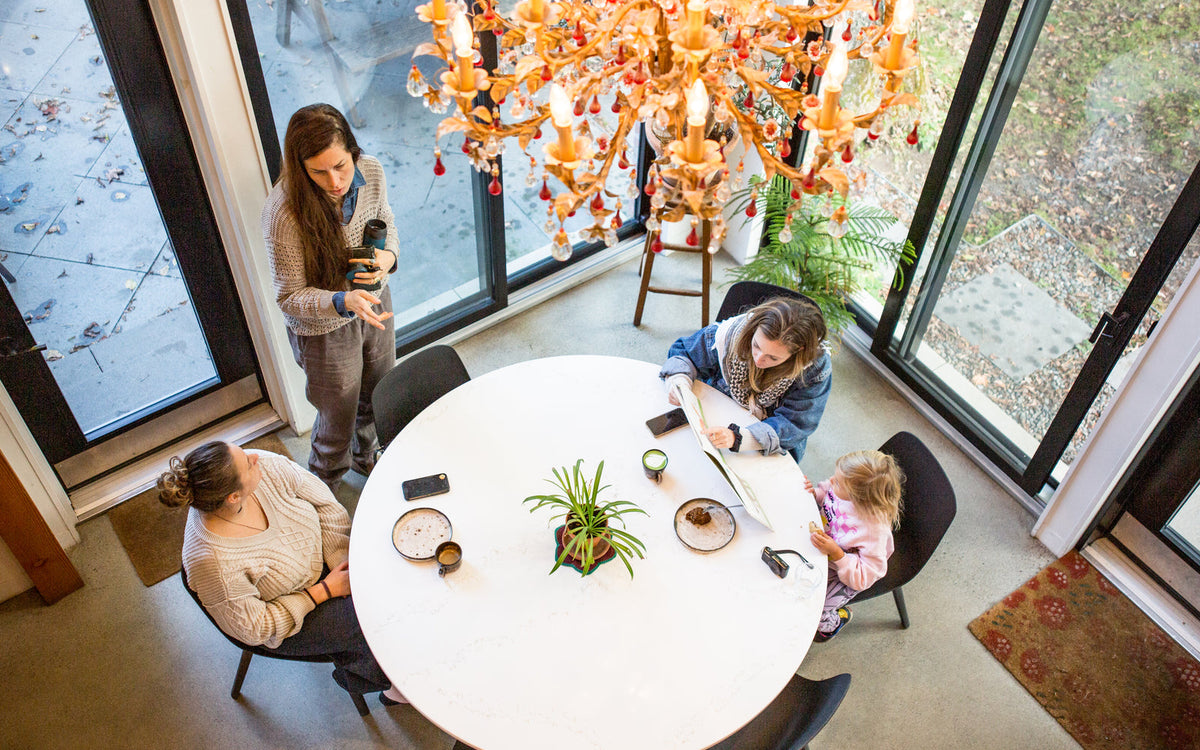
Some of the furniture in Revelstoke’s Dose Coffee came straight out of Lauren Webster and John Pierce’s home. The couple had collected pieces on road trips around British Columbia, and their new café needed furnishing. A friend contributed timber from an old church. When customers told Webster the place felt like a living room, there was a good reason. Today that café is Spilt Milk Coffee Roasters. You can still visit it at 101 2nd Street East in Revelstoke, or get to know the roastery through a flat white made with Daily Driver. For a second cup, try a black filter coffee from Ethiopia’s Ayla Shantawene station.
From an Australian café in Revelstoke to Spilt Milk
Webster and Pierce moved from Australia to Revelstoke in 2014 for the mountains and the snowboarding. What they missed was the time people spent in cafés back home, catching up with a friend over an espresso and staying for a second cup. They opened Dose Coffee downtown in 2017. The coffee in the grinder came first from Calgary’s Phil & Sebastian, then from Monogram. A rotating guest slot let the team find out which coffees regulars would order again. Webster and Pierce tell the café’s story in BCBusiness.
In February 2023, Dose opened its own roastery in Revelstoke’s Big Eddy neighbourhood. The founders wanted to give the people behind their bar a way to build a career in town. Taking green-coffee buying and roasting into their own hands created one such job for Lemmie Green. The new space had room for another of Pierce’s interests, too. In the early days, you could hear skateboards on the roastery floor. The Revelstoke Mountaineer covered the opening.
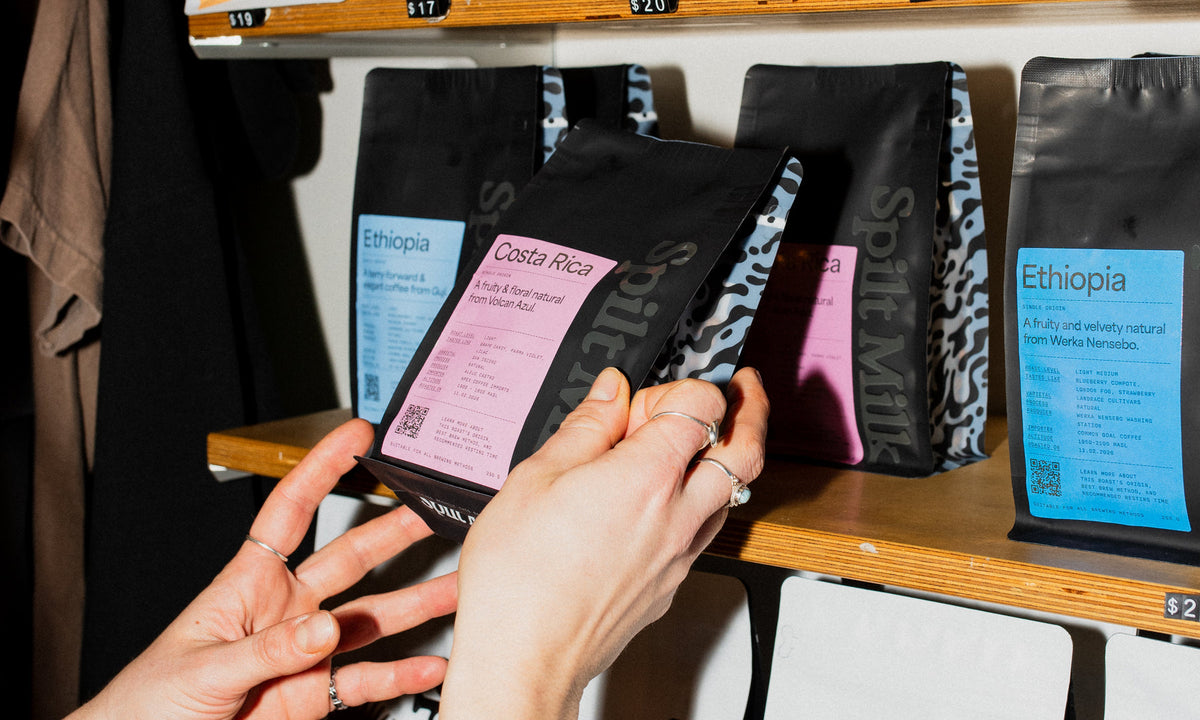
As the bags travelled farther from Revelstoke, a conflict over the Dose name caught up with the business. The team picked Spilt Milk in 2025. Pierce liked the link with skateboarding, where a fall is usually followed by another try. The team kept a souvenir of the name change on its coffee shelf. Its flagship Brazilian blend is called Trademark. The founders explain the new name in Commonly Coffee.
What head roaster Lemmie Green brings to the cup
Green had been head barista at Proud Mary in Melbourne, a café Webster and Pierce already admired. Green joined the Revelstoke team and took on buying green coffee and learning to roast. For early sample batches, the team used a small IKAWA P100. Production batches went through a 15-kilogram Loring S15 Falcon nicknamed Rosa. For Green, one of the nicest compliments came when many regulars barely noticed the change from Monogram to the house espresso. Read Green and Pierce’s early roastery interview.
You can see the café’s influence in the two ranges. Everyday is the place to look for a bag you can put through the espresso machine on Monday and the drip brewer on Tuesday. It includes medium and dark roasts. Premium gives Green room for seasonal lots with more distinctive flavours, including a washed Ethiopian coffee that finishes like sweet lime. If you usually add milk, start with the Everyday range. If you drink your coffee black and enjoy comparing origins or processing, look through the seasonal releases. Spilt Milk’s guide to its two ranges.
Which Spilt Milk coffee should you choose for espresso?
Daily Driver for a flat white, Alfred’s for an after-dinner espresso
Daily Driver is our first pick if you switch between flat whites and black coffee. Ricardo Zelaya grows this washed Guatemalan coffee at Finca Santa Clara. Spilt Milk buys it through Common Goal Coffee, whose connection with Zelaya predates the roaster’s. Its medium roast leaves room for candied orange alongside honeycomb and brown sugar. For a double espresso, try 18 g of coffee for 36 g in the cup in about 30 seconds, scaled from Spilt Milk’s recipe. Taste a spoonful before adding steamed milk to see how much of that orange comes through.
Alfred’s takes its cue from Milanese espresso. Spilt Milk gives coffees from Brazil, Ethiopia and Sumatra a long, slow roast for a dark cup with cocoa, tiramisu and almond-like amaretto notes. The name belongs to the team’s Italian-inspired restaurant, which began as an evening pop-up at the café. Alfred, known as Alfio, was Webster’s grandfather, a sugarcane farmer in Queensland. The radio in the restaurant’s logo is a tribute to the one that played in his shed. Try his namesake coffee in an affogato by pulling a double over a small scoop of vanilla ice cream. The family story behind Alfred’s.
Trademark, Double Double and Wired Enough Decaf
If you like a chocolatey espresso, the choice between Trademark and Double Double comes down to how dark you like the roast. Trademark blends naturally processed Brazilian coffees from Deyvid Leandro and the Barbosa family. Think brownie and hazelnut with a butterscotch finish. Double Double takes Leandro’s Brazilian Red Catuaí darker, toward dark chocolate, maple syrup and peanut brittle. It’s the bag we’d pick for someone who takes cream and sugar. For an evening cappuccino, Wired Enough Decaf pairs caramel and toasted-nut notes with cocoa. The Colombian beans are decaffeinated by Swiss Water in British Columbia.
Ayla Shantawene, tasted washed and natural
For a two-bag introduction to Spilt Milk’s filter roasting, choose the Ayla Shantawene pair. Around 725 farming families bring coffee cherries to this Ethiopian station, operated by Testi Coffee. The station name appears on both bags. On one, the fruit is removed before drying. On the other, the seed dries inside the cherry. Spilt Milk also roasts them a little differently, which gives you two things to pay attention to in the cup.
| Coffee | Roast | What to look for |
|---|---|---|
| Ayla Shantawene Washed | Light | Pineapple, white peach and a lime finish. Try this first for a bright paper-filter cup. |
| Ayla Shantawene Natural | Light-medium | Blackberry jam, lilac and milk chocolate. Try this for a creamier filter coffee or a berry-toned espresso. |
For both lots, Spilt Milk suggests 20 g of coffee to 340 g of water, with a medium-coarse grind. For a smaller tasting, make each with 12 g and 204 g of water. Use the same brewer and pour pattern, and alternate sips as the cups cool. Smell the natural first, then taste the washed. On the second pass, pay attention to how long the blackberry sweetness lingers compared with the lime. Both processing and roast level differ here, so this tasting is a way to discover which cup you prefer. The roaster’s washed lot notes and natural lot notes.
Two more filter coffees, from Huila and Cerrado Mineiro
If it’s the citrus you liked in the washed Ayla, follow it with Peñas Blancas. Nestor Lasso and Jhaon Vergara founded this central washing station in Huila so neighbouring Colombian growers could use its processing facilities. The lot combines Caturra and Castillo. Orange marmalade captures the first impression, both the sweetness and the little edge of peel. Apple and a finish reminiscent of oolong tea make this a good choice for someone who likes a lighter-bodied filter coffee.
For a different take on the same Brazilian family behind part of Trademark, try Ipê. At Fazenda Joia Rara in Cerrado Mineiro, the Barbosas fermented whole Yellow Catuaí cherries in sealed bags for 96 hours before pulping and patio drying. Here Spilt Milk roasts light. The roaster’s notes run to passion fruit, green apple and gummy bears, a long way from Trademark’s brownie and hazelnut. Brew either Peñas Blancas or Ipê with 20 g of coffee to 320 g of water as a starting point. Spilt Milk’s account of the Ipê lot.
See which Spilt Milk coffees are available at Speciality Coffee Canada.
Cover photograph from Spilt Milk Coffee Roasters.