Yamabiko Coffee Roasters, from Sutton’s Saturday market to rue Principale
At Sutton’s Saturday market in 2020, making a flat white took two people. Chris Shinn pulled the espresso on a hand lever. Beside him, Nahoko Nakada steamed the milk with a stovetop steamer she had brought in from Indonesia. Their stall had no plumbing, but it could serve the drink they remembered from Melbourne. That stall became Yamabiko Coffee Roasters, a café and roastery in Quebec’s Eastern Townships.
How Nahoko Nakada and Chris Shinn found their way to Sutton
Nakada and Shinn met in Australia. For Nakada, who had come from Japan to study English, part of the attraction was watching a barista pour a pattern into the milk. Shinn, originally from Ontario, took to Melbourne’s small espresso drinks. The couple later lived in Vancouver. Shinn’s brother was their connection to Sutton, where they found themselves as the pandemic began. Olivia Enns’s early profile for Le Tour and the couple’s story in Canadian Geographic.
Before the market stall, there was the Sutton Coffee Drop. Shinn organized group orders from Canadian roasters and delivered bags to neighbours’ doorsteps. By May, people could buy a cup from the couple at the market. Roasting followed because they wanted a say in what went into that cup. A counter at Round Top Bagels gave them another place to serve espresso before they opened their own café on rue Principale Sud. The founders recall the Coffee Drop and their first espresso bar.
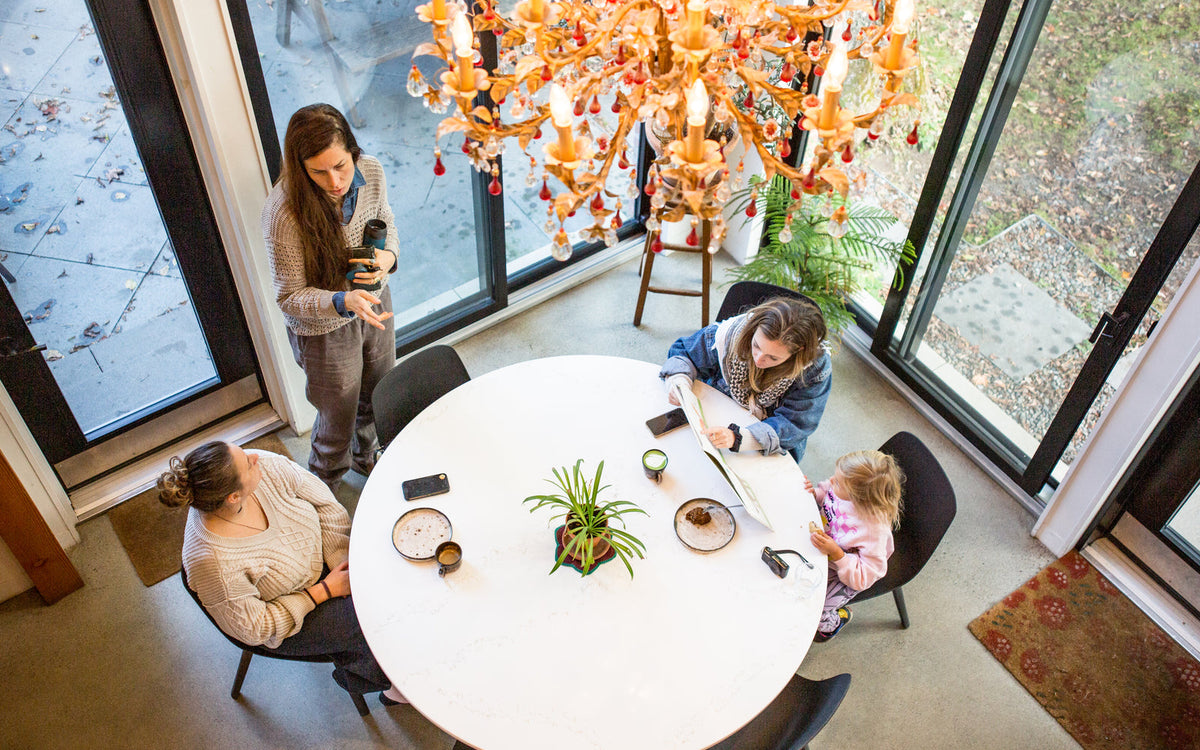
In May 2025, five years after the project began, the roasting equipment moved from rue Cemetery to rue Principale. A garage door facing the café’s back terrace now connects the two spaces. For someone drinking a flat white out back, the place where the beans were roasted is just across the terrace. Le Tour on the move to rue Principale.
A mountain echo and a bird from Melbourne
The Japanese word yamabiko refers to an echo in the mountains. Nakada and Shinn chose it for their adopted mountain town. The bags tell a few more of their stories. The rainbow lorikeet on Good as Gold is a nod to their Australian friends. Its name comes from an expression one of those friends used, and the espresso reminds the team of drinking coffee in Fitzroy, Melbourne. On Quetzal, look for the bird that gives the Guatemalan coffee its name. The story behind Good as Gold and Yamabiko’s notes on Quetzal.
How Yamabiko buys and roasts its coffee
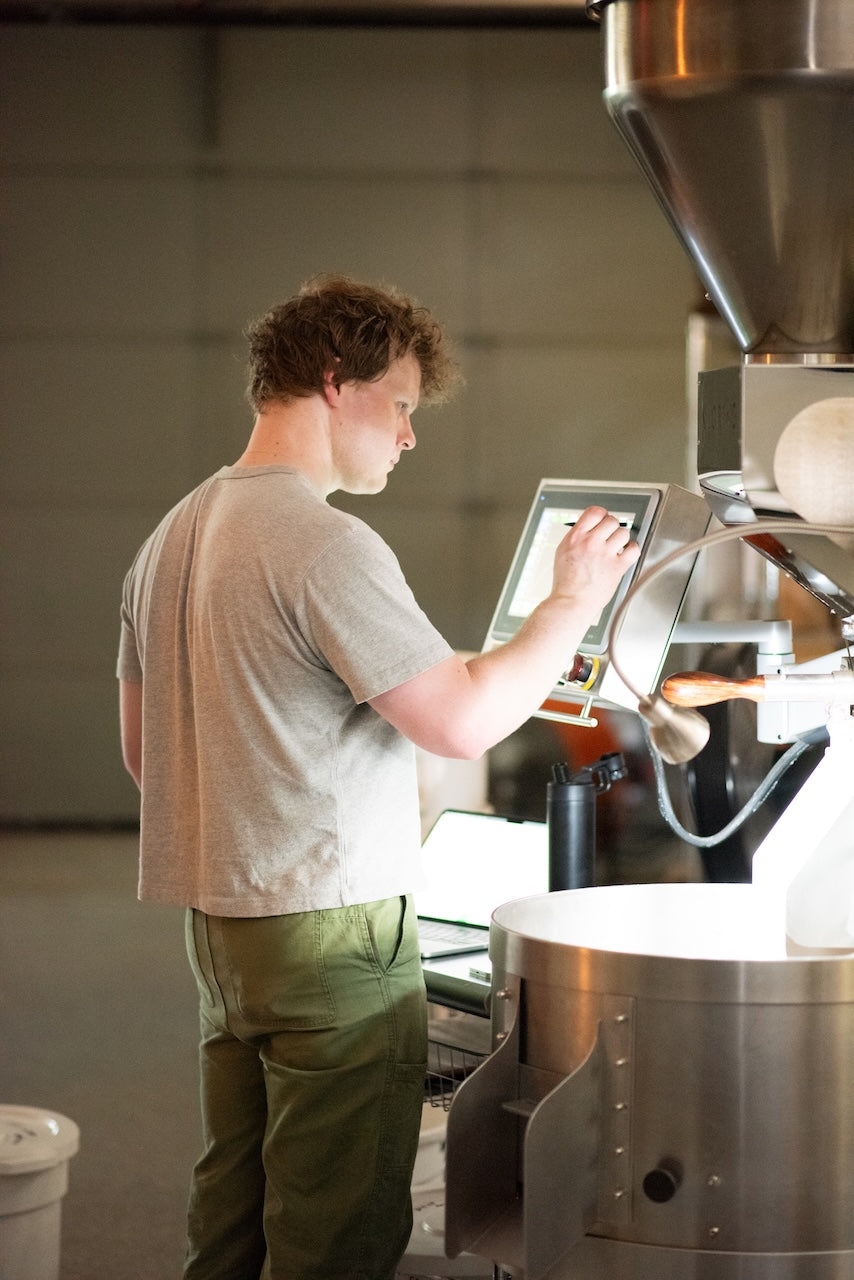
Yamabiko roasts weekly in Sutton on a San Franciscan drum roaster. Its buying program centres on smallholder farms, including lots that bring together the harvests of several growers at a washing station. The team tastes samples and works with a small network of importers and exporters. At the roaster, sweetness is the common thread. How the team gets there depends on what it tasted in the green coffee and how it wants the finished cup to drink. Yamabiko’s account of its sourcing and roasting.
Two coffees show the range. The original house espresso, Kick Start, gets a little more development in the roaster. Dark chocolate and cooked cherry are flavours you can still pick out in a cappuccino. For Move, the team took a quicker, lighter approach to preserve the rose aroma of Didier Ortega’s washed Colombian Pink Bourbon. The relationship behind that bag runs both ways. Ortega, a founding member of Monkaaba, visited Sutton in 2023. Later, he guided the Yamabiko team around farms near his home in San Agustín, Huila. Yamabiko on meeting Didier Ortega.
Which Yamabiko coffee should you try for espresso?
If you remember the espresso from a visit to Café Yamabiko, start with Kick Start, the café’s original blend. If you make both espresso and drip and want one bag open on the counter, Mélange Maison is our pick. Here’s how the five options taste alongside one another.
| Coffee | Origin and roast | Choose it for |
|---|---|---|
| Kick Start | Brazil and Colombia · medium-dark | A cappuccino with dark chocolate and a touch of cherry. |
| Mt Echo | Brazil · medium-dark | Rounded espresso with caramel and nuts. A good choice for gentle acidity. |
| Mélange Maison | Mexico and Guatemala · medium | Chocolate, hazelnut and crème brûlée. Works as an everyday filter, too. |
| Good as Gold | Brazil and Ethiopia · medium | Milk chocolate and berries. Try it if you want some fruit in a flat white. |
| Luna Decaf | Honduras · medium | Brownie, almond and date. A washed community lot decaffeinated by Swiss Water in British Columbia. |
Five single origins to explore on filter
Quetzal and Aki for chocolate, citrus and a gentler cup
Quetzal comes from Max Perez at Finca La Hermosa in Acatenango, Guatemala. Perez and his wife restored an abandoned farm, replanted trees and built a wet mill. For this lot, washed Bourbon and Caturra give a medium roast with a familiar milk-chocolate and hazelnut opening. Save some for a second sip as it cools. Tangerine and fig are the details that make this bag worth lingering over.
Aki is our other washed Guatemalan filter pick. Here the flavours lean towards brownie and caramel, with orange zest at the finish. We’d choose Aki for a full pot at breakfast and Quetzal for a slow pour-over, especially if you like discovering a little more fruit halfway through the cup.
Move for a floral Colombian filter
Choose Move if aroma is what draws you to a coffee. Ortega’s Pink Bourbon opens with rose, then moves towards tropical fruit and a sweetness the roaster likens to icing sugar. Try the first cup black in a V60. Smell it just after the drawdown, then take another sip when it is comfortable to drink. The fragrance and the sweetness are easier to notice separately that way.
Cleo and Elle, two Ethiopian coffees to taste together
Cleo comes from Idido in Yirgacheffe, where ripe coffee cherries are sorted and dried whole on raised beds. Look for mandarin up front, stone fruit as the cup opens, then ginger and black tea. Of Yamabiko’s two Ethiopian selections, this is the one we’d give someone who likes a delicate finish.
Elle comes from the Bombe washing station in Sidama. This lot undergoes an anaerobic natural process, with a fermentation stage in a low-oxygen environment. Lychee and dried mango give Elle a riper fruit character, with cinnamon and cacao further back. Brew Cleo and Elle with the same water, dose and grinder setting for a first comparison. Both are light roasts. Their origins and processing differ, so think of the tasting as a chance to see which fruit character you prefer.
Two ways to brew Yamabiko at home
For a flat white with Kick Start, our starting recipe is 18 g of ground coffee for 36 g of espresso. Taste a spoonful before you steam the milk. If the shot runs fast and tastes thin or sharply tart, grind a little finer on the next one. Use a small cup for your first flat white so you can judge how much milk you like with the blend’s dark-cherry flavour.
For a paper-filter comparison, use 15 g of each coffee to 250 g of water, with a medium grind to start. Quetzal and Move make a particularly good pair if you want to compare two washed coffees. Brew them into separate servers, let them cool together and alternate sips. Start with the aromas, then see whether Quetzal’s hazelnut or Move’s rose is easier to recognize on the second pass.
Explore the Yamabiko Coffee Roasters collection at Speciality Coffee Canada.
Cover photograph from Yamabiko Coffee Roasters.