Mirra Coffee and Will Warren’s Nordic Roastery in New York
Will Warren came home from Europe in 2022 with a very particular taste in coffee. Working as a barista there, he had been able to drink April, Coffee Collective and Tim Wendelboe regularly. Back in the United States, he wanted to keep drinking that way. In December of that year, he founded Mirra Coffee in Kingston, New York, and devoted the roastery to the Nordic style he had come to love.
Will Warren, from Baltimore to the Hudson Valley
Warren grew up in Baltimore. It was Bard College, where he studied philosophy and literature, that drew him to the Hudson Valley. The coffee education that shaped Mirra took place across the Atlantic. In 2021, he worked behind the bar in Europe and got to know the coffees of Copenhagen and Oslo through repeated tasting. A bag of April or Tim Wendelboe was something he could open again the following week. Over time, their approach to buying and roasting became his own point of reference.
Warren saw room in American specialty coffee for a roastery explicitly dedicated to that tradition. In a July 2025 introduction to Coffee Rotation readers, he described how much of Mirra he still handled himself. He bought the green coffee, roasted it, applied labels, filled bags, packed orders and answered the emails. That detail gives the name on the box some weight. The person deciding whether a farm’s sample was worth buying could also be the person answering a customer’s question about how long to rest it. Warren’s account for Coffee Rotation.
What makes a roaster in New York “Nordic”?
Mirra calls itself the American Nordic roastery. Kingston is its home. “Nordic” describes an idea Warren brought to North America about what deserves attention in a cup of coffee. His starting point is the green lot. Who grew it? Which variety did they plant? Can you taste something distinctive about that harvest after the coffee has been roasted and brewed?
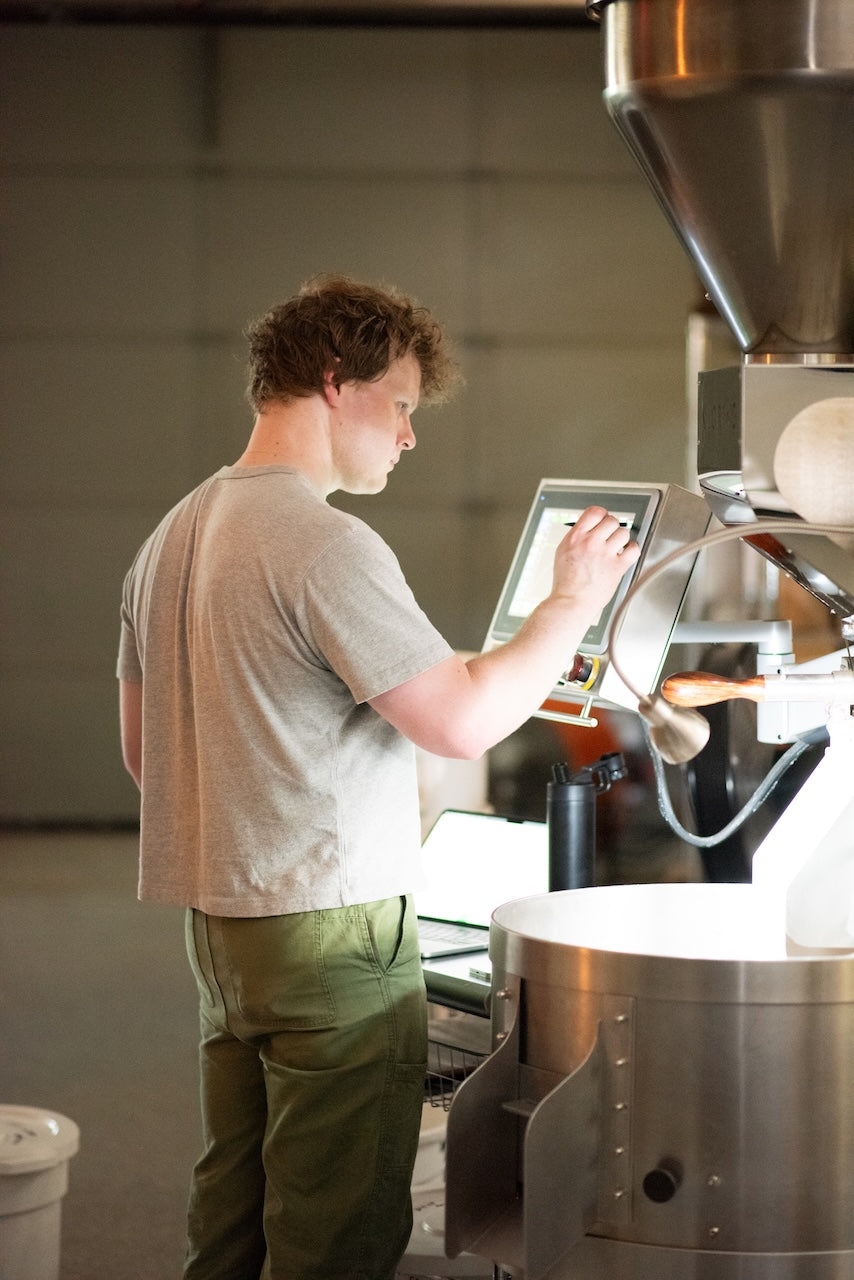
Mirra roasts on a Loring S15 Falcon and develops a separate profile for each offering. Its ultralight style aims for sweetness alongside acidity and a body that can feel as delicate as tea. Think of the difference between biting into a ripe blood orange and tasting the pith. Both are bright, but the sweetness in the first gives you a reason to take another bite. That balance is what to look for in a Mirra filter coffee. One practical way to find it is to leave half a cup in the carafe and return to it as it cools.
The decisions that happen before the roast
For Mirra, a producer’s name on the bag matters because it lets you follow their work across lots. Mirra reported sourcing roughly 80% of its 2026 releases to date directly from producer partners. It also works with specialist importers, including growers who export their own coffee. The roastery has been candid about where direct buying is harder for it, particularly in Ethiopia, Kenya and Tanzania. Mirra’s roasting and brewing notes.
Consider Paola Trujillo’s coffees from Patio Bonito in Colombia. Choosing between two washed lots from one family farm gives you a more precise question than asking what Colombian coffee tastes like. Would you prefer the citrus and elderflower associated with the Pink Bourbon, or the papaya and rooibos of the Wush Wush? The producer, farm and process give those tasting notes a context you can use the next time either variety appears on the shelf.
Which Mirra coffee should you try first?
Our first pick for a small milk drink is Luis Valdez from Guatemala. For black filter coffee, start with Hsu Tingyeh SL34 from Taiwan if you like raspberry and white tea.
Luis Valdez · Guatemala
At Finca San Lorenzo in Alta Verapaz, Luis Valdez grows this washed coffee with notes of stewed pear, speculaas and caramel. Its warm spice makes it a good place to start if you usually add milk.
Augustin Ccoyo Maragogipe · Peru
This collaboration with Brooklyn’s Secret Coffee features Maragogipe from Finca Progreso. Black cherry and apricot give lift to a syrupy cup with milk-chocolate sweetness.
Servio Gonzalez Geisha · Ecuador
This natural Geisha from Finca Clara Luz in Loja brings marshmallow, clementine and violet together. Choose it if you like a floral aroma with creamy sweetness.
Nelson Urrego Chiroso · Colombia
Nelson Urrego grows this washed Chiroso at Finca Granito de Oro in Antioquia. Candied lemon, hibiscus iced tea and dried papaya make it a pick for citrus lovers.
For another side of Colombia, the Trujillo family’s Patio Bonito farm in Cauca gives us two washed coffees. Paola Trujillo Pink Bourbon leans toward blood orange, Darjeeling and elderflower. Paola Trujillo Wush Wush shifts toward ripe papaya and rooibos.
Two side-by-side tastings
Karimikui, Kenya
The Rungeto Cooperative Society operates Karimikui washing station in Kirinyaga. Of the two washed selections, Karimikui AA has the brighter citrus profile, with red currant, Meyer lemon and basil blossom. Karimikui PB, the peaberry selection, brings darker berry fruit, quince preserves and peach blossom. Brew each with the same dose and water, then taste again as they cool. Which one still reminds you of fresh citrus?
Hsu Tingyeh, Taiwan
In 2001, Hsu Tingyeh began converting oolong fields to coffee at Zhou Wu Mountain in Chiayi County. His washed Hsu Tingyeh SL34 has notes of raspberry, white tea and sumac. The washed Hsu Tingyeh Typica, released with Taipei’s Looproom Coffee, suggests gooseberry, violet and milk tea. Here you can compare two varieties grown by the same producer on former tea land.
When should you open a bag of Mirra?
Read the roast date before planning your first brew. Mirra gives its filter coffees a preferred window of three to ten weeks after roasting and its espresso four to twelve weeks. It also says filter can be enjoyable from day five and espresso from day ten. If you have a small bag of a rare lot, save enough for a second session a week later. Use the same recipe and compare the aroma, sweetness and finish with your first cup. Mirra’s roasting and brewing notes.
How should you brew Mirra Coffee?
For a pour-over, our suggested starting point is 15 g of coffee to 250 g of water at 96°C. Use a medium-fine grind. Wet the grounds evenly with 45 g of water, wait 40 seconds, then pour the rest slowly. If the cup tastes sharp and thin, grind a little finer on the next brew. If the finish feels drying, go a little coarser. Keep the dose and water the same while adjusting.
Frequently asked questions
Does Mirra only roast washed coffee?
Mirra also selects natural lots. Servio Gonzalez’s Ecuadorian Geisha is one example in our selection. Each product page identifies the process used for that lot.
Where can I buy Mirra Coffee in Canada?
Speciality Coffee Canada carries a rotating selection of Mirra coffees. Check individual listings for bag size, roast date and availability. Explore our Mirra Coffee collection.
Roastery photograph courtesy of the Mirra Coffee website. Mirra Coffee.