History of Coffee: Origins, Trade and Specialty Culture
Coffee’s history connects a plant, a traded crop and many ways of gathering around a drink. It is not a single invention story, and the familiar legends should be separated from the evidence of cultivation, commerce and everyday life.
Begin with the plant, and treat the legend as a legend
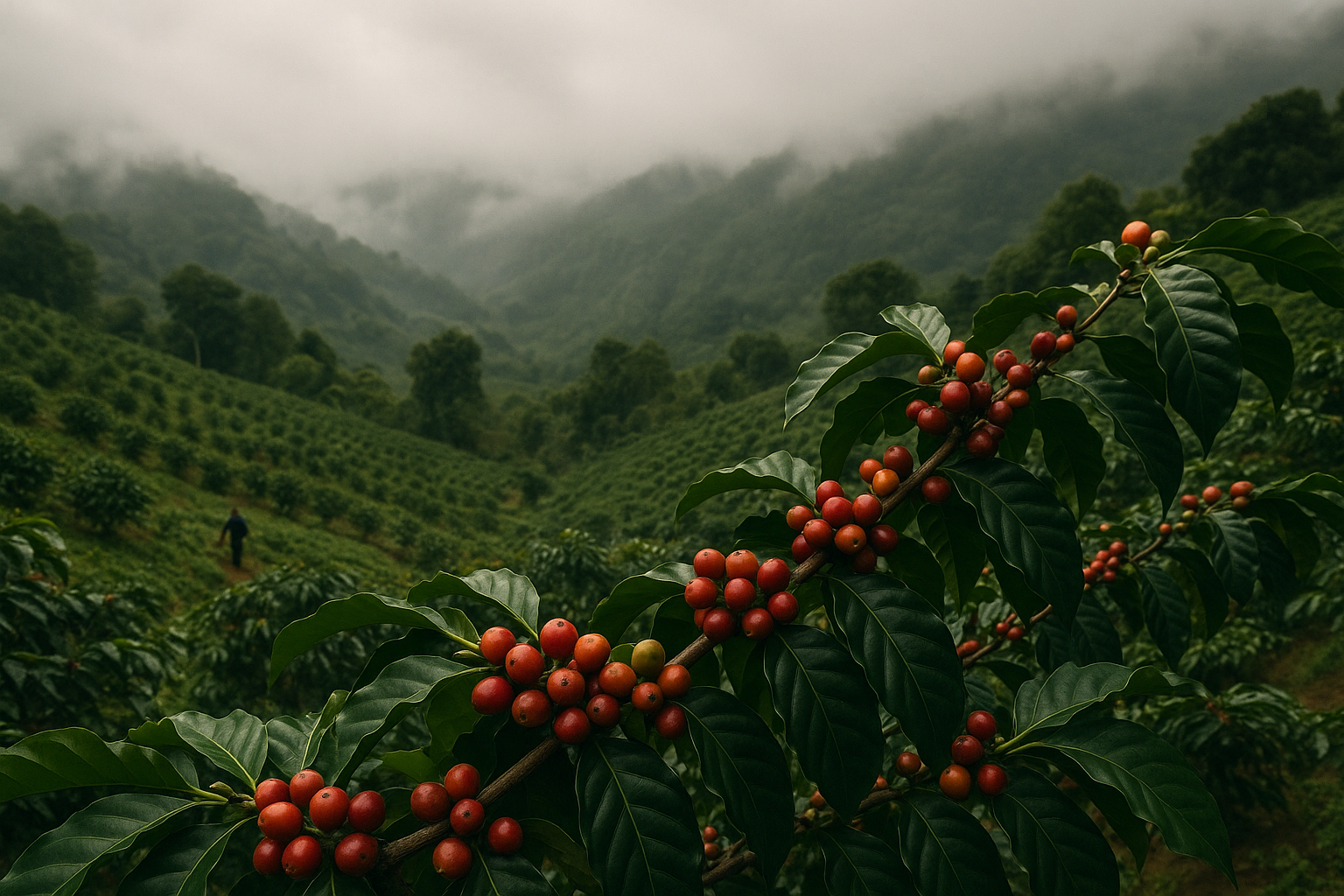
Arabica’s wild origins are associated with southern Ethiopia and South Sudan, as described by the Royal Botanic Gardens, Kew. That botanical history is different from identifying the first person to roast and brew the seeds.
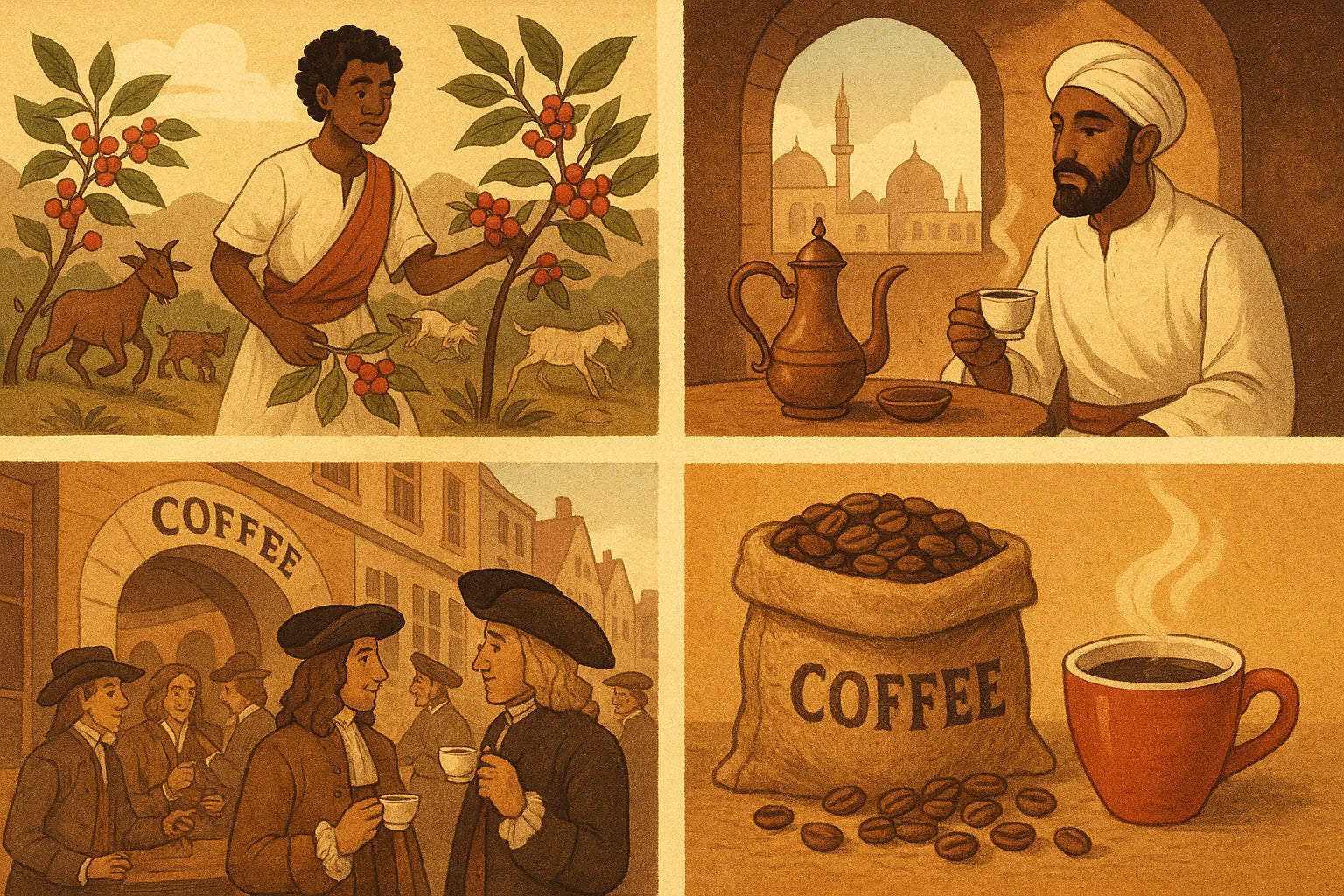
The story of Kaldi and his energetic goats is a well-known Ethiopian coffee legend. It is not reliable proof of a discovery date or of a single inventor of the beverage. Its lasting appeal tells us something about how people explain coffee’s stimulating character.
Yemen and the spread of coffee drinking
By the fifteenth century, coffee was being cultivated in Yemen. Its cultivation and trade helped establish the drink beyond its botanical origins. During the following century, coffee drinking spread through areas including Egypt, Persia and the Ottoman world.
Coffeehouses became places of conversation and social activity. They did not create sociability from nothing; they gave existing communities another setting in which to meet, exchange information and spend time.
Trade brought opportunity and exploitation
Coffee became established in Europe during the seventeenth century, and cultivation subsequently expanded through colonial networks in tropical regions. This expansion cannot be told only as an adventurous journey of plants and merchants.
The National Library of Medicine’s historical exhibition connects growing demand for coffee with slavery and colonialism. The people forced to cultivate and handle the crop are part of its history, alongside the cafés and trading companies that profited from it.
Many traditions, not one straight line of progress
Coffee developed different meanings in homes, markets and cafés. A modern espresso bar, an Ethiopian coffee ceremony and a household filter routine cannot be arranged neatly from primitive to advanced. Equipment and tastes change, while established traditions remain important.
Specialty coffee and the later language of a “third wave” brought renewed attention in parts of the trade to producers, flavour and preparation. They did not invent quality or cultural appreciation, nor do their labels automatically guarantee fair outcomes.
Read today’s bag with that history in mind
The growing origin, producer and roaster each represent a different stage of the journey. Learning those distinctions makes the coffee more interesting without requiring a romantic story for every cup.
Try comparing two coffees with clear origin information, then explore the people and processes behind them. The useful connection to history is curiosity grounded in evidence.
Continue the journey
Read our guide to coffee origins or explore Thai-grown coffees. Our third-wave coffee guide explains the modern terminology.
Sources and further reading: Royal Botanic Gardens, Kew: arabica origins; National Coffee Association: coffee history; National Library of Medicine: coffee, slavery and colonialism; Wrecking Ball: third-wave terminology.