La Cabra Coffee in Canada: Roasts, Flavours and Brewing
La Cabra offers a useful entry into Danish specialty coffee: light, expressive coffees with a single-roast approach that can work across brewing methods. Choosing a bag is less about finding an “espresso bean” than matching its flavour profile to the way you like to drink.
From Aarhus to a Copenhagen roastery
La Cabra began in Aarhus in 2012 and started sourcing and roasting coffee in 2013. Its development now includes a roastery in Copenhagen. The Aarhus origin remains part of its identity, but it should not be confused with the location of all its current roasting operations.
The company describes its approach in terms of bright, transparent coffee experiences. For the drinker, that is an invitation to compare the details of individual lots, rather than assume that every Danish coffee will taste alike.
One roast, different recipes
La Cabra’s single-roast philosophy is intended for different brewing methods. An omni-roast does not remove the need to dial in: espresso needs a different grind and brew ratio from a paper-filtered cup. Start with the relevant recipe and adapt it to your grinder, water and coffee.
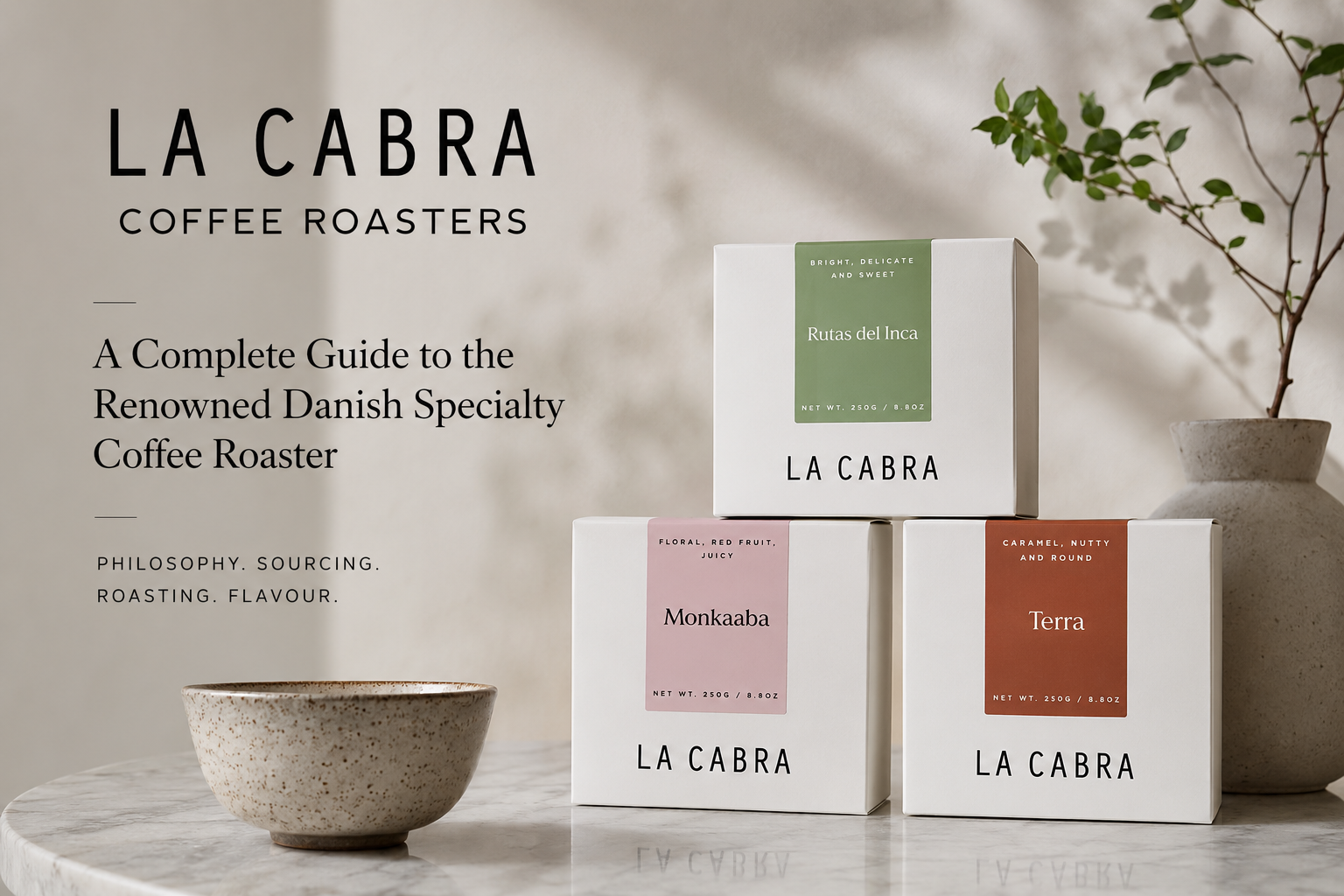
Our selection includes Luna for a fruit-and-floral direction and Terra for chocolate and roundness. These are useful flavour starting points, while individual releases such as Kiangoi or Julian Calderón Geisha offer another way to explore particular origins and varieties. Read each current product description because seasonal offerings change.
La Cabra coffees to explore
| Coffee to compare | Listed brewing method |
|---|---|
| La Cabra - Luna | Espresso / Filter |
| La Cabra - Terra | Espresso / Filter |
| La Cabra - Kiangoi | Espresso / Filter |
| La Cabra - Julian Calderón Geisha | Espresso / Filter |
Resting is part of the brewing approach
La Cabra recommends at least ten days of rest for its coffees and reports good results beyond six weeks for some dense lots. It also publishes different V60 approaches for coffees under three weeks, between three and six weeks, and over six weeks from roast.
Those are roaster-specific recommendations, not universal freshness deadlines. Storage, roast development and the particular coffee still matter. Keep the bag sealed away from heat and moisture, and taste across several brews rather than discard a coffee because it has passed an arbitrary date.
Make your first adjustment deliberately
Use one consistent dose and water amount. If a filter brew feels sharp and thin, a small move finer can be a useful test; if it becomes dry or drains unevenly, reassess pouring and grind instead of chasing a target time. Espresso requires the same discipline: record dose and beverage weight before changing settings.
Flavour descriptors are comparisons, not promises that everyone will perceive the same note. A successful cup is one you enjoy and can reproduce.
Choose a starting point
Browse La Cabra coffee in Canada or read our guide to resting coffee after roasting for the broader context.
Sources and further reading: La Cabra: origins and roastery; La Cabra: single roast philosophy; La Cabra: resting and V60 recipes.