Speciality Coffee Beans: From Farm to Cup — The Journey of Exceptional Flavor
Behind every memorable cup of coffee is a story: that of a terroir, a know-how and a shared passion.
Specialty coffee beans represent the excellence of this art — grown with care, harvested by hand, and then roasted with almost scientific precision.
Unlike industrial coffee, specialty coffee is not a mass product.
It is a sensory experience that honors quality, transparency and respect for the producer.
In this comprehensive guide, we'll discover what makes specialty coffee beans so unique, where they come from, how they're roasted and prepared, and why choosing them has a lasting impact — for you and the planet.

1. What is a Specialty Coffee?
The term "specialty coffee" refers to coffee that scores 80 or more points out of 100 according to the criteria of the Specialty Coffee Association (SCA).
This rating rewards the exceptional quality of the bean, from the field to the cup.
Specialty Coffee Beans Features:
- Grown at altitude (often above 1,200 metres).
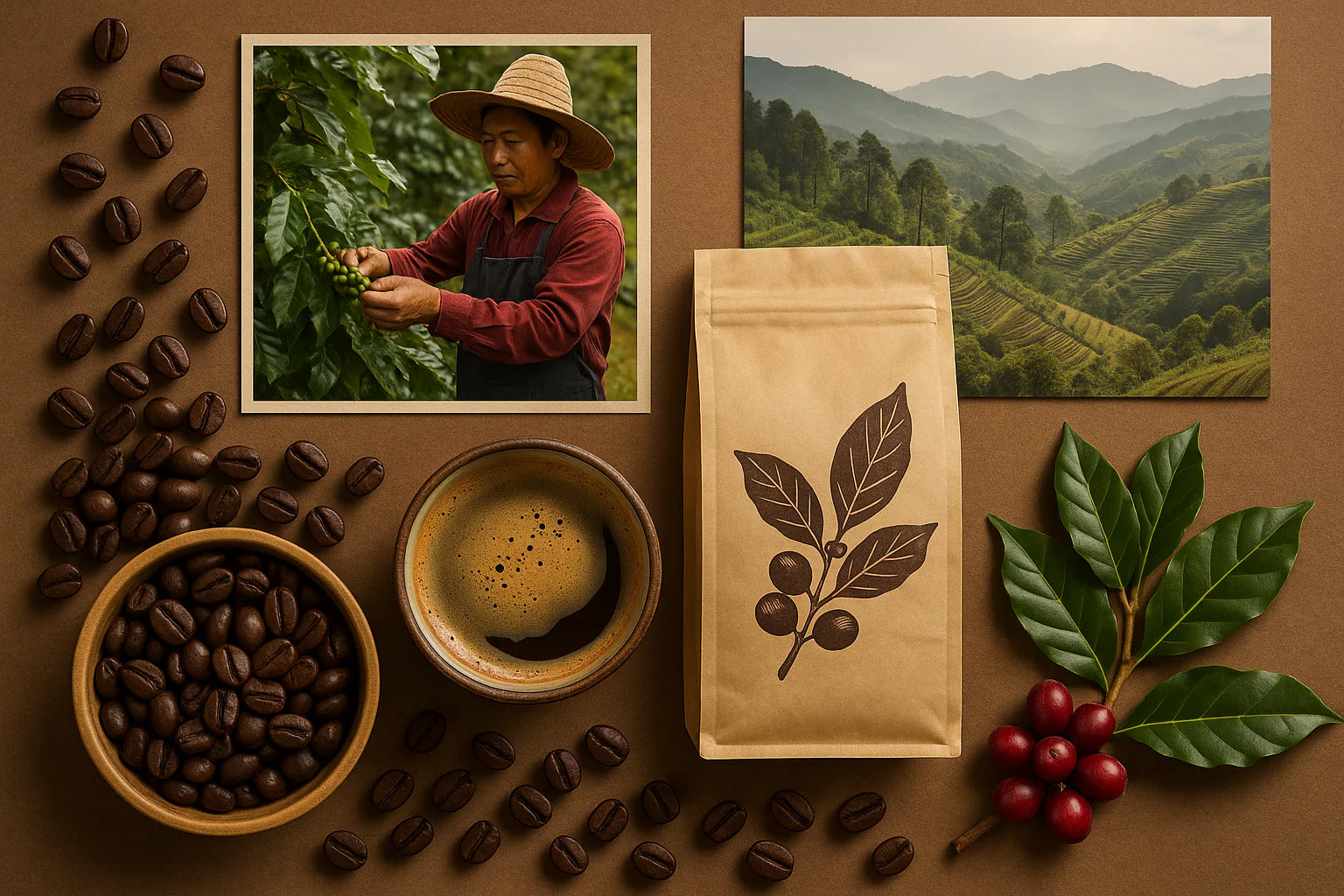
- Harvested by hand, only at perfect ripeness.
- Careful treatment: washed, natural or honey to adjust the flavor profile.
- Artisanal roasting: small batches for optimal control.
- Full traceability: each bag is linked to its farm of origin.
Specialty coffee isn't a trend: it's a commitment to quality and sustainability.
2. The Origin of Specialty Coffee Beans
The best specialty coffee beans grow in the "coffee belt", between the tropics of Cancer and Capricorn, where the climate and altitude are ideal.
Emblematic regions and aromatic profiles:
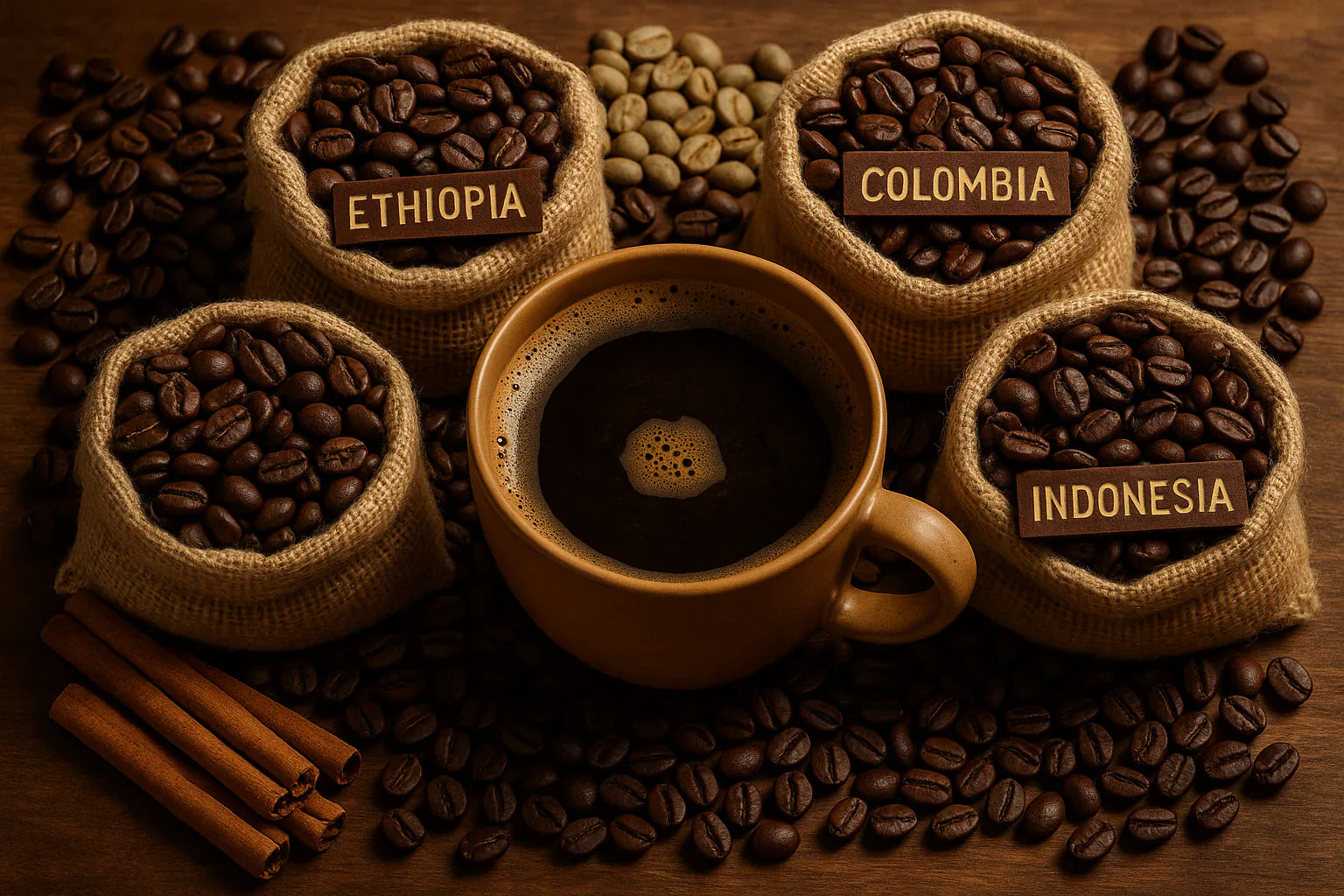
- Ethiopia: floral, fruity and tangy — the birthplace of coffee.
- Colombia: balanced, round and chocolatey.
- Thailand: sweet, slightly honeyed, with notes of citrus and nuts.
- Honduras: smooth, sweet and delicate.
- Costa Rica: lively, citrusy and clear.
Each terroir, depending on its soil and altitude, influences the final flavor of the coffee.
To better understand the types of coffee and their particularities, check out:
? The different types of coffee explained
3. The Selection and Classification Process
Before obtaining the "specialty coffee" label, the beans go through a series of strict evaluations.
SCA Criteria:
- Visual inspection: no visible defects (broken, altered grains, impurities).
- Cupping: evaluation of aroma, acidity, body, sweetness and length in the mouth.
- Uniformity: consistency of quality across the entire batch.
Only 5% of the world's coffee reaches this level of excellence.
4. Roasting: the alliance of Science and Art
Once harvested and dried, the specialty coffee beans pass through the hands of the roaster, who is the true conductor of aromas.
Roasting transforms the green beans into brown pearls ready to reveal all their aromatic richness.
The main roast levels:
- Light roast: floral aromas, marked acidity, light texture.
- Medium roast: perfect balance between sweetness and intensity.
- Dark roast: full-bodied, chocolatey, slightly bitter.
Each roaster develops its roasting curve according to the origin and the desired profile, in order to sublimate the natural complexity of the bean.
5. Why Are Specialty Coffee Beans Better?
The difference lies in the care taken at each stage of the process:
a) Freshness
Specialty coffees are roasted in small batches and often to order — a guarantee of freshness and aroma.
b) Aromatic complexity
Each cup can reveal floral, fruity, honeyed, or chocolate notes depending on the terroir.
c) Sustainability
Specialty coffee is based on direct trade and respect for producers.
d) Passion and transparency
From the farmer to the barista, each player in the sector values quality over quantity.
6. How to Prepare Specialty Coffee Beans at Home
Even the best beans require precise preparation to reveal their full potential.
Essential Tips:
- Grind just before preparation to preserve the aromas.
- Use filtered water between 90 and 96 °C.
- Respect the perfect ratio: 1 g of coffee to 16 g of water.
- Try several methods: espresso, filter, plunger or Chemex.
- Store the beans in an airtight container, away from light and moisture.
To learn how to extract the best from your coffees, check out:
? How to make great coffee
7. Caffeine: A Natural Boost
Coffee is famous for its energizing effect — but why does it do this?
Caffeine blocks adenosine receptors, which are responsible for the feeling of fatigue. The result: increased alertness, improved concentration and boosted mood.
However, each person metabolizes caffeine differently depending on their body.
To better understand this mechanism, read:
? Why does caffeine keep us awake?
8. The Future of Specialty Coffee
The specialty coffee bean market is growing rapidly in Canada and around the world.
Consumers are now looking for traceability, quality and sustainability.
The major trends to come:
- Climate-resilient agriculture.
- Carbon neutral roasting and recyclable packaging.
- Artificial intelligence technologies for quality control.
- Fair trade strengthened to support small producers.
Specialty coffee isn't a fad — it's a fundamental movement that is transforming coffee culture.
9. Where to Buy Specialty Coffee Beans in Canada
The good news is that Canada is full of great craft roasters.
Here are some references to discover:
-
Speciality Coffee Canada – Ministry of Roasters
Small Batch Artisan Roast, Origins: Thailand, Ethiopia, Honduras. - Phil & Sebastian (Calgary) – complex and balanced coffees.
- 49th Parallel (Vancouver) – pioneers of direct trade.
- Pilot Coffee Roasters (Toronto) – sustainability and consistency.
- Detour Coffee (Ontario) – innovation and creativity.
For consistently fresh coffee, check:
- The roast date
- The origin and method of processing
- The roaster's ethical commitment
10. Why Choose Specialty Coffee Beans?
Choosing specialty coffee is much more than a matter of taste.
It means supporting a sustainable and equitable model.
You contribute to:
- Valuing the work of producers.
- Reduce environmental impact.
- Promote quality over quantity.
- Preserving biodiversity and local ecosystems.
Each cup becomes a conscious gesture, an ethical and authentic pleasure.
Conclusion
Specialty coffee beans embody the best of global coffee culture.
They are the result of a perfect balance between nature, science and human passion.
From the producer to the roaster, each player works to reveal the full aromatic potential of the bean.
At Speciality Coffee Canada, we believe that exceptional coffee starts with an exceptional bean—grown with respect, roasted with precision, and shared with passion.
Savour, discover, and let each cup tell you a story.
☕ FAQ — Specialty Coffee Beans
1. What is a specialty coffee bean?
A grain that scores 80 points or more according to the SCA, guaranteeing superior quality.
2. Are specialty coffees organic?
Many are, but the key is sustainable and transparent practices.
3. How long do the beans keep their freshness?
Ideally between 2 and 4 weeks after roasting, stored hermetically.
4. What is the best extraction method?
It depends on the desired taste: filter for clarity, espresso for intensity.
5. Does specialty coffee have more caffeine?
Not necessarily — the flavor profile is more complex, but the caffeine content varies depending on the variety.
6. Why does specialty coffee cost more?
Because it fairly remunerates producers and requires very high quality standards.
7. Where to buy specialty coffee beans in Canada?
On SpecialityCoffee.ca, with coffees roasted by hand and delivered fresh.