Why is Thai coffee so special?
Published by SpecialityCoffee.ca

■ Why is Thai coffee so special?
Thailand is not always the first country that comes to mind when talking about coffee — yet in recent years, it has established itself as one of the most fascinating origins in the world of specialty coffee.
■ A unique origin
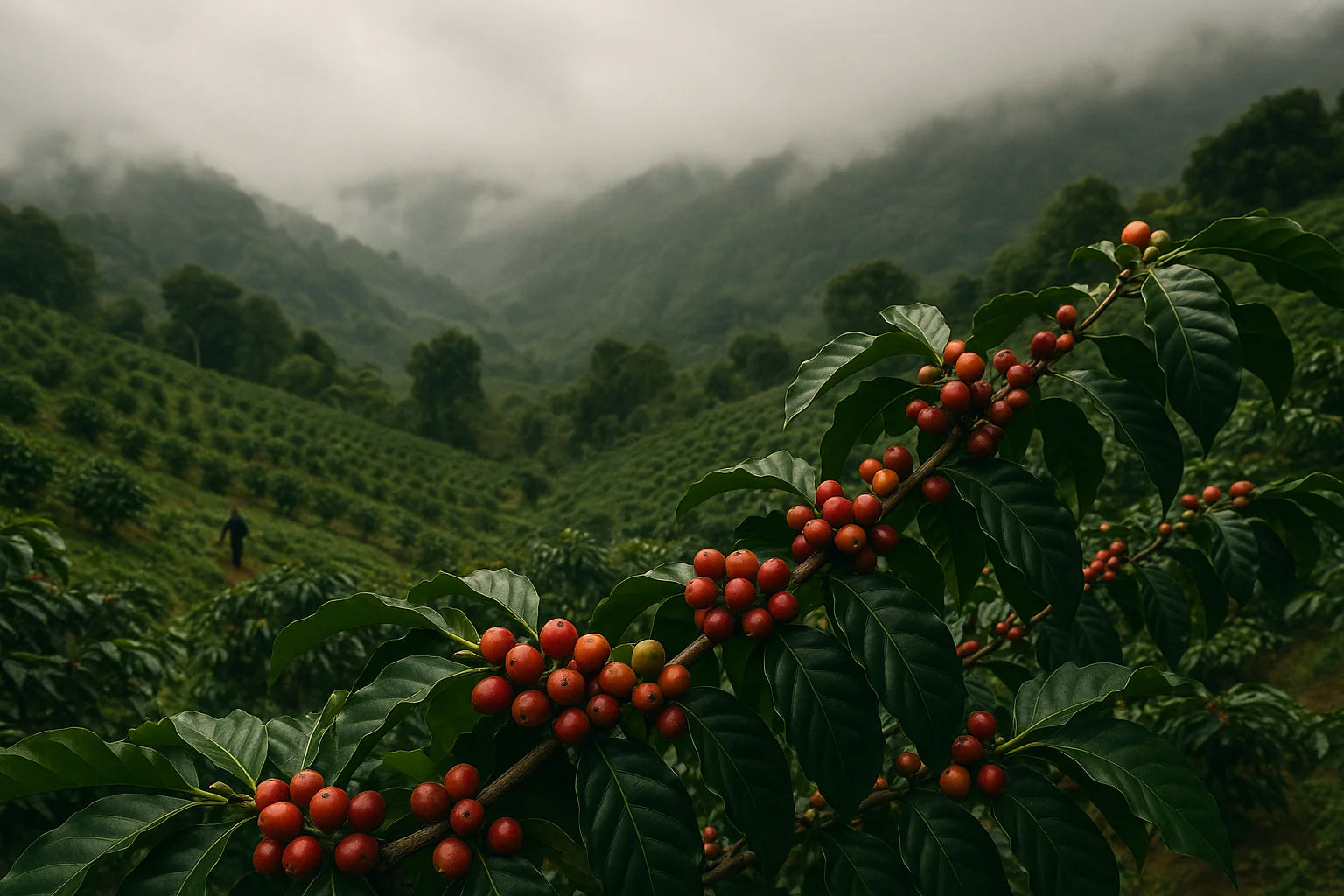
Thai coffee is mainly grown in the northern regions of the country, in areas such as Chiang Rai, Chiang Mai, and Mae Jan Tai. The altitude, fertile soils, and misty climate provide ideal conditions for cultivating exceptional Arabica. Farmers harvest by hand and favor sustainable and often organic methods, ensuring both quality and environmental respect.
■ From opium fields to coffee farms
In the past, these mountains were known for opium cultivation. Thanks to royal agricultural development projects, local communities were able to replace this production with coffee — a shift that brought hope and economic stability. Today, coffee from these same hills symbolizes renewal, craftsmanship, and local pride.
■ Ministry of Roasters — The art of Thai coffee
At SpecialityCoffee.ca, we are proud to collaborate with the Chiang Rai-based roaster Ministry of Roasters, led by Anuwat. A true coffee artisan, he roasts each batch with precision to bring out notes of tropical fruit, chocolate, and floral sweetness. Each bag tells a story — of terroir, commitment, and passion.
■ Why is Thai coffee more expensive?
Producing specialty coffee in Thailand requires a great deal of manual work. Farms are small, often remote, and each harvest demands careful attention. Thai producers prioritize quality over quantity: fewer beans, but exceptional taste. The result is a cup that is refined, complex, and authentic.
❤ ■ An experience worth discovering
Thai coffee stands out for its balance of sweetness, fruitiness, and aromatic richness — a unique tasting experience even for seasoned coffee lovers. Discover the spirit of Thailand in every cup on SpecialityCoffee.ca and let yourself be surprised by its incomparable flavors.