


Published by SpecialityCoffee.ca
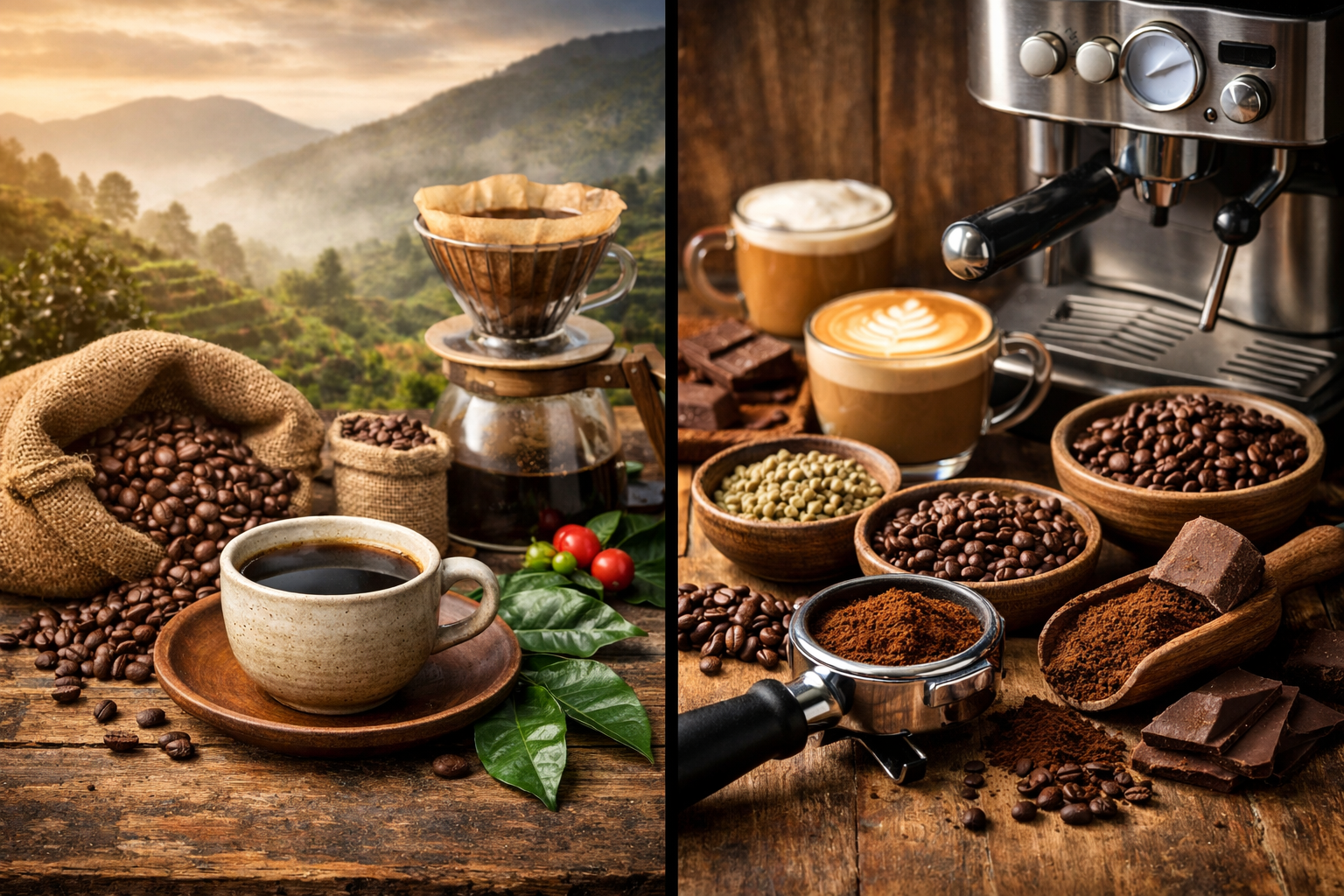
Introduction: Why This Question Matters More Than Ever
One of the most common questions specialty coffee drinkers ask is whether they should choose single-origin coffee or blends. As specialty coffee becomes more accessible across Canada, consumers are no longer satisfied with generic labels — they want to understand what they are drinking and why it tastes the way it does.
The truth is that neither single-origin coffee nor blends are inherently better. Each serves a distinct purpose, offers different advantages, and appeals to different brewing styles and taste preferences.
This guide explains the real differences, the pros and cons of each, and how to choose the right option based on how you brew and what flavors you enjoy.
What Is Single-Origin Coffee?
Single-origin coffee comes from one specific geographic location. This can mean:
- One country
- One region within a country
- One cooperative
- One farm or even a single lot
The defining characteristic is traceability. Single-origin coffees allow drinkers to experience how origin, altitude, soil, and processing shape flavor.
Flavor Characteristics of Single-Origin Coffee
Single-origin coffees are prized for their distinctive and expressive flavor profiles. Depending on origin, they may showcase:
- Floral aromas
- Bright citrus or stone fruit acidity
- Tropical fruit sweetness
- Tea-like or wine-like textures
These coffees highlight terroir, similar to wine, and often change slightly from season to season.
Advantages of Single-Origin Coffee
Transparency and Traceability
You know exactly where the coffee comes from, often down to the farm level. This appeals to consumers who value ethics, sustainability, and origin storytelling.
Flavor Complexity
Single-origin coffees offer unique flavor expressions that blends cannot replicate. This makes them ideal for tasting, exploration, and education.
Seasonal Freshness
Because they are harvested and released seasonally, single-origin coffees are typically sold closer to peak freshness.
Limitations of Single-Origin Coffee
Seasonal Availability
Single-origin coffees are not available year-round. Once a harvest sells out, it may not return until the next season.
Less Forgiving in Brewing
Because they emphasize clarity and acidity, single-origin coffees can be less forgiving of brewing mistakes, especially at lighter roast levels.
Flavor Variability
Seasonal changes mean the flavor profile can shift from one harvest to the next — a positive for enthusiasts, but a challenge for those seeking consistency.
What Is a Coffee Blend?
A coffee blend combines two or more coffees from different origins to achieve a specific flavor goal. Blends are carefully designed by roasters to balance sweetness, acidity, body, and consistency.
Contrary to outdated assumptions, high-quality blends are not made from inferior beans. In specialty coffee, blends are intentionally crafted recipes.
Flavor Characteristics of Coffee Blends
Blends are designed to be:
- Balanced and approachable
- Consistent across batches
- Versatile across brewing methods
Common flavor profiles include:
- Chocolate and caramel sweetness
- Nutty undertones
- Smooth acidity
- Fuller body
Advantages of Coffee Blends
Consistency
Blends deliver a reliable flavor profile year-round. This is especially important for espresso drinkers and cafés.
Brewing Versatility
Blends perform well across multiple brew methods and are generally more forgiving of grind and extraction variations.
Ideal for Milk-Based Drinks
Blends are often optimized to cut through milk, making them excellent for lattes, cappuccinos, and flat whites.
Limitations of Coffee Blends
Less Origin Transparency
Blends focus on flavor balance rather than showcasing a specific origin, which may be less appealing to origin-focused drinkers.
Reduced Flavor Uniqueness
While well-balanced, blends rarely offer the distinctive, standout flavors found in exceptional single-origin coffees.
Single-Origin vs Blends for Different Brewing Methods
Espresso
Blends are often preferred for espresso because they provide consistency, body, and sweetness that pairs well with milk. However, single-origin espresso is growing in popularity among experienced drinkers seeking brighter, more complex shots.
Pour-Over
Single-origin coffees shine in pour-over brewing, where clarity and origin character are emphasized.
French Press
Both can work well, but blends tend to offer richer body, while single-origin coffees highlight nuance.
Drip Coffee
Either option works, depending on whether you value consistency (blends) or exploration (single-origin).
Which Should You Choose? A Simple Decision Guide
Choose single-origin coffee if you:
- Enjoy exploring different flavor profiles
- Brew primarily pour-over or filter coffee
- Value transparency and origin stories
- Prefer lighter roasts with acidity
Choose coffee blends if you:
- Drink espresso or milk-based drinks
- Want consistency from bag to bag
- Prefer chocolatey, balanced flavors
- Brew coffee for multiple people with varying tastes
Many specialty coffee drinkers keep both on hand — a blend for daily use and single-origin coffees for exploration.
Why Specialty Coffee Retailers Offer Both
High-quality specialty coffee retailers curate both single-origin coffees and blends to meet different needs. Each plays an essential role in helping customers:
- Discover new flavors
- Brew confidently at home
- Enjoy coffee across different occasions
Offering both options is not a compromise — it is a reflection of thoughtful curation.
Final Thoughts: There Is No “Better,” Only Better for You
The debate between single-origin coffee and blends is not about superiority. It is about context, preference, and intention.
Single-origin coffees invite curiosity and exploration. Blends offer comfort, balance, and reliability. Understanding the strengths of each allows you to choose coffee that truly fits your lifestyle and brewing habits.