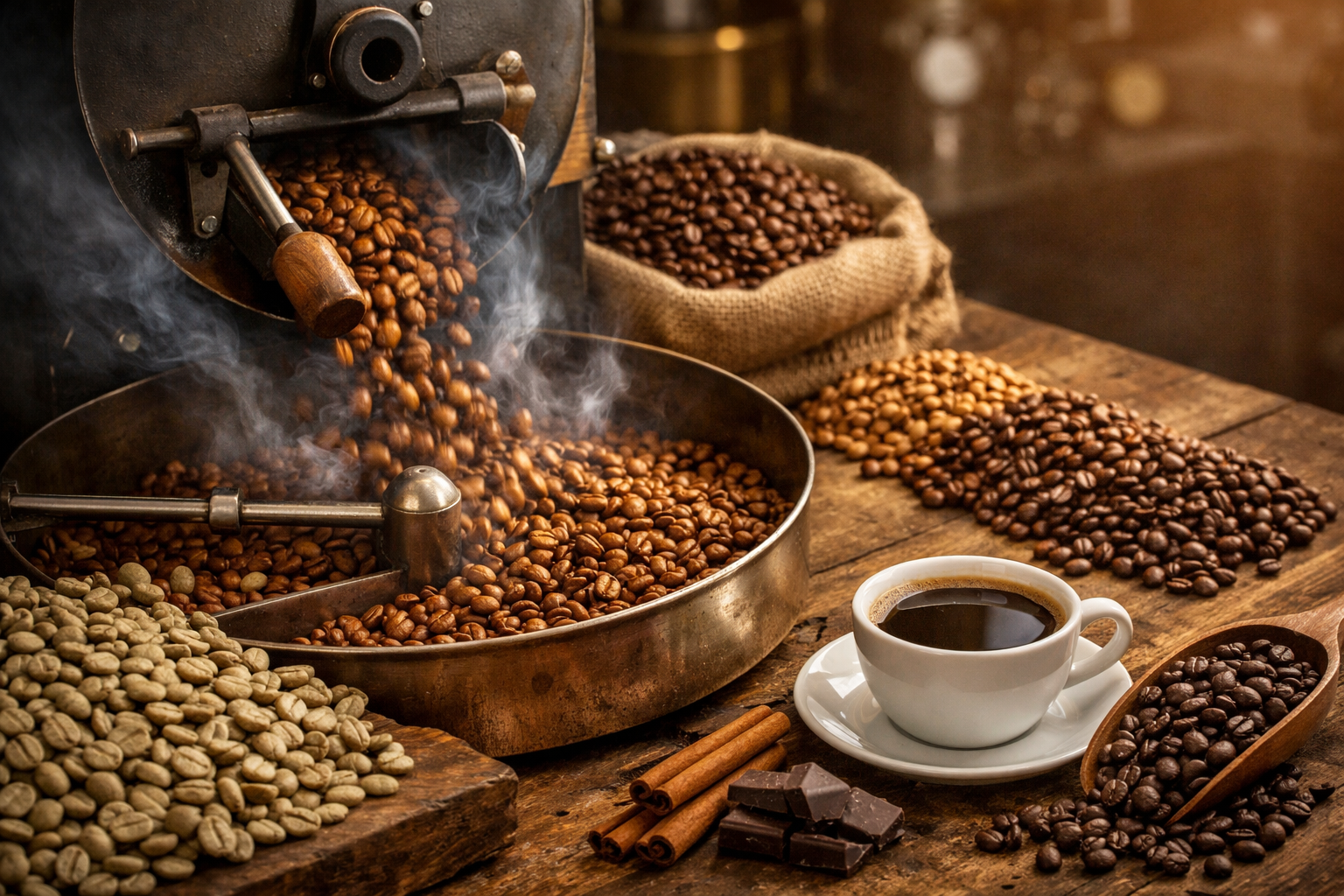


Published by SpecialityCoffee.ca
Introduction: What Coffee Cupping Really Is (and Why It Matters)
Coffee cupping is the standardized tasting method used by coffee professionals around the world to evaluate quality, compare coffees, and make buying decisions. While it may look technical or intimidating, cupping is actually the purest and most honest way to taste coffee.
Unlike brewing methods that introduce variables such as filters, pressure, or technique, cupping removes complexity. It allows the coffee itself — origin, processing, and roast — to speak clearly.
For home coffee drinkers, learning how to cup coffee is one of the fastest ways to:
- Understand flavor differences
- Improve buying decisions
- Train your palate
- Appreciate specialty coffee more deeply
What Is Coffee Cupping?
Coffee cupping is a controlled tasting process where coffee grounds are steeped directly in hot water without agitation or filtration. After brewing, the crust of floating grounds is broken, aromas are evaluated, and the coffee is tasted using a spoon.
Cupping is used to:
- Evaluate green coffee quality
- Compare roast profiles
- Identify defects
- Describe flavor notes consistently
It is intentionally simple so that nothing interferes with the coffee’s natural character.
Why Cupping Is Different from Brewing
Traditional brewing methods influence extraction through:
- Grind size
- Water flow
- Filter type
- Pressure
- Brew time
Cupping eliminates these variables. Every coffee is:
- Ground the same
- Brewed the same
- Tasted the same
This makes cupping ideal for objective comparison.
Who Uses Coffee Cupping?
Coffee cupping is used by:
- Coffee producers
- Green coffee buyers
- Roasters
- Quality control teams
- Competition judges
- Educated consumers
In recent years, cupping has become more accessible to home coffee enthusiasts who want to deepen their understanding.
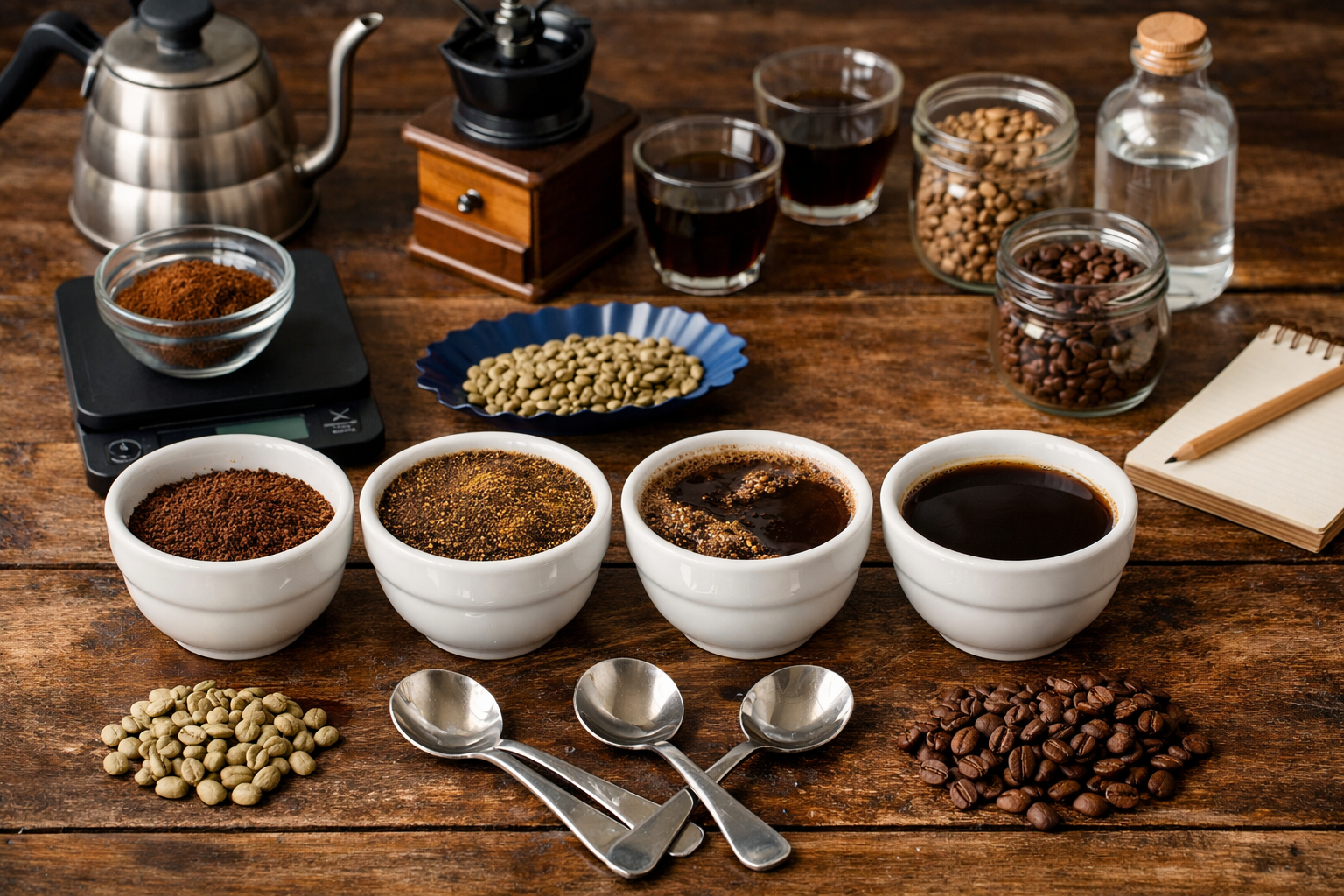
What You Need to Cup Coffee at Home
You do not need professional equipment to get started.
Basic Equipment
- Freshly roasted whole-bean coffee
- Burr grinder
- Scale
- Kettle
- Bowls or cups (identical if possible)
- Cupping spoons or soup spoons
- Timer
Optional but Helpful
- Tasting notebook
- Flavor wheel
- Filtered water
Consistency matters more than perfection.
Coffee-to-Water Ratio for Cupping
The standard cupping ratio is:
8.25 grams of coffee per 150 ml of water
This ratio ensures balanced extraction and consistency across samples.
Use the same ratio for every coffee you cup.
Step-by-Step: How to Cup Coffee at Home
Step 1: Grind the Coffee
Grind coffee slightly coarser than pour-over, similar to coarse sand.
Smell the dry grounds immediately and note:
- Floral
- Fruity
- Nutty
- Chocolatey
- Spicy
Dry aroma offers early clues about quality and freshness.
Step 2: Add Hot Water
Heat water to approximately 93–96°C (200–205°F).
Pour water directly over the grounds until the bowl is full.
Start your timer.
Do not stir.
Step 3: Smell the Crust (After 4 Minutes)
After four minutes, a crust of grounds forms on the surface.
Lean in and smell deeply. This moment often reveals:
- Peak aromatics
- Sweetness
- Fermentation notes
- Potential defects
Step 4: Break the Crust
Using a spoon, gently break the crust by pushing it away from you while inhaling.
This is one of the most aromatic moments of cupping.
After breaking, skim off remaining foam and grounds from the surface.
Step 5: Let the Coffee Cool
Wait another 5–10 minutes.
Coffee tastes different at different temperatures. Cupping emphasizes tasting across a cooling curve, which reveals balance and defects more clearly.
Step 6: Taste the Coffee
Using a spoon, slurp the coffee forcefully so it sprays across your palate.
This aeration helps aromas reach your nose and enhances perception.
Taste multiple times as the coffee cools.
What to Evaluate When Cupping Coffee
Aroma
- Clean or dull?
- Expressive or muted?
Acidity
- Bright and pleasant?
- Sharp or sour?
Sweetness
- Honey-like?
- Brown sugar?
- Absent?
Body
- Light and tea-like?
- Creamy?
- Heavy?
Flavor
- Clear and distinct?
- Muddy or confusing?
Aftertaste
- Clean and lingering?
- Bitter or drying?
How to Identify Quality During Cupping
High-quality coffee typically shows:
- Clean, pleasant aroma
- Natural sweetness
- Balanced acidity
- Clear flavor notes
- No harsh bitterness
Low-quality or defective coffee may taste:
- Astringent
- Phenolic
- Flat
- Sour or bitter simultaneously
Cupping makes flaws obvious.
Common Coffee Defects You Might Encounter
- Ferment: vinegar-like, sour
- Phenolic: medicinal, plastic
- Baked: dull, lifeless
- Smoky: excessive roast character
Identifying defects improves buying confidence.
Comparing Coffees Side by Side
Cupping multiple coffees at once is the most effective way to learn.
Try comparing:
- Different origins
- Washed vs natural processing
- Light vs medium roast
- Two Ethiopian regions
Differences become much clearer when tasted together.
Taking Notes Without Overthinking
You do not need fancy vocabulary.
Simple descriptors work:
- Sweet
- Bright
- Fruity
- Clean
- Heavy
- Bitter
Over time, your vocabulary will naturally expand.
Why Cupping Improves Everyday Brewing
Cupping trains your palate to recognize:
- Sweetness
- Balance
- Extraction issues
This makes you better at dialing in grind size, brew ratio, and water temperature at home.
Why Specialty Coffee Is Ideal for Cupping
Specialty coffee is:
- Free of major defects
- Freshly roasted
- Transparent in origin
This makes it easier to taste nuance and understand why coffees differ.
Final Thoughts: Cupping Is the Fastest Way to Learn Coffee
You do not need to become a professional to benefit from cupping. Even occasional home cuppings dramatically improve your ability to:
- Taste objectively
- Buy confidently
- Brew better coffee
Cupping transforms coffee from a habit into a skill — and makes every cup more rewarding.