Is There Really a Difference Between “Espresso” and “Filter” Roasts?
A very common question in specialty coffee:
Why does the same coffee appear in both espresso and filter versions?
Is there actually a difference — or is it marketing?
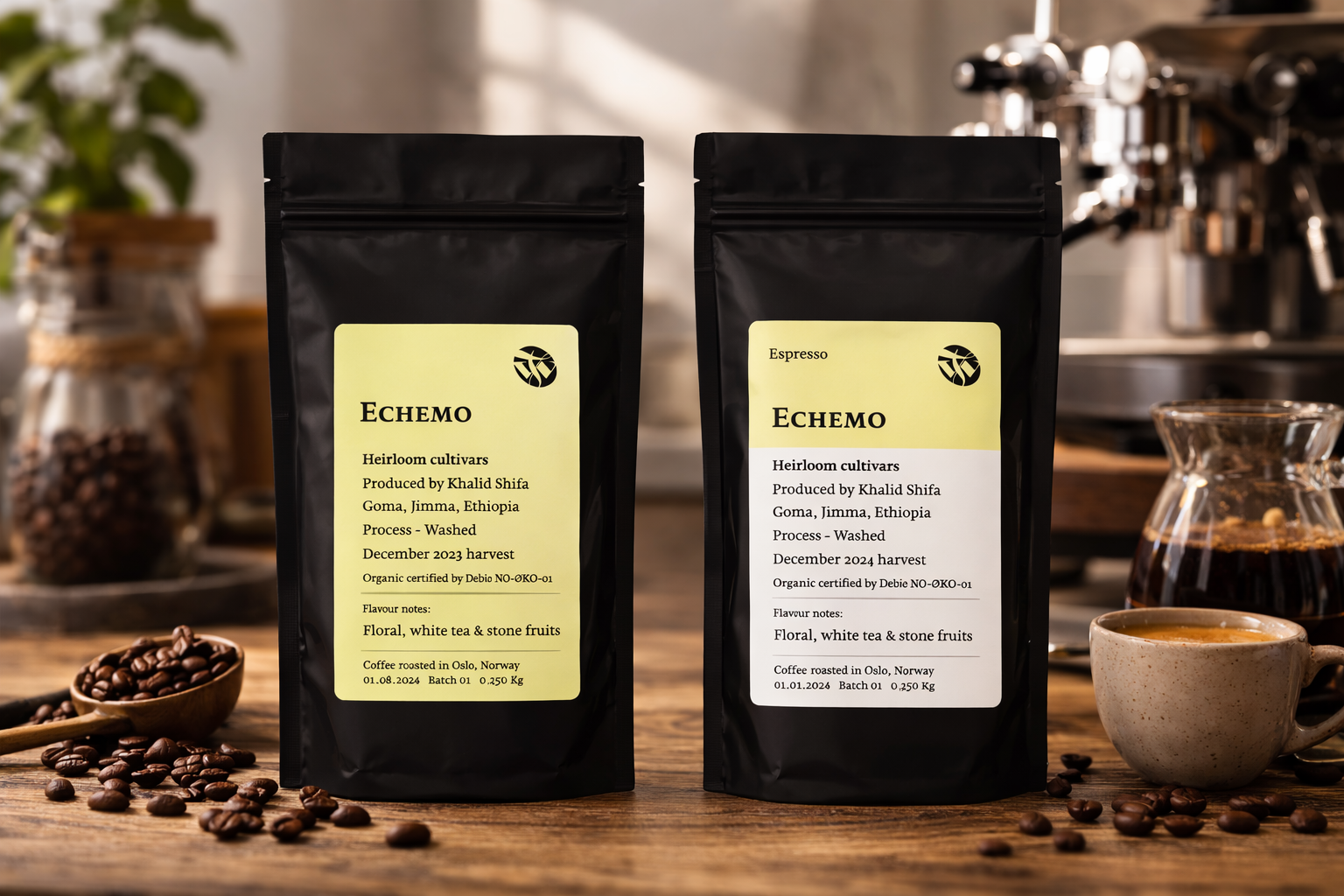
Many roasters release the exact same origin in two formats:
- Ethiopia Washed – Espresso
- Ethiopia Washed – Filter
Let’s clarify what’s happening — and whether it matters for you.
Short Answer: Yes, There Can Be a Difference — But It’s Often Subtle
When a company offers the same coffee in espresso and filter versions, it usually means one of three things:
1️⃣ Slightly Different Roast Development
This is the most common scenario.
- Espresso version → slightly more developed
- Filter version → slightly lighter
The difference is typically:
- 5–15 seconds more development time
- Slightly deeper sugar caramelization
- Marginally higher solubility
It is not a dramatic dark vs light difference.
2️⃣ Optimized for Extraction Style
Espresso extraction is:
- High pressure
- Very short contact time
- Highly concentrated
To make espresso easier to dial in, roasters may:
- Increase solubility slightly
- Reduce sharp acidity
- Build more body
Filter brewing, on the other hand:
- Uses gravity
- Extracts longer
- Emphasizes clarity
So filter roasts are often kept lighter to preserve:
- Florals
- Acidity
- Terroir transparency
3️⃣ Sometimes… It’s the Same Roast
Some specialty roasters simply label one version as espresso and one as filter — but they’re roasted identically.
The label may exist only to:
- Help beginners choose
- Match café usage
- Simplify buying decisions
In modern specialty coffee, many high-end roasters now use one roast profile for both methods.
Will You Taste the Difference?
For most people:
- The difference is subtle.
- Only experienced palates will detect it clearly.
- Brewing technique matters more than roast label.
If you brew:
- Espresso → espresso roast may dial in slightly easier.
- Filter → filter roast may show more brightness.
But the origin character remains the same.
What Actually Impacts Taste More?
Here’s what influences your cup more than espresso vs filter labeling:
- Grind size
- Brew ratio
- Water temperature
- Extraction time
- Water chemistry
Those variables create bigger differences than small roast adjustments.
When Should You Care?
You should care about espresso vs filter versions if:
- You run a café and need consistency
- You want easier espresso dial-in
- You are sensitive to acidity levels
If you’re a home brewer comfortable adjusting grind and ratio, you can often use either version successfully.
Why Do Roasters Offer Both?
Because espresso is unforgiving.
Small roast differences can:
- Reduce sourness under pressure
- Increase body
- Improve balance in milk drinks
Offering both versions gives customers a smoother experience — especially for espresso users.
Final Verdict: Is There a Real Difference?
Yes — but usually minor.
Think of it as fine-tuning for extraction, not a completely different coffee.
Same farm.
Same varietal.
Same processing.
Slightly adjusted roast for a different brewing environment..