Published by SpecialityCoffee.ca
When coffee tastes sour, bitter, hollow, or inconsistent, most people blame the beans, the roast, or the brewer. In reality, the most common cause of poor coffee is incorrect grind size.
Grind size is the single most influential variable in coffee brewing. It determines how water interacts with coffee grounds, how quickly compounds dissolve, and ultimately whether the cup tastes balanced or flawed. This matters even more with specialty coffee, where subtle differences in extraction dramatically affect flavor clarity and sweetness.
This guide explains why grind size matters, the science behind extraction, how to identify problems by taste, and how to dial in the correct grind size for any brewing method.
What Coffee Extraction Really Is (In Plain Language)
Coffee extraction is the process of dissolving soluble compounds from roasted coffee into water. These compounds include:
- Acids (brightness and liveliness)
- Sugars (sweetness and balance)
- Oils (body and mouthfeel)
- Bitter compounds (structure, but unpleasant in excess)
The goal is balanced extraction: enough solubles to taste sweet, complex, and satisfying — without pulling excessive bitterness or harshness.
Grind size directly controls how fast and how evenly these compounds are extracted.
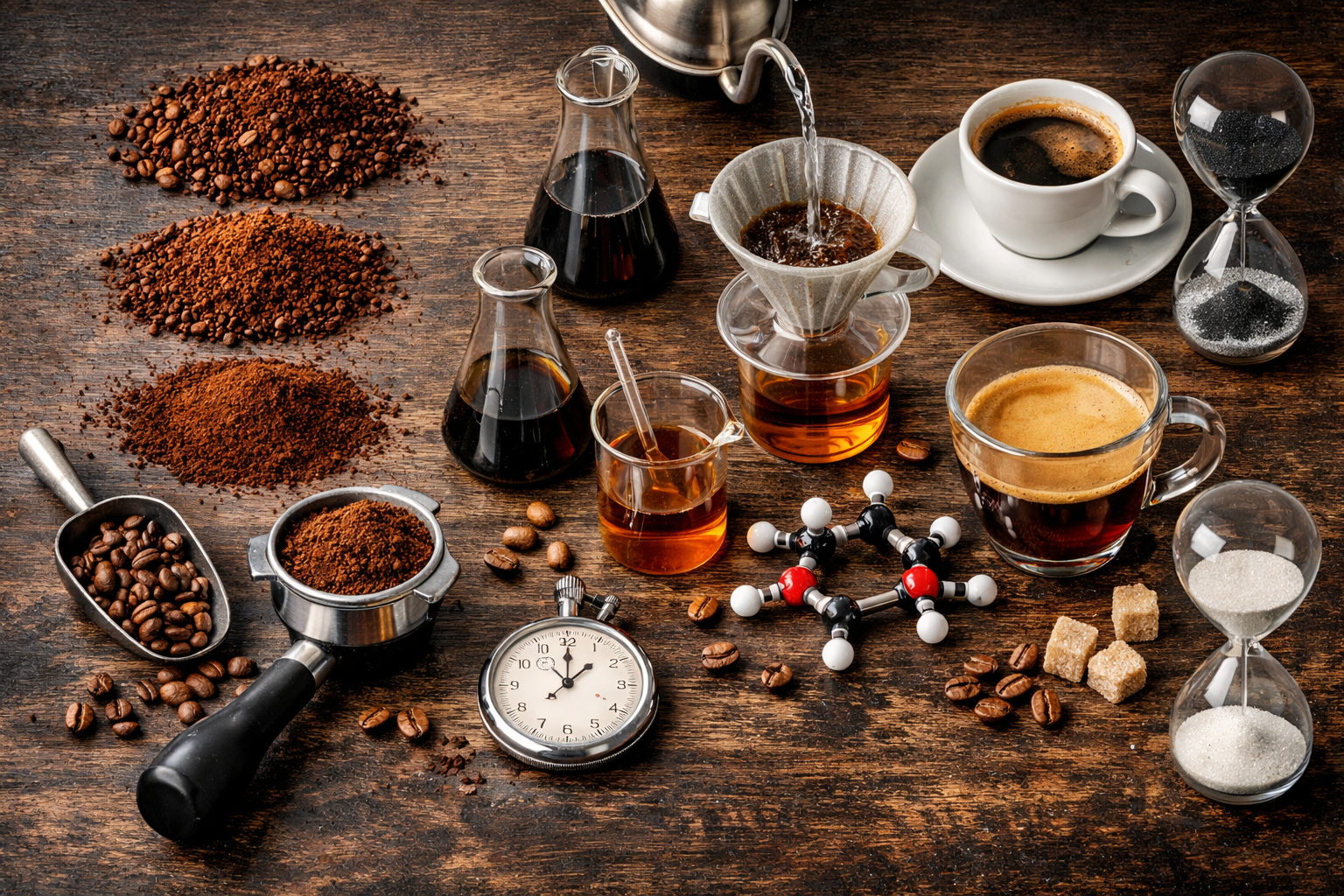
The Science: Surface Area and Flow Rate
Two physical principles explain why grind size matters so much:
1. Surface Area
When coffee is ground, its surface area increases.
- Finer grinds → more surface area → faster extraction
- Coarser grinds → less surface area → slower extraction
2. Water Flow Resistance
Grind size also controls how quickly water flows through coffee:
- Fine grinds slow water down
- Coarse grinds allow water to pass quickly
Extraction is the result of surface area × contact time. Grind size sits at the center of both.
Under-Extraction vs Over-Extraction: How to Taste the Difference
Understanding flavor symptoms helps you diagnose grind size issues instantly.
Under-Extracted Coffee (Grind Too Coarse)
Common characteristics:
- Sour or sharp acidity
- Salty or vegetal notes
- Thin body
- Short, hollow finish
What’s happening:
Water passes too quickly, extracting acids but leaving sugars behind.
Over-Extracted Coffee (Grind Too Fine)
Common characteristics:
- Bitterness
- Dry, chalky mouthfeel
- Astringency
- Muted origin character
What’s happening:
Water stays in contact too long, pulling excessive bitter compounds.
Why Grind Size Is More Important Than Brew Method
Many people buy new brewers expecting better coffee, yet continue using the same grind size. This often leads to disappointment.
A correctly dialed-in grind with a simple brewer will outperform:
- Expensive equipment
- Fancy filters
- Complex recipes
Grind size determines whether your coffee tastes alive or dull, regardless of gear.
Ideal Grind Size by Brewing Method
While grinders vary, the relative relationships remain consistent.
Espresso
- Very fine, powder-like
- High resistance
- Short brew time (25–35 seconds)
Pour-Over (V60, Kalita, Chemex)
- Medium to medium-fine
- Balanced flow
- Clear, articulated flavors
Drip Coffee
- Medium
- Designed for flat-bed extraction
- Emphasizes balance
AeroPress
- Fine to medium
- Highly adjustable depending on recipe
- Extremely forgiving
French Press
- Coarse
- Long immersion time
- Fuller body
Cold Brew
- Very coarse
- Long extraction (12–24 hours)
- Low acidity
Why Consistency Matters as Much as Grind Size
Even if the grind size is correct, inconsistent particle distribution causes uneven extraction. This happens most often with blade grinders, which produce both fine powder and large chunks simultaneously.
The result:
- Fine particles over-extract
- Large particles under-extract
- The cup tastes both sour and bitter
Burr grinders solve this problem by producing uniform particle size, leading to more predictable and repeatable results.
Fresh Grinding vs Pre-Ground Coffee
Grinding coffee exposes aromatic compounds to oxygen. Within minutes, volatile aromas begin to dissipate.
Pre-ground coffee:
- Oxidizes rapidly
- Loses sweetness
- Develops stale flavors
Freshly ground coffee:
- Preserves aromatics
- Maintains sweetness
- Improves clarity and balance
For specialty coffee, grinding fresh is not optional — it is essential.
Common Grind Size Mistakes to Avoid
Grinding Too Fine to “Make It Stronger”
Strength comes from brew ratio, not grind size. Finer grind increases bitterness, not strength.
Using One Grind Size for Everything
Each brewing method requires a different grind size. Reusing the same setting compromises extraction.
Ignoring Grinder Drift
Grinders change slightly over time due to wear and humidity. Periodic adjustment is necessary.
Blaming the Coffee
Poor grind size often masks the quality of excellent beans.
Grind Size and Specialty Coffee: Why Precision Matters More
Specialty coffee is grown, processed, and roasted to highlight origin-specific characteristics. These nuances are fragile.
Incorrect grind size:
- Destroys clarity
- Masks sweetness
- Makes high-quality coffee taste ordinary
Correct grind size:
- Reveals terroir
- Enhances sweetness
- Produces balance and depth
This is why specialty roasters emphasize brewing education alongside bean quality.
A Simple Dial-In Process Anyone Can Use
- Start with the recommended grind for your brew method
- Brew using consistent ratios and time
- Taste critically
- If sour → grind slightly finer
- If bitter → grind slightly coarser
- Adjust incrementally
Small changes make a big difference.
Final Takeaway: Grind Size Is Where Good Coffee Begins
If you want consistently better coffee at home, focus on grind size before anything else. It influences extraction more than equipment, recipes, or even roast level.
When paired with freshly roasted specialty coffee, correct grind size unlocks:
- Sweetness
- Balance
- Origin character
- Repeatable excellence
Great coffee begins long before the first sip — it begins at the grinder.